
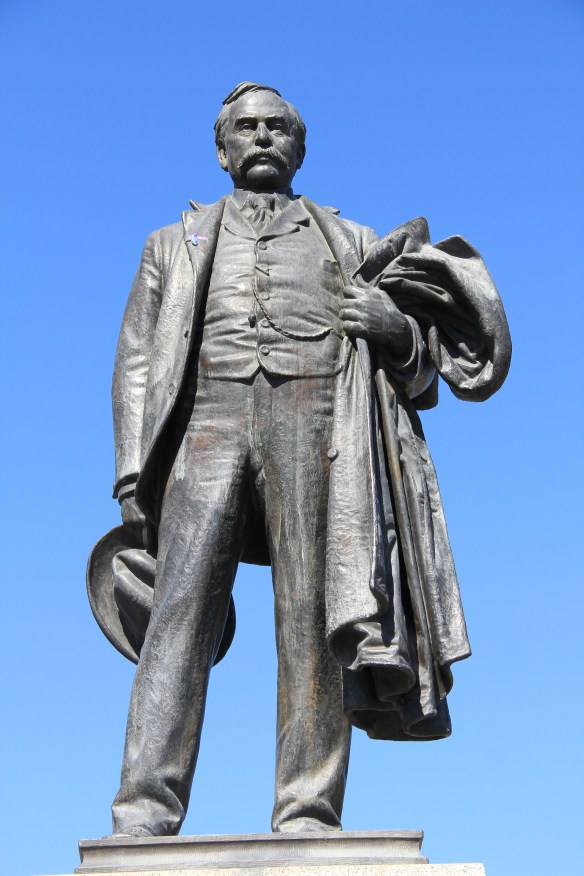
 Marcus Daly, the copper magnate of Butte and Anaconda, certainly put his stamp on the landscape of Silver Bow and Deer Lodge counties. But not until the early 1980s did most Montanans understand that Daly too had shaped the landscape of the Bitterroot Valley with the creation and expansion of his Bitterroot Stock Farm, starting in 1886 and continuing even beyond his death in 1900.


It is a stunning landscape, framed by the mountains and railroad tracks, crisscrossed by irrigation ditches. Daly created the ranch to specialize in livestock breeding and the development of thoroughbred race horses. The only Montana horse to win the Belmont Stakes came from Daly’s “farm.” Like other titans of industry and capital of the late 19th century, Daly wished to not only demonstrate his entry into the gentry of America but also
 to have a place, on the other side of the divide from his dark, dank, smelly mining towns, where he and his family could escape and enjoy Montana’s open lands and skies. The ranch began with the purchase of the Chaffin family homestead in 1886. Daly immediately set forth to remodel and expand the older ranchhouse yet those changes only lasted three years when Daly replaced the first house with a rather grand and flamboyant Queen Anne-styled mansion and named it Riverside. Daly died in 1900 and Riverside’s last grand remodeling was guided by his wife, who looked to architect A. J. Gibson of Missoula to design a Colonial Revival-on-steroids mansion, which referenced the recent Roosevelt family mansion on the Hudson River in New York State.

The classical styled ceremonial entrance to Riverside
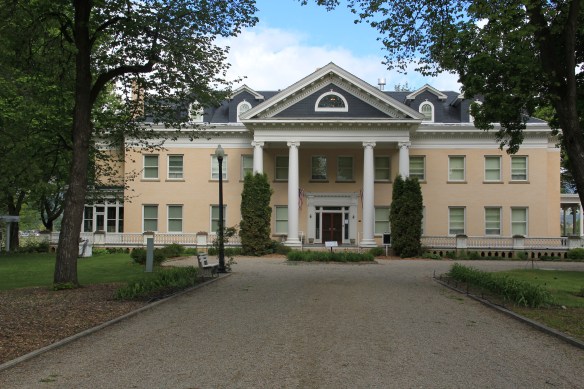 There is really nothing in the world of domestic architecture in Montana to compare to the Daly family’s Riverside estate. As we made our plans for the state historic preservation survey in 1984, I never imagined gaining access to this mysterious place. Then, suddenly, the owners decided to offer the property to someone–the state preferably but locals if necessary–who could transform it into a historic house museum and still working farm.


Here then came a great opportunity but also a daunting task–could be the property be saved, and how would such a huge property be maintained, considering the comparatively low attendance rates received by historic houses.
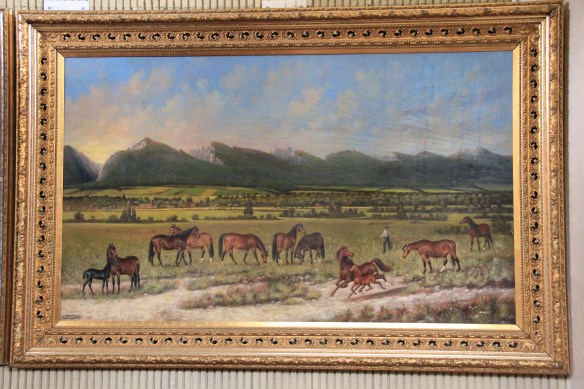
In time, a partnership was established between the local Daly Mansion Preservation Trust and the University of Montana to open the house in the summer as a museum but to conserve the farm as an invaluable agricultural asset throughout all seasons.


The result has been one of the most important “gains” in historic preservation in Montana in the last 30 years. The property has been saved but historic preservation needs continue, with projects both large and small taking place on a regular basis.


A Northern Rockies “great house” is the result–a sign of the great disparity of wealth between miners and owners, and between absentee large estate ranchers and surrounding ranch families pulling a living from the land. Daly never saw the mansion as you do today–it was Margaret who decided to take the grand estate in the direction of the fashionable Colonial Revival. Yet it remains a monument to his domination of the western Montana landscape, as powerful in its own way as his head frames in Butte.


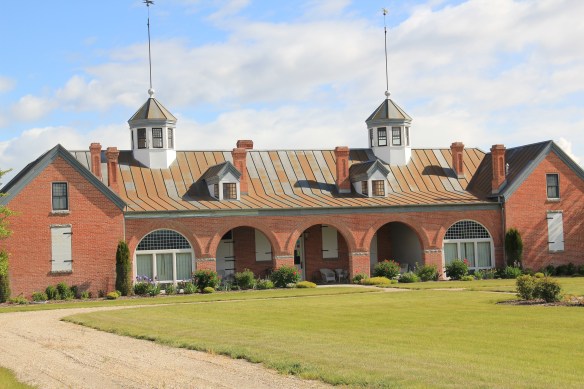
One key component of the estate has moved on to a new life. The ornate 1895 stable for Tammany–his prize horse–has been converted in residential units, for people. Tammany Castle also speaks to who Daly was and what he was about in late 19th century Montana.
 Indeed not far away is a 21st century sign of the super-rich and their imprint on the Montana landscape: the Stock Farm Club, a private, gated community for those who can afford it–and probably 99% cannot.
 When most people think of Ravalli County they think of the ever suburbanizing northern half, as you take U.S. Highway 93 south–a four lane highway–from Missoula and encounter the new suburbs of Florence. But if you use U.S. Highway 93 from the southern end, you find a very different place, one that starts with Ross’ Hole.
 There are few more beautiful places in the state, even on this cloudy day in 2012, the hole beckoned, as it has for centuries. In western American history, its importance has multiple layers, from ancient Native American uses to the peaceful encounter between Flathead Indians and the Lewis and Clark Expedition in 1805. Without the horses the expedition acquired from the Flathead, its journey would have been much more difficult, if not impossible.
 Montana “cowboy” artist Charles M. Russell painted the scene as a prominent historical mural in the House of Representatives chamber at the Montana State Capitol in 1912. His composition, as I used to like to point out when I gave state capitol tours in 1982, emphasized the centrality of the Native Americans in the region–the expedition were minor characters, in the background of the painting’s right side. The place name Ross’s Hole refers to Hudson Bay Company trader Alexander Ross who traded there in 1824. Hole was a trader and trapper term for mountain valley.
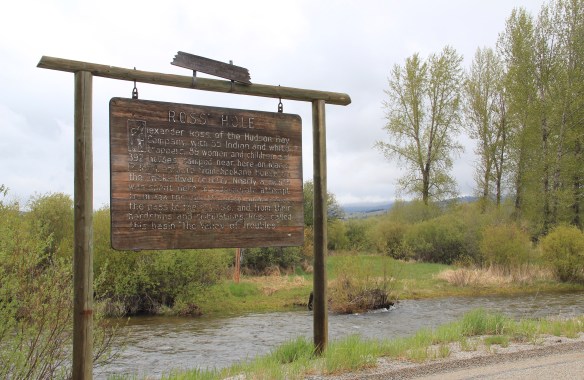 At the time of the 1984 survey, Ross’ Hole was interpreted by this single wooden sign, now much worse for the wear of the decades. But like many important landscapes in the state, today you find a rather full public interpretation in a series of markers sponsored by the Montana Department of Transportation, the U.S. Forest Service, and the Lewis and Clark National Historic Trail.


 Any trip to Ross’ Hole would not be complete with a stop, however brief, at the roadside architecture-a log bungalow–home to the Sula Community Store, which can basically provide you with about anything you might need while traveling on U.S. Highway 93.
 And the coffee is always hot, and strong.
 Montana's Historic Landscapes