 One of my favorite county seats is Choteau, where U.S. Highways 89 and 287 meet. Both of those roads were and are among my favorite to take in the state, and Choteau I quickly found had one of my favorite local dives the Wagon Wheel. Back in the day, however, I did not appreciate how the town’s history and built environment was shaped by the Sun River Irrigation project and the overall growth in the county during the first two decades of the 20th century and later a second boom in the 1940s.
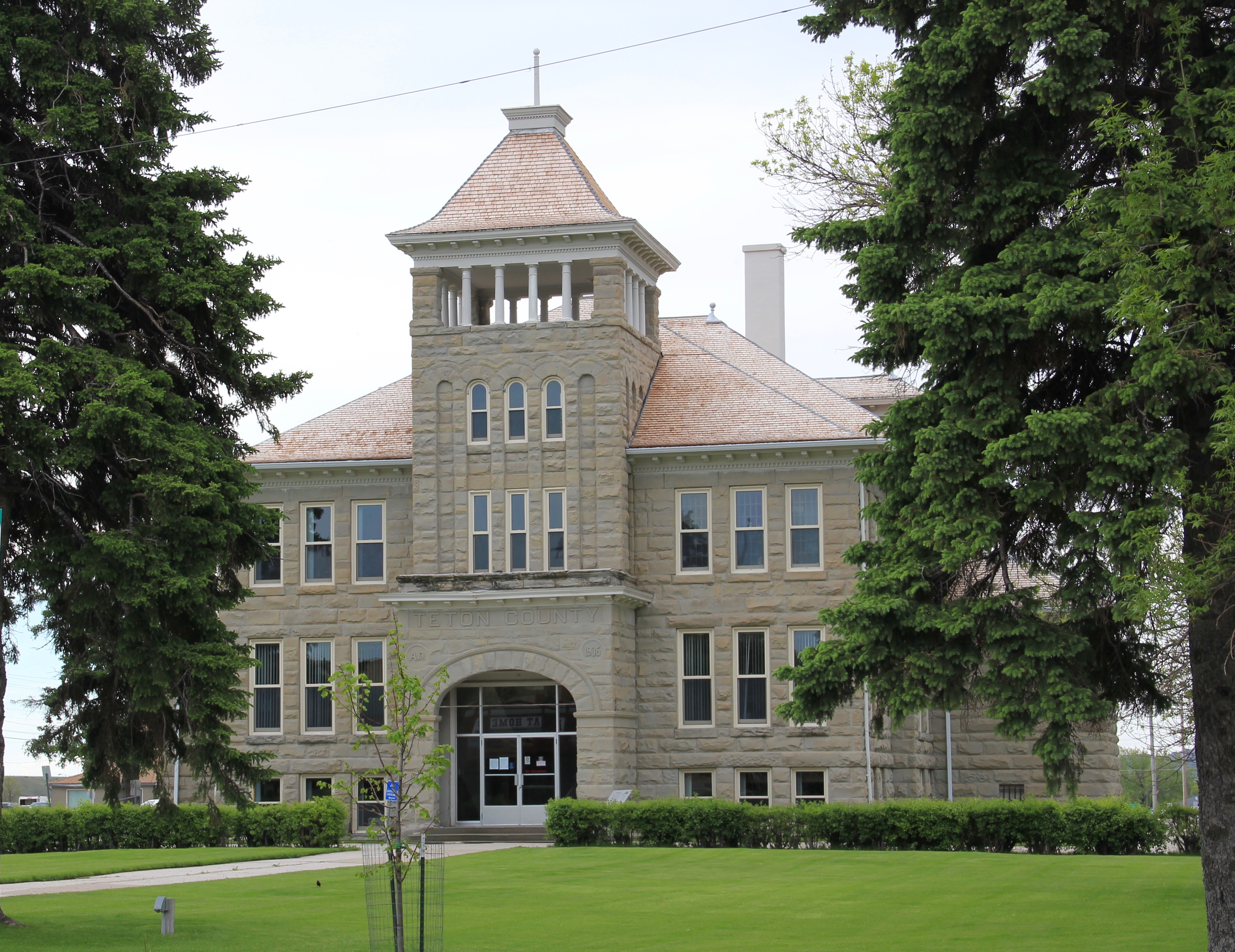 Choteau has a different look than most towns from this era of Montana history. The centerpiece of the towns plan is not a railroad depot but the magnificent Teton County Courthouse (1906), which occupies a spot where the two federal highways junction. Designed by architects Joseph B. Gibson and George H. Shanley, the National Register-listed courthouse is made of locally quarried stone in a late interpretation of Richardsonian Romanesque style, similar to, but to a much lesser scale and detail, than H. H. Richardson’s own Allegheny County Courthouse (c. 1886) in Pittsburgh.
The courthouse defines the south end of town and then U.S. Highway 89 heading north defines Main Street. Since my first visit to Choteau in 1982 the town’s population has only declined marginally, about 100 less residents in 2010 than in 1980. But there is a clear pattern of building change in more recent years. Some are successful adaptive reuse projects, such as the conversion of this old service station/garage across from the courthouse (left above) into offices.
 This historic neoclassical-styled bank building is now home to a coffee shop but other commercial buildings have changed very little, except for the mix of retail business. This is not a dying business district but one with a good bit of jump, of vitality.
The historic Roxy Theater is still open, and its Art Deco-styled marquee gives a bit of flash and dash to Main Street.

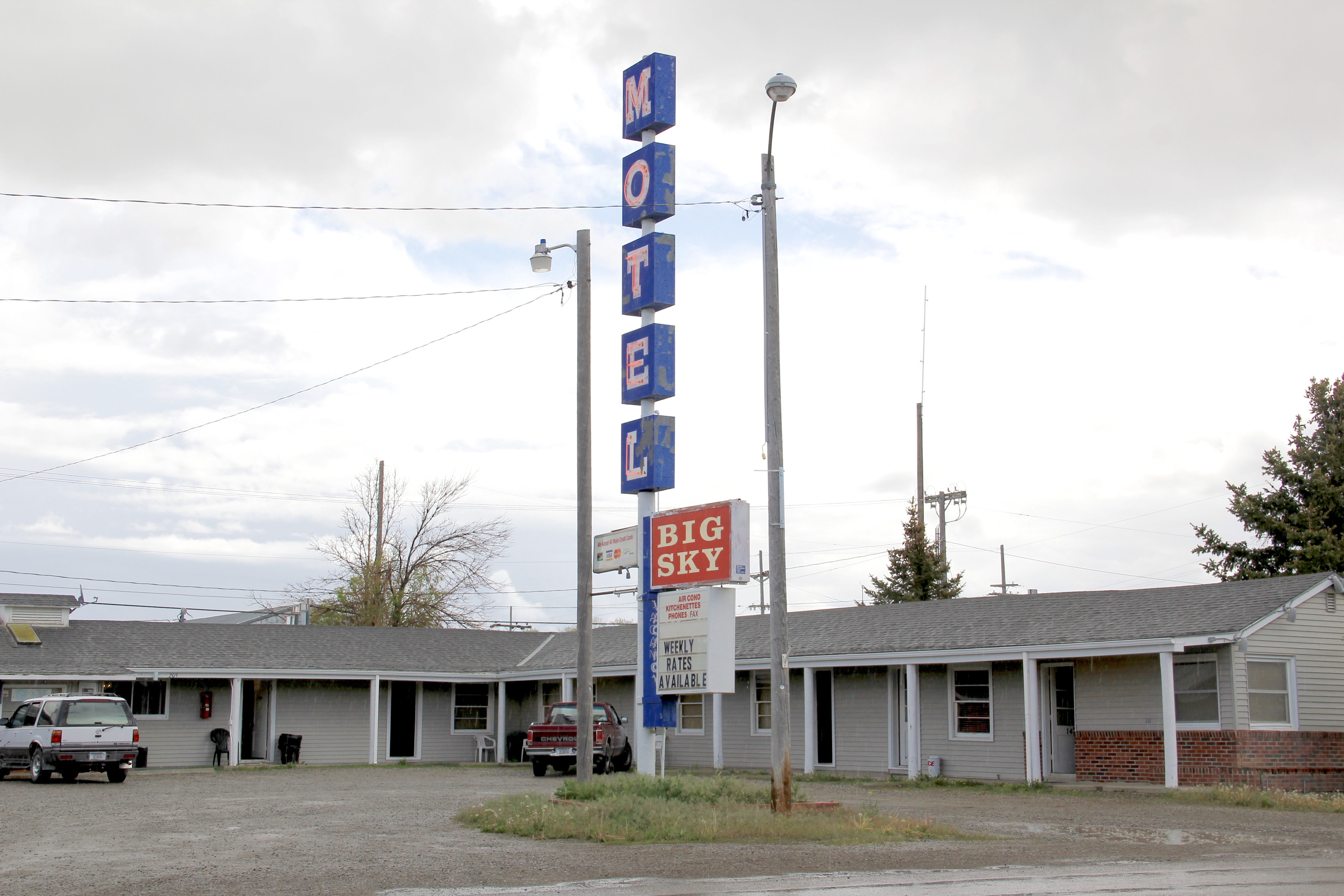
Choteau has its share of eye-catching roadside architecture on both the south and north ends of town. South on U.S. 89 is the Big Sky motel, little changed over 50 years but on the north end of town is a far different story
 where the historic Bella Vista Motel–a perfect example of a 1950s motel with separate units like tiny Ranch-styled houses–has given way to a c. 2015 conversion into apartments.
The north end of town is also home to Choteau’s heritage tourism, with the local Old Trail museum significantly expanded since the 1980s with more moved buildings, artifacts, and a special focus on dinosaurs.
The stability of Choteau is reflected in its historic church buildings, defining architectural landmarks within the residential neighborhood to the west of Main Street. Arts and Crafts style influences the look of the Trinity Lutheran Church while the United Methodist Church is a textbook example of Colonial Revival style. St. Joseph’s Catholic church is also a revival styled building, one in keeping with a vernacular Gothic than the modern look shared by so many Catholic Church buildings in rural Montana.
East of Main Street is the railroad corridor and associated warehouses, elevators, and other industrial buildings along with the historic county fairgrounds and a pretty city park, watered by an irrigation ditch.
Stability, continuity, yet change have marked Choteau over the last 30 years–let’s hope all three traits remain for another generation.









 Montana's Historic Landscapes