Gladstone Hotel: A threatened landmark in Circle, Montana

Image


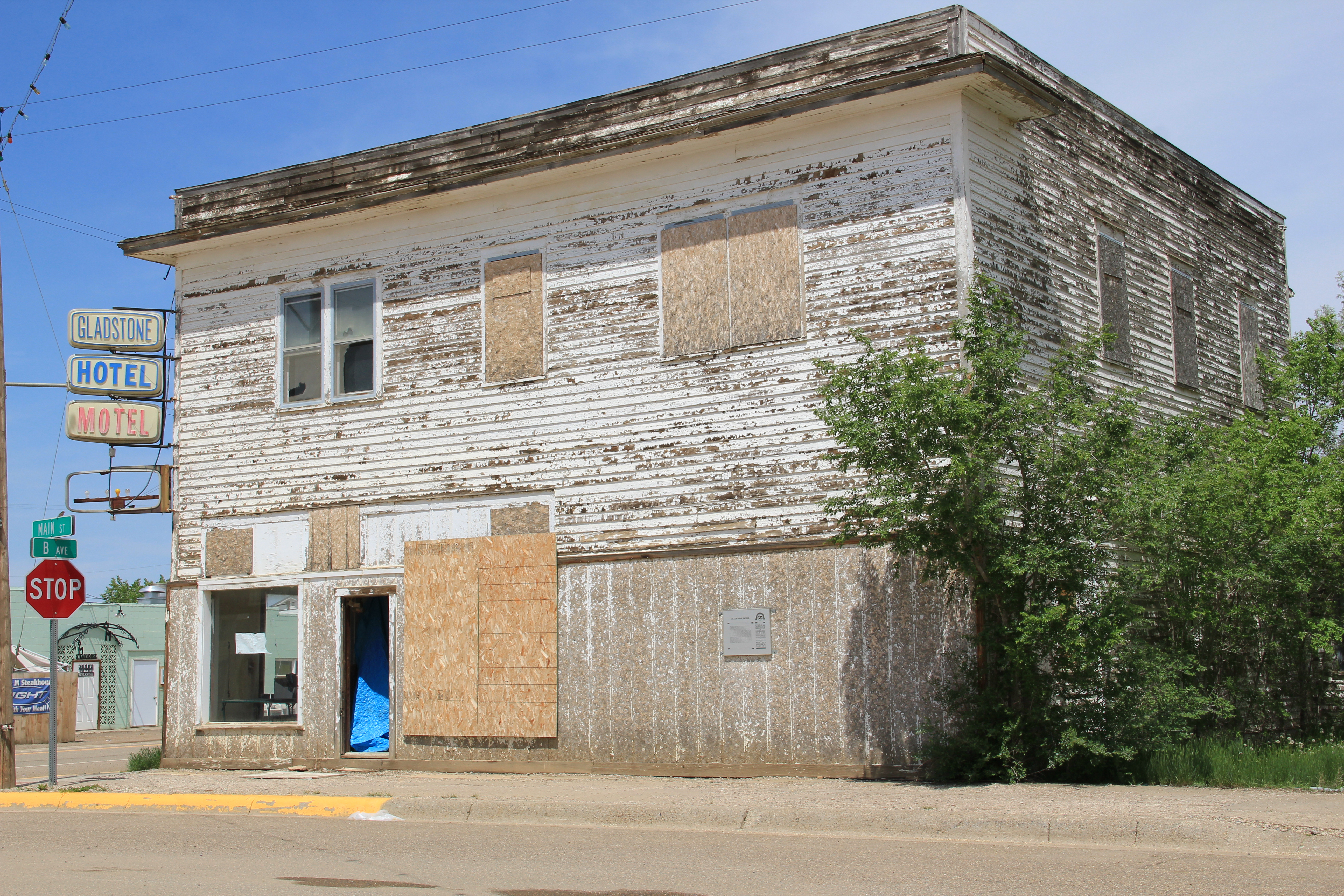
Circle, Montana, is an isolated place in the big scheme of the western landscape.  It is not close to any interstate nor is it served by any federal highways.  It is at a key Eastern Montana crossroads, that of state highways 13 and 200.  The seat of government for McCone County, the place has been an important trade and agricultural crossroads since the early 20th century.  It was at that time that the two-story frame Gladstone Hotel was constructed–as a place of first residence for homesteaders coming into the region and later for highways travelers in the automobile age.

Image

When I traveled the state in 1984 for the preservation plan, folks at the State Historic Preservation Office–Marcella Sherfy, Lon Johnson, and Pat Bick particularly–were eager to see what I thought about this recent addition to the National Register of Historic Places.  They knew that it was already a rare yet fascinating relic of the early homesteading era.

The day and evening in Circle were memorable.  Orville Quick, the head of the local museum and a heritage treasure in his own right, arranged everything, managing even to get a decent crowd there for my evening remarks, even though Circle was playing in the regional basketball tournament in Miles City at the same time.  The Gladstone was just as memorable–creaky, yes, quaint, yes, but quiet except for a truck or two roaring through the town.

I wasn’t surprised just disappointed at its condition today.  Certainly it is among the state’s threatened National Register landmarks.  Anytime a business is closed, the lack of use is not good for its preservation.  The solutions for a building of this size in an age of standardized lodging and marketing are daunting–where can the money come from to adequate conserve the building but yet recoup the investment when relatively few travelers come this way.  But to lose this c. 1910s building, and the role it played in giving the early town a semblance and symbol of permanence and prosperity would truly be a loss for understanding and documenting the homesteading experience of the northern plains.


Modernist Architecture in the Diocese of Great Falls

Bishop William Joseph Condon is a pivotal figure in the history of the Catholic Church of eastern Montana.  As Bishop of the Diocese of Great Falls (which became the Diocese of Great Falls and Billings in 1980) in the mid-twentieth century, he presided over the growth of the church in Great Falls and Billings, due to the influx of federal defense dollars and the impact of the petroleum boom.  Bishop Condon also presided over the construction of remarkable new church buildings across the region, from tiny towns like Highnam to rural county seats such as Roundup.  Then there was the construction of the 1950s modernist landmark, the College of Great Falls [now University of Great Falls], which has arguably the state’s most coherent set of c.1960 “contemporary” style buildings.

Over the next few months I will explore the churches associated with the diocese’s expansion in the 1950s and 1960s, giving particular attention to the buildings at  the University of Great Falls.  These compelling resources frankly were not on my radar screen in 1984-1985:  like many others the buildings were too recent, and being devoid of easily classified architectural elements, I ignored them in favor of the historic Gothic and Classical revival church sanctuaries in the region.  But more than a generation later, you can readily appreciate the dignity and the beauty of the churches.  In most cases the congregations have been solid stewards, and the buildings still convey their original design and intent.

Image

Image

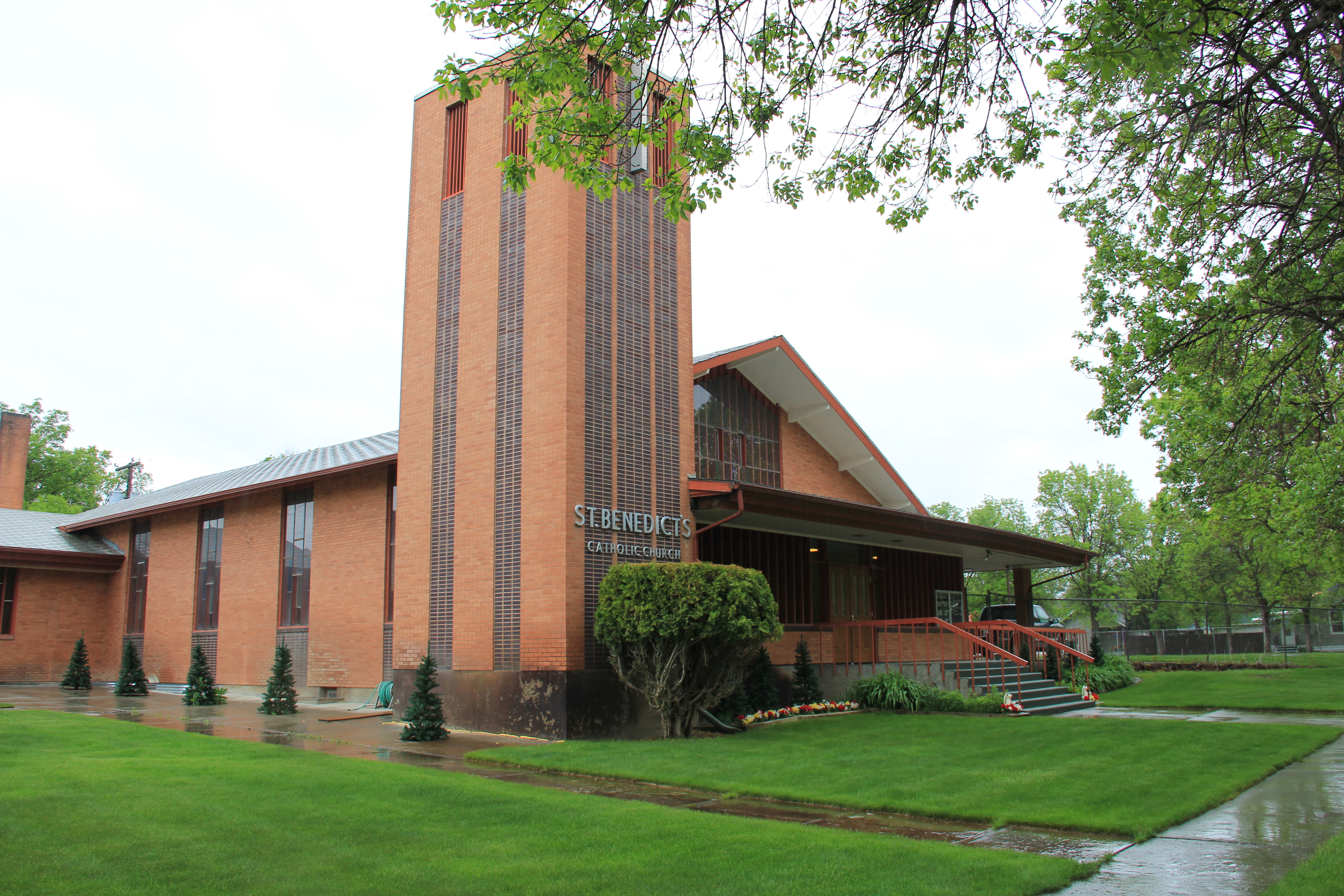
St. Benedict’s Catholic Church, Roundup.

One reason I really like the Roundup church is that it faces, across Main Street (US 87), another modern landmark in eastern Montana:  the New Deal-funded Art Deco-styled Musselshell County Courthouse.  

Image

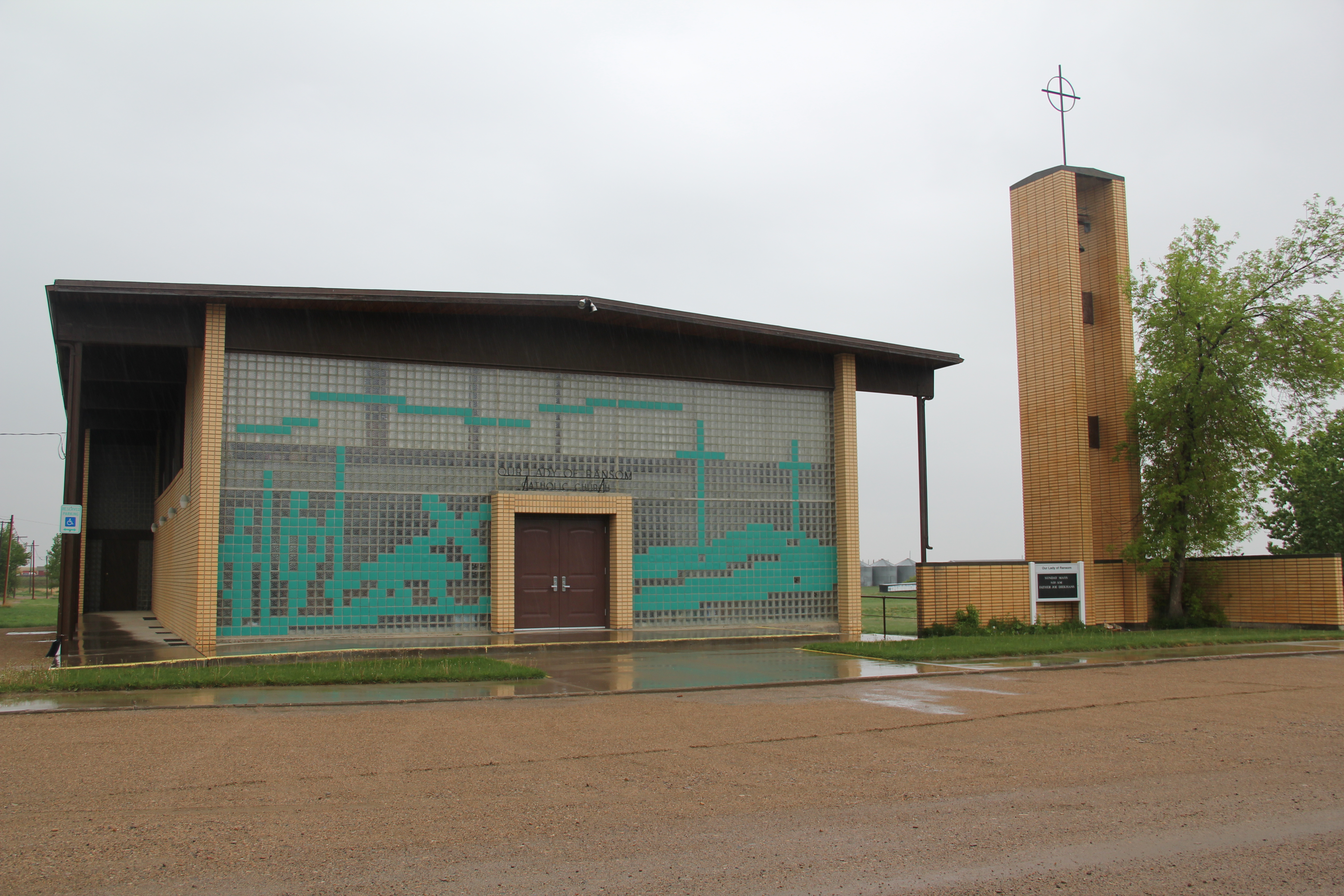
My second example for today’s post comes from tiny Hingham, a Great Northern railroad town in Hill County.  In 2010, its population was just over 100 but the town and surrounding ranch families have carefully kept the Our Lady of Ransom Catholic Church as a truly 1960s landmark.  I apologize for the dark rainy images, but everyone that day on the Hi-Line rejoiced in the rain, and offered me a place to stay if I returned every May and brought rain.

Image

Image


Our Lady of Ransom Catholic Church, Hingham, Hill County


Range Riders Bar Sign, Mlles City: 1984 and 2013

Miles City has always been one of my favorite western towns.  Located near the confluence of the Tongue and Yellowstone rivers, the town’s early history and prominence in the Yellowstone Valley remains significant, if understudied.  More attention has been given to the town’s turn of the century transformation, when the Chicago, Milwaukee, St. Paul, and Pacific Railway entered into the Yellowstone Valley and here at Miles City it located shops and a classically styled passenger station to compete with the already established Northern Pacific Railroad.  The town has a bevy of interesting buildings, commercial, public, and domestic, built between 1990 and 1930. The Great Depression hit the town and countryside particularly hard, and the New Deal reacted with numerous projects, particularly the city park that is such a central community element today.

But you most often come to Miles City not for the historic buildings per se but for the cowboy vibe, and the historic bars along Main Street.  The Montana Bar is my favorite–and more on it in a later posting.  But across the street is another time-tested spot, the Range Rider, always eye-catching due to the giant bar sign.  Here is the one from 1984.

Image


At the west end of town on old U.S. 10 is the Range Riders Museum, a mid-twentieth century institution that interprets the region’s western, and particularly its ranching, history.  Don’t know which place took the name Range Riders first.  But both remain in operation, although the Range Rider bar has a new name, perhaps evocative of the 21st century, and has shifted the sign to the adjacent building.  Below is the bar and sign of May 2013–not as overwhelming perhaps, but still evocative of Miles City’s history and culture. 

Image


Moccasin School, Judith Basin County, 1984 and 2013

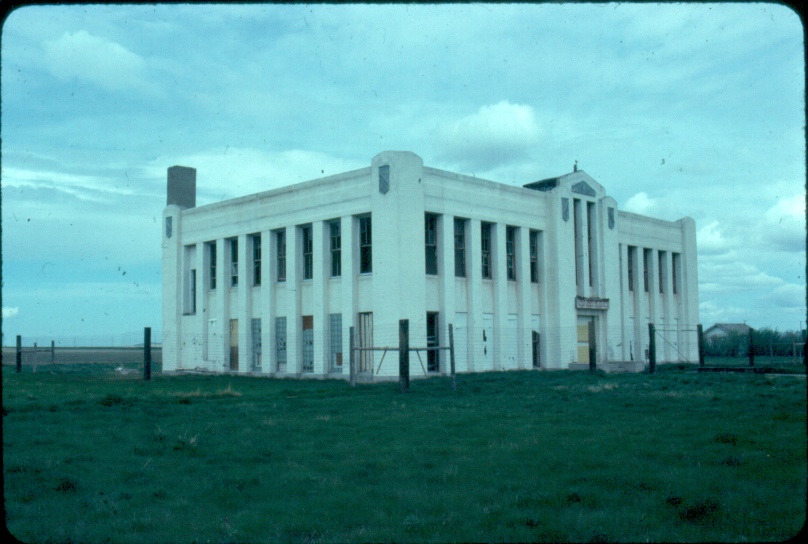
One of the most stunning properties I discovered in my 1984 survey of Montana–stunning perhaps because it was so unexpected–was the Art Deco styled school at Moccasin in Judith Basin County (central Montana).  

Image

Moccasin is a tiny place, tucked away on a federal highway, true, but certainly not ever a major transportation or commercial crossroads.  Yet here was one of the most architecturally striking schools built for a rural community that I have encountered, American West or American South or anyplace in-between.  The white concrete hard-edged exterior spoke of the International style then raging in major cities across the world; the decorative metal insets were Art Deco in its purest form, as applied ornament that gave some life to an otherwise severe facade.  A creature of the homesteading boom of the 1910s, the town suffered from fires that literally snuffed out the promise of the place by 1919. But nearby was the Central Montana Agricultural Station, and from what I can gathered from web sources the school stayed in operation till 1966, with regional educators considering the high school agricultural and vocational education programs at the school to be noteworthy.  

The web, particularly Flickr, has a range of photos taken of the school in more recent years. Here is the one I took in May 2013. Compared to 30 years ago, a tall line of bushes now obscures views of the first story; obviously the building has deteriorated, and now would be considered in poor repair.

Image

A New Deal Marvel: Pondera County Courthouse, Conrad

Image


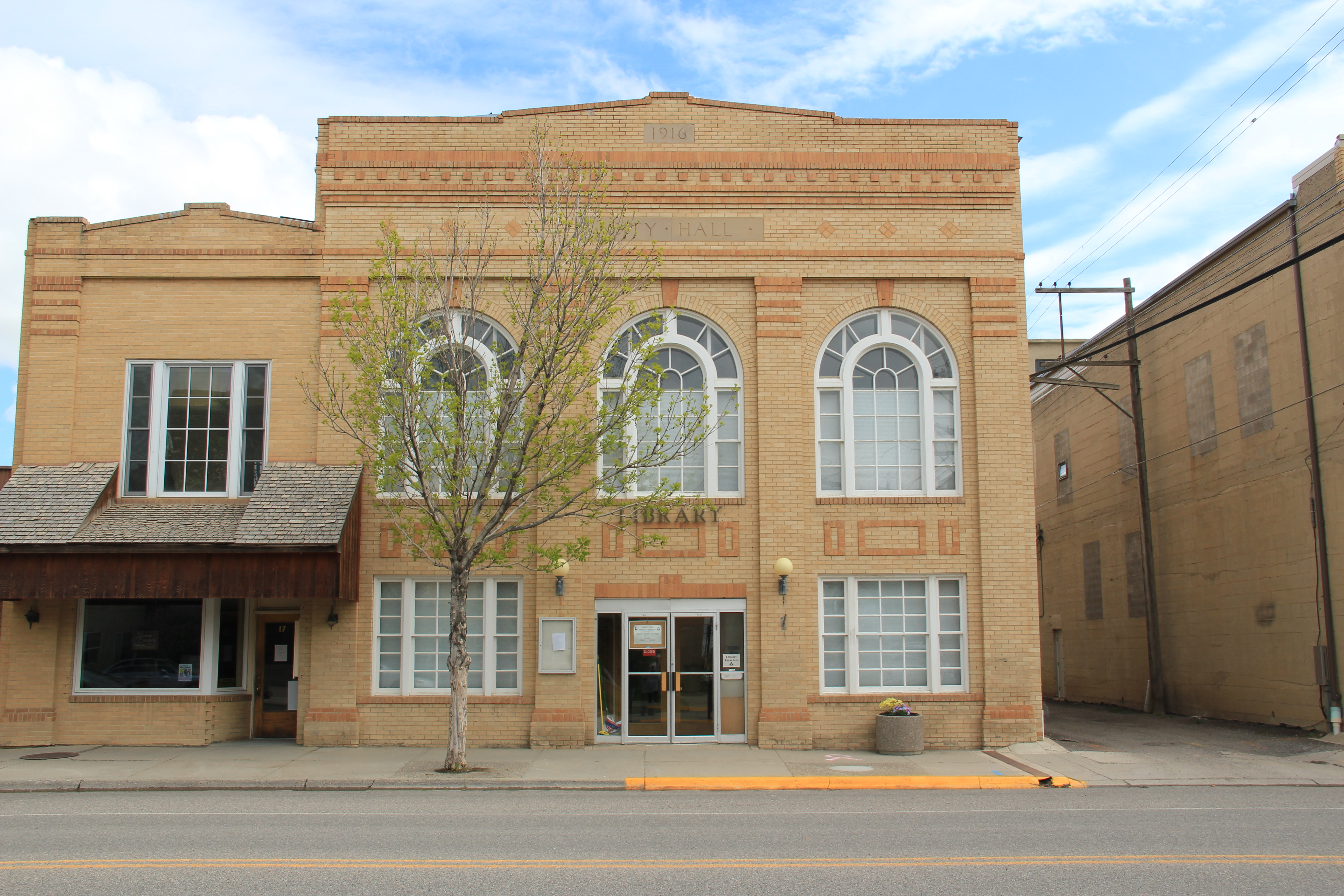
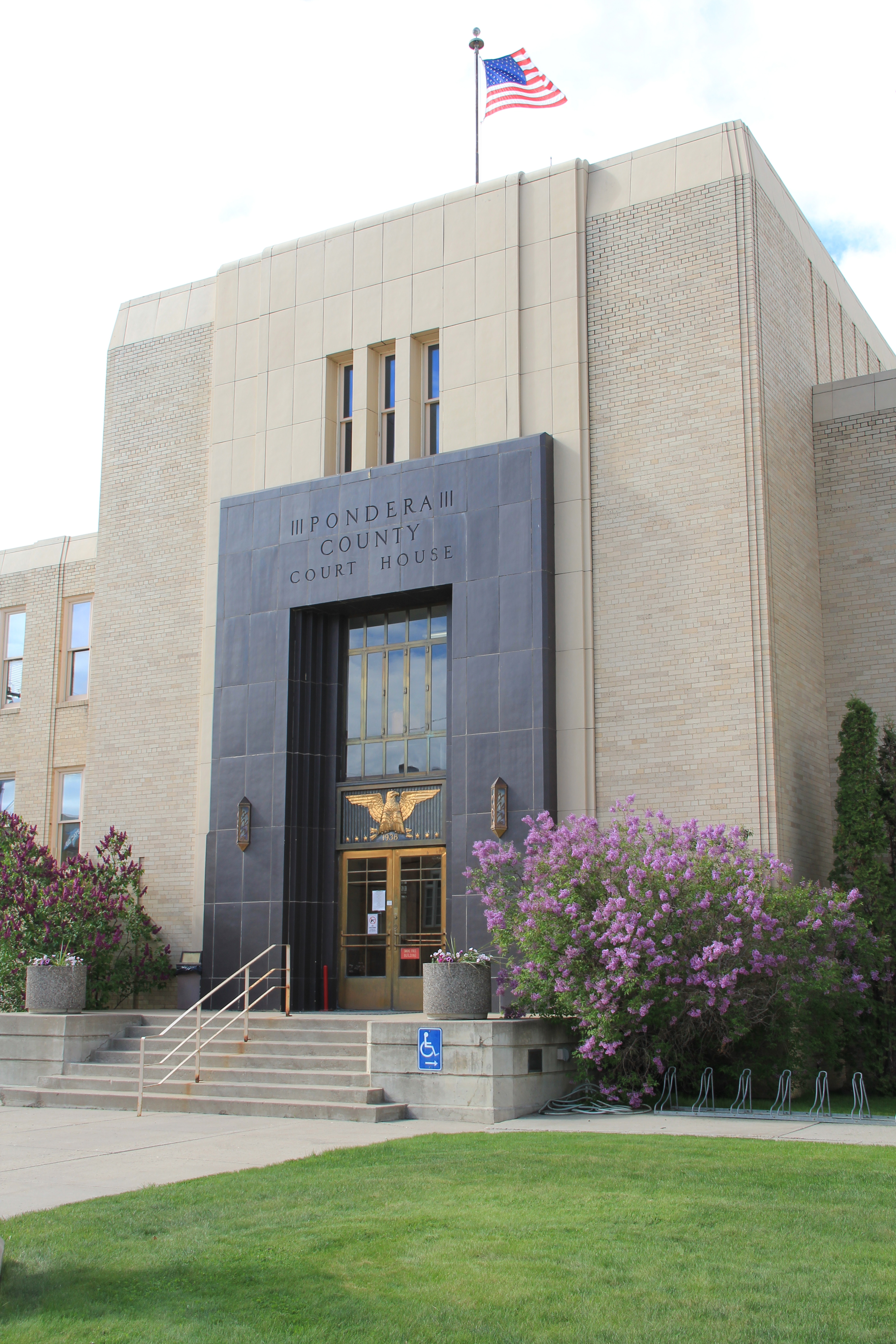
The Pondera County Courthouse is a Public Works Administration project of 1938.  Located in Conrad, which served as the seat of government for the recently created (1919) Pondera County, the courthouse stands across the street from the National Register-listed City Hall, a building which for the county’s first generation served as a catch-all public building for this agricultural community.  Neither the city hall nor the courthouse lie at the center of town–the railroad tracks and passenger depot were the focal point of the original town plan.  Both public buildings are about a block away from the town”s primary commercial crossroads.


Image


Conrad City Hall, 1919, listed in National Register of Historic Places

Architect Angus V. McIver of Great Falls designed the courthouse in the PWA Modern style found in New Deal projects across the country.  McIver, born 1892, attended public schools in Great Falls and then took a combination degree in architecture and engineering at the University of Michigan. McIver had started his practice in 1915 as part of the firm McIver & Cohagen.  He served in the military during World War I and then returned to Montana and took his architectural license in 1918. When McIver took on the Pondera County Courthouse project, he already had experience with federal projects, having been one of the principals with the U.S. Post Office and Courthouse at Billings.  After the Conrad project, he took on a public housing project in Great Falls.  McIver also designed the historic library building for the University of Montana and the Glacier County Courthouse, another New Deal project, in Cut Bank.

Image


During World War II, McIver was a principal architect for the East Air Field (now Malmstrom AFB) in Great Falls and the much more controversial Heart Mountain Relocation Center (a Japanese internment camp) near Cody, Wyoming.  

A dedication plaque in the entry hall notes the county commissioners for the project: Walter M. Brophy, chairman; Walter Banka; W. C. Collins; and the clerk of the board, Adolph L. Rachac.  Contractors were Lease & Leigland, J. H. Hubbard, and the Palmquist Electric Company.  The plaque also proclaims that the courthouse was “dedicated to the citizenship of Pondera County for the purpose of keeping the records, enforcing the law and upholding justice.” Many New Deal era buildings have lost their dedication plaques over the decades; this one expresses the hope and determination of a community that had been bombarded with difficulties during the Great Depression.  A county history from 1968 noted: “the anxious days of the thirties affected Conrad as they did all other parts of Montana and the nation.  Not too much progress was made.  Banks and many businesses closed, jobs were scarce and so was money” [Pondera History Association, Pondera (Great Falls, 1968), 53].

Image


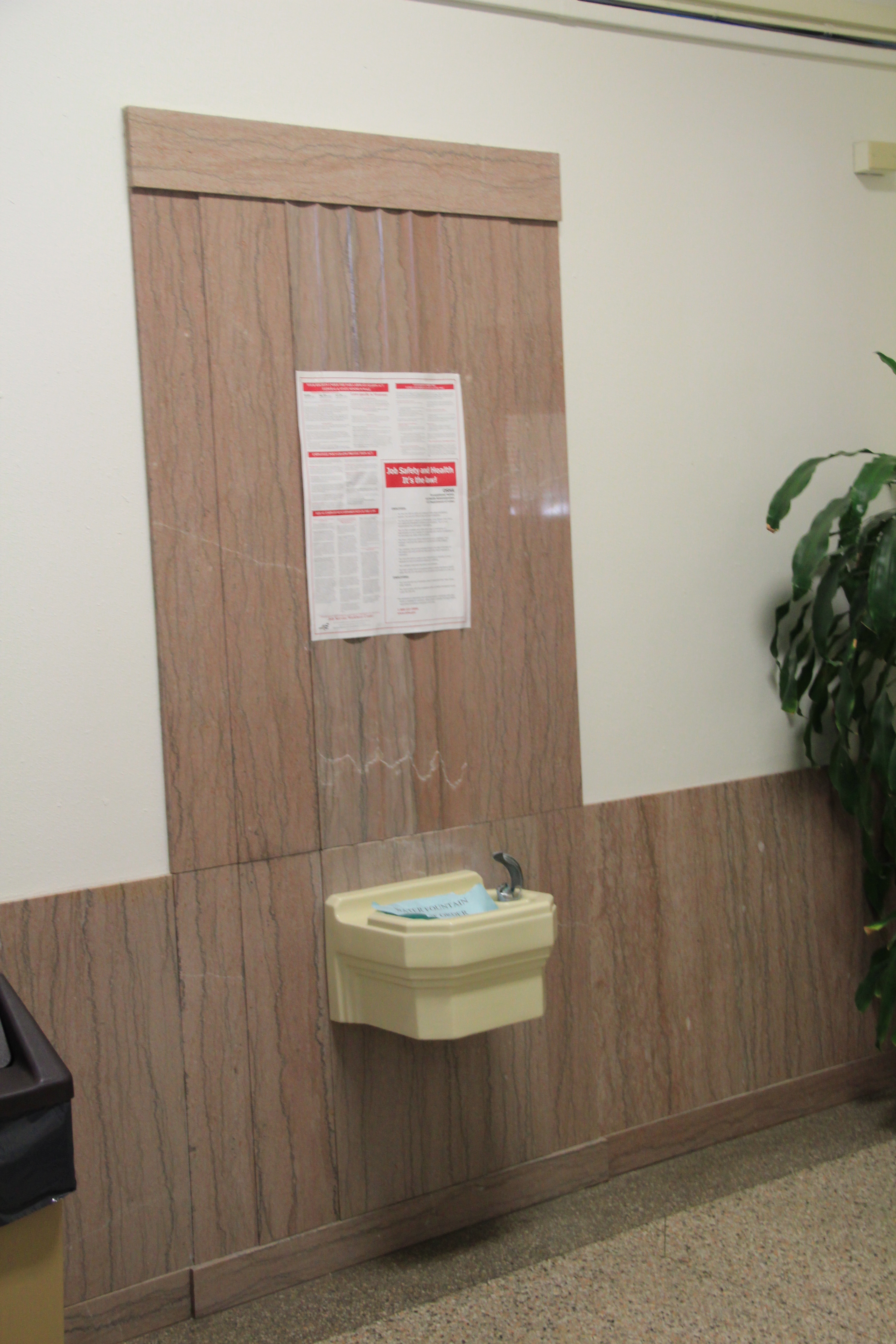
The courthouse in Conrad is one of McIver’s most intact architectural achievements.  The blending of Art Deco styling within a general classical composition characterized PWA Modern style, and the Pondera County Courthouse is excellent, intact representation of this 1930s architectural movement.  Key architectural details include the use of streamlined metal stair-rails throughout the building; the sleek stone wainscoting in the public areas, even the Art Deco-influenced water fountains.

Image


Image


The courtroom is a major achievement, with its Art Deco-styled bench, jury box, and the movie theater-like seats for the public.  Many New Deal courthouses survive but often the interiors have been renovated to either remove or obscure the original craftsmanship of the 1930s.  Not so with Pondera County Courthouse; it is an exceptional public property in northern Montana.

Image.

Image


Thomas Molesworth and the Western Room at the Glasgow library

Thomas Molesworth (1890-1977)  is one of the most important Rocky Mountains furniture designers of the mid-twentieth century with his work most fully catalogued and discussed in the exhibit (and exhibit book), “Interior West,” which opened at the Buffalo Bill Historical Center in Cody, Wyoming, in 1989.  The exhibit, especially once it showed at the Autry Museum in Los Angeles in the following year, brought greater acclaim to Molesworth’s distinctive designs.

Early on, Molesworth had taken courses at the Art Institute of Chicago; his western work reflected the Chicago preoccupation with an Arts and Crafts sensibility by its incorporation of regional materials and themes.  But Molesworth also thought boldly and bright colors, especially a predominance of red fabric, make his designs striking even today.

Molesworth’s most significant period came in his years in Cody, Wyoming, after 1931 when he operated the Shoshone Furniture Company in that town.  His work appeared in fine homes and hotels in Wyoming (primarily) but also in Oregon, Nevada, and Montana.  Molesworth had operated the Rowe Furniture Company in Billings in the years between his discharge from the Marine Corps after World War I and before he moved his family to Cody.

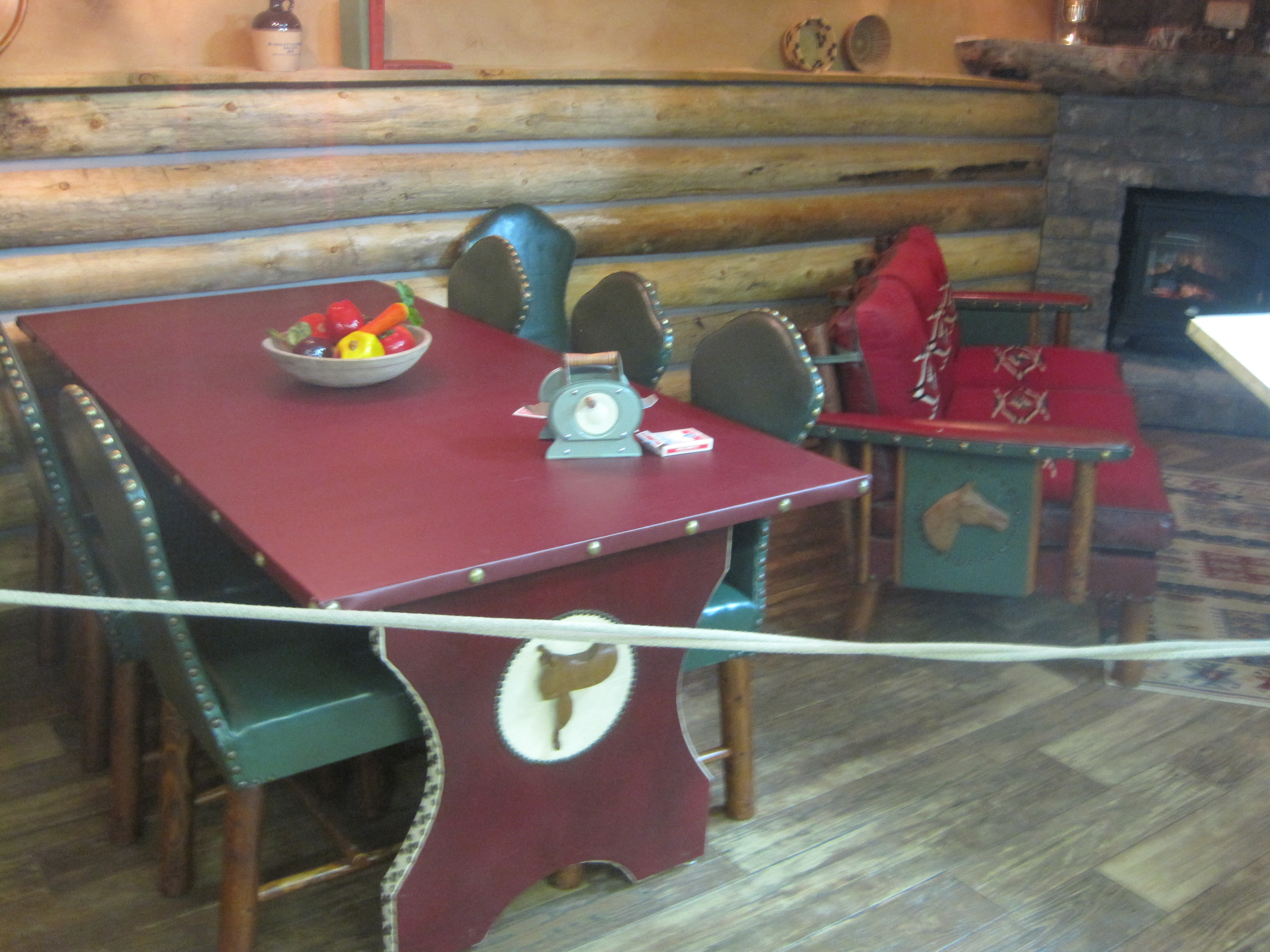
The Wyoming State Museum in Cheyenne has the best collection of Molesworth’s “western rustic furniture,” with many significant pieces from the former Ranch A of the wealthy eastern publisher Moses Annenberg.  But at the Valley County Museum in Glasgow, Montana (far from his earlier roots in Billings) is an interesting set of Molesworth’s designs, c. 1947, which once stood in the Western Room of the Glasgow public library.  Georgia Dignan commissioned the furniture in honor of her late husband, Lt. George Dignan, who had died in 1945 during World War II.  

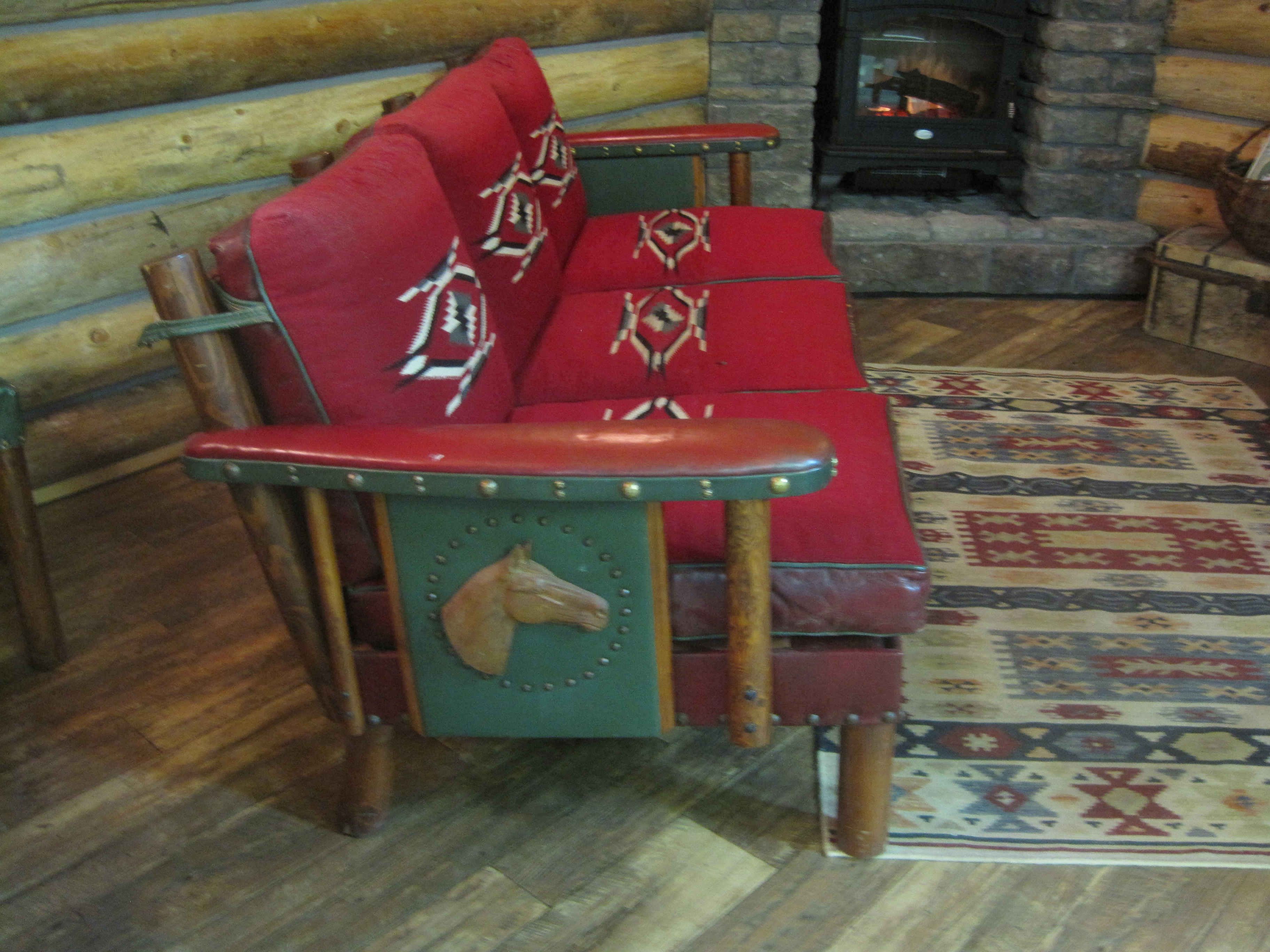
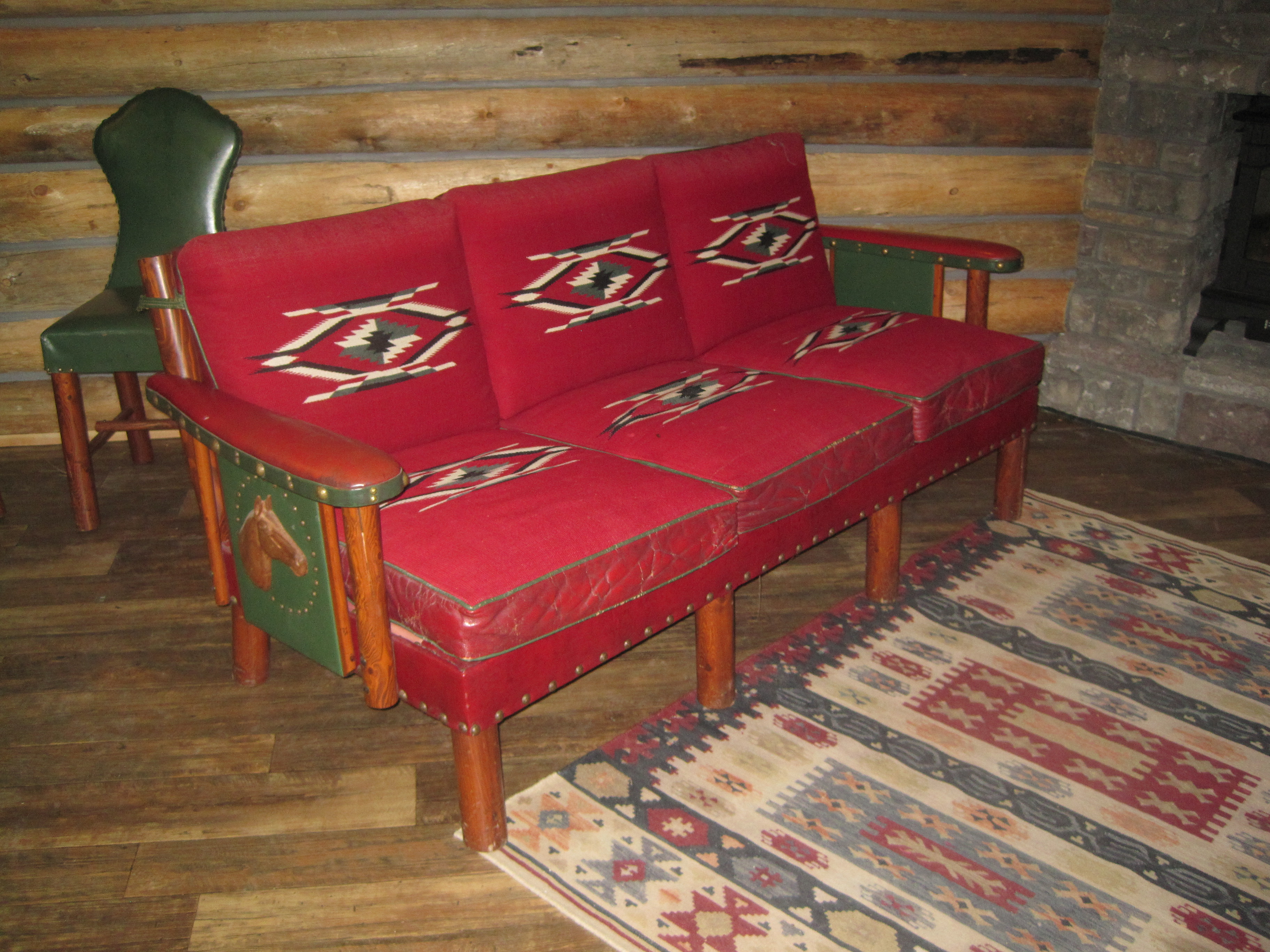
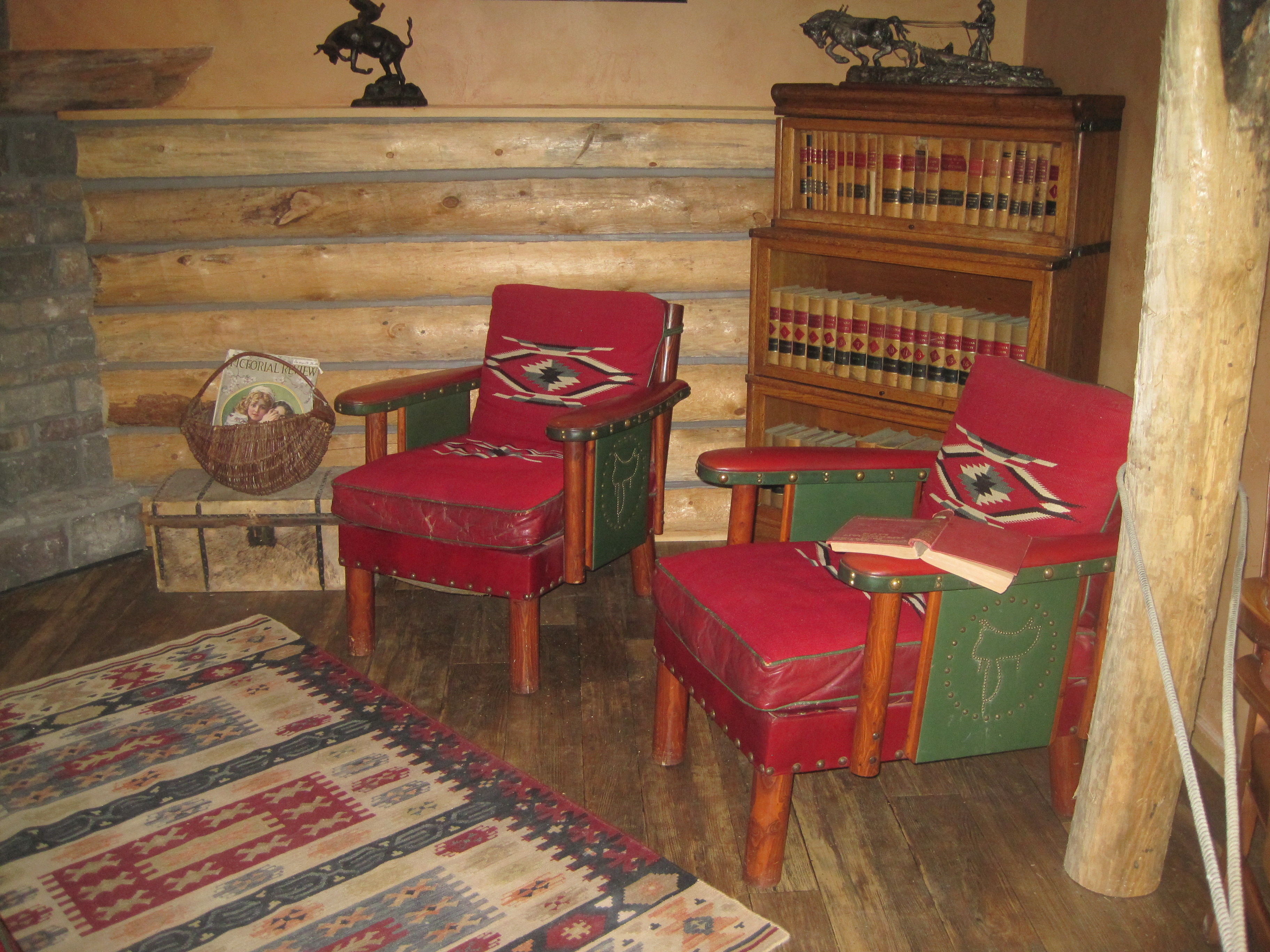
Here are selected images of the Molesworth pieces in Glasgow Montana

Image


Image


Image


Image


This small but significant collection underscores the surprises you can encounter in the small county museums of Eastern Montana.  They are in every county seat, and yes these museums are often community heritage attics, with anything and everything, dependent on volunteers and good will to keep their doors open, and offer little in interpretation except to say “we are here and we have survived, and mattered.”  All true.  But sometimes the collections are valuable, and compelling.  This Molesworth furniture could have as easily ended up scrapped or in private hands once the local library board decided a new building was necessary.  But here it is, at the Valley County Museum–a valuable relic of mid-20th century decorative arts, Wyoming style, in a small northern plains town.

Soo Line Towns in Sheridan and Daniels counties

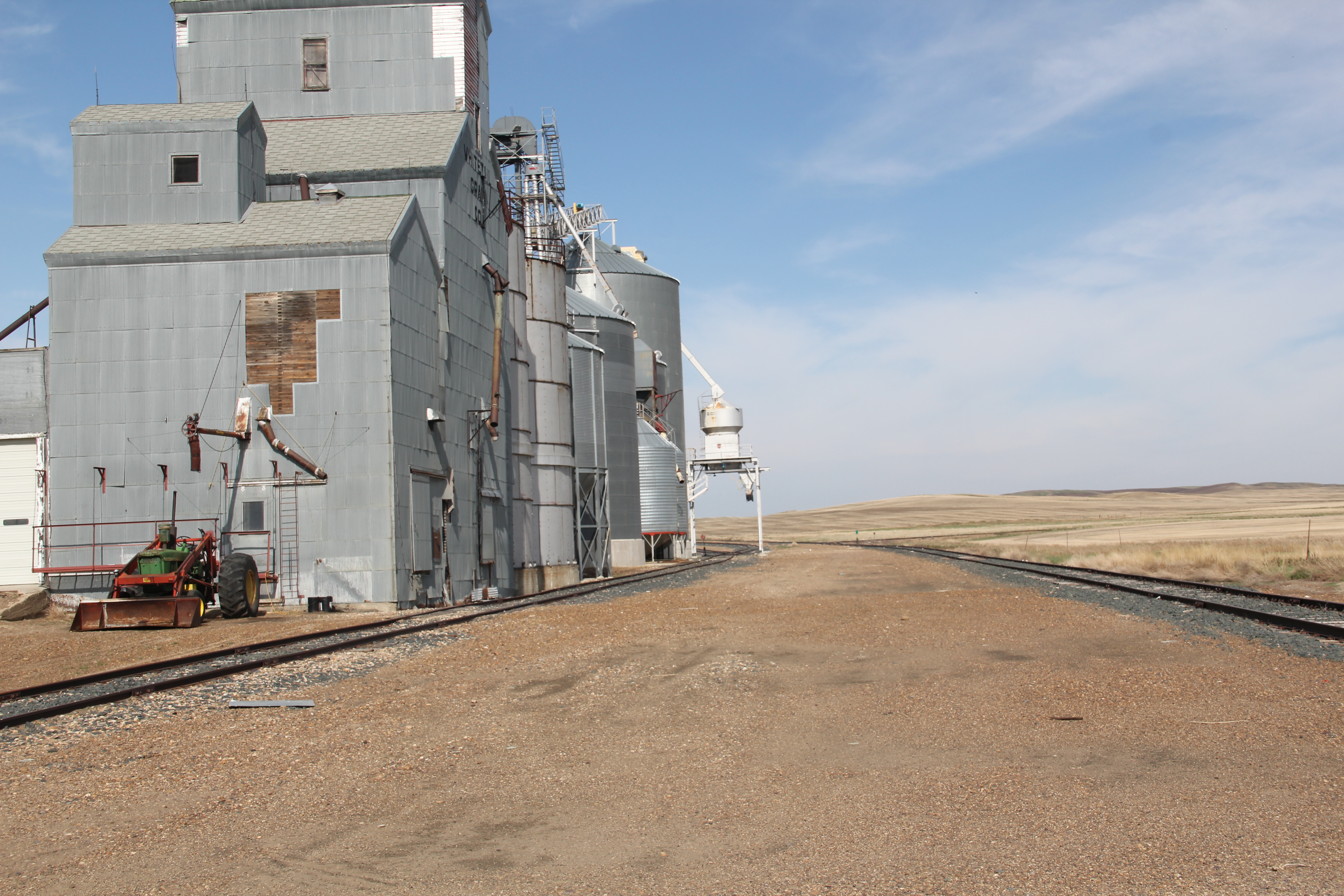
Twenty-six years ago, I wrote a brief essay titled, “The Soo Line Corridor of Northeastern Montana,” for Montana: The Magazine of Western History. I wanted to share images of resources and places that few Montanans knew about, much less ever visited. But it was an interesting corridor–an extension of the Canadian-based Soo Line into this corner of the state in the early 1910s. The railroad left behind small agricultural communities, punctuated by the company’s distinctive standardized combination-plan depots and grain elevators lining the tracks. What I found in the mid-1980s were compelling buildings that spoke of community pride, and boosterism. Those who created these spaces in the years before World War I thought they were establishing remote outposts with promise. But then came the crushing agricultural depression and resulting homesteading bust of the 1920s, compounded by the Great Depression of the 1930s. The communities hung on, barely, until the 1970s when towns like Dooley and Comertown became ghost towns. Whitetail and Outlook remained vital in the mid-1980s. But as I traveled into the region last month, I wondered what was left.

Dooley and Comertown are almost to the point that the next generation may mean they are little but archaeological sites. Good National Register work took place in these towns in the early 1990s–20 years ago–so they have been recorded, which is good, considering the conditions today.

Image


The rock with the metal plaque serving as a tombstone for Comertown is appropriate.

Image


Image


The story is even bleaker in the next town down the line, at Dooley. There the National Register-listed community church is in dire need of a new roof and preservation repair or it probably will not survive another 20 years.

Image


In 2005, the community had tried to permanently mark the landscape with their story by means of a huge boulder on which was etched the name and included depictions of landmarks now gone. But in less than ten years, the harsh environment of the northern plains had almost swept those images off of the boulder.

Image


Outlook, I hoped, would be a different story. But it has lost its National Register-listed Soo Line depot–it had its original pain scheme, outbuildings, and was in good condition when I was last there in 1988. Now only the corridor remains.

Image


The town’s cemetery tells the story of how many were once there, and a post office, a bar, and other scattered businesses remained. Not a ghost town, but like many northern plains towns, the decline from past prominence is startling.Image.

What about Whitetail–it is the first town after crossing the Canadian border on Montana Road 511 on the way to Flaxville in Daniels County.

Image


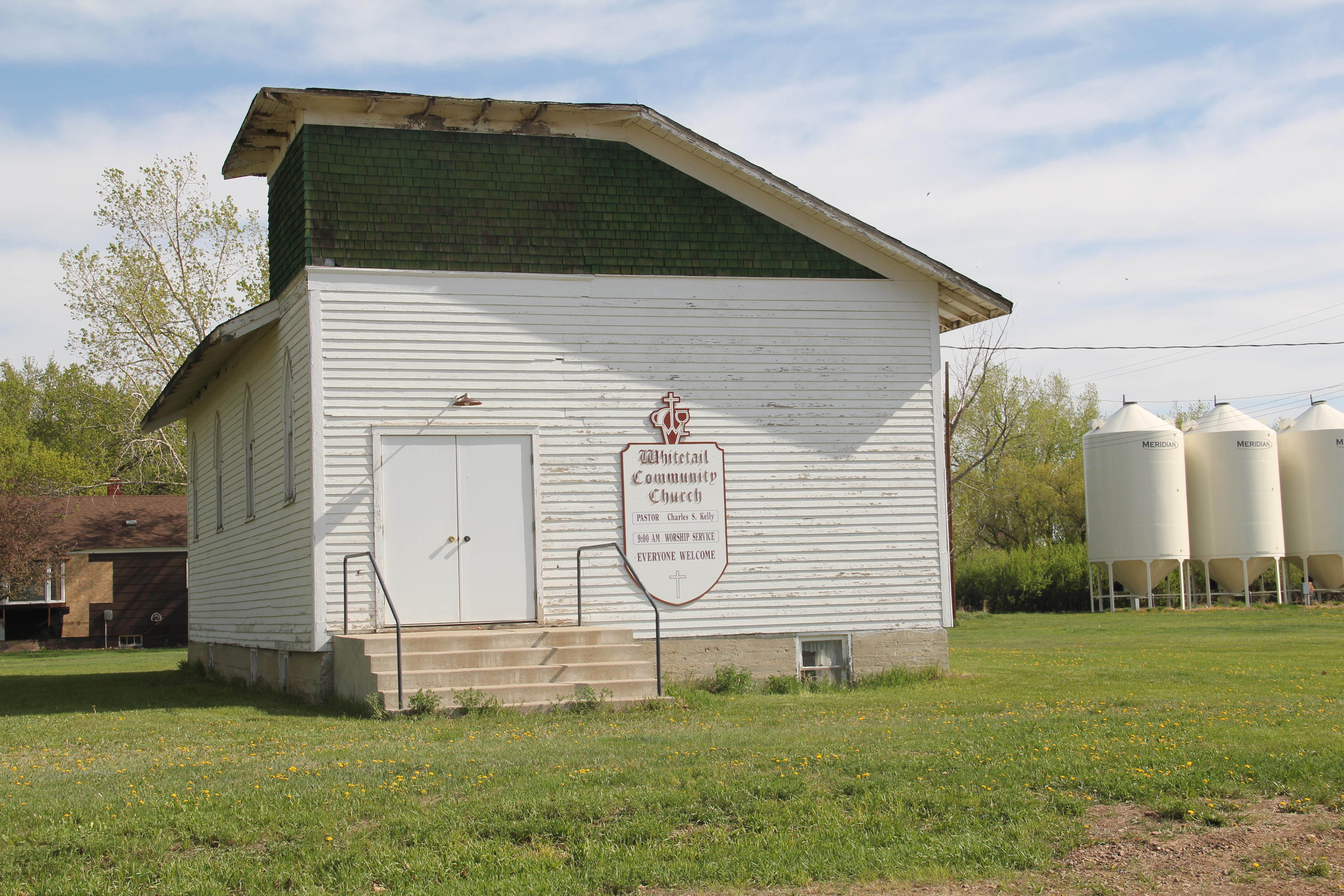
But the federal and Canadian decision to close the border crossing earlier this year landed a blow against what remained in the town. The c. 1913 community school, a true plains landmark when I first saw it in 1984, may not last another generation.

Image


There is a community church and a post office, but one wonders for how much longer.

Image


As this final view of the corridor in Whitetail shows, outside of the grain elevators and tracks, there may be little to remind anyone of this time and story in Montana history.

Image

Fort Peck Dam Spillway

Image

Fort Peck Dam Spillway

Two weeks of very concentrated fieldwork, touching most of Eastern Montana. Over 4000 miles of territory covered. Many, many places investigated, many questions raised and some questions answered. I am two days removed from the Hi-Line sojourn and over the next weeks I will explored in greater depth the many significant places and stories that Montanans have shared with me. This first image–of the iconic concrete Fort Peck spillway (mid 1930s), located in McCone County–is a teaser. But it speaks of the unexpected monumentality of the landscape, the starkness of the distances, and a theme to which I will return to again, and probably again: Montana reflects a marvelous natural beauty but it also reflects a decades-old attempt by men and women to conquer those resources, distances, and space by means of faith in technology. The spillway is just an overwhelming example–just as important are the irrigation ditches that crisscross the region; the two-lane roads that bisect it; and the bands of steel of the region’s railroad networks. Our search to master the northern plains continues, and the land, it is obvious to me, is up to the challenge.

Sand Springs School, Garfield County

Image

20130602-054917.jpg

One room schools are a huge source of interest among preservationists in the northern plains. Most are gone; some were preserved in building zoos (almost every Montana county museum will have a one-room school moved onto its grounds). Here in Garfield County, one if the state’s most sparsely populated places, is one that still operates. Quite a testament to education in a demanding country.

Erasing the Great Northern Image across the Hi-Line

Image

Erasing the Great Northern Image across the Hi-Line

One of the most surprising–for me, even shocking–patterns in the 21st century Hi-Line landscape is how many railroad depots have disappeared from the small towns. Certainly major towns that provide access to the Amtrak passenger service (Havre, Malta, Glasgow, Shelby) still retain their historic buildings. But most others are gone. Certainly the corridor itself remains and the grain elevators still dominate the scene, reminding everyone of the power of agribusiness today, but the stations that told you here is a Great Northern town are not there. The photo is from Rudyard in Hill County where residents took the station, moved it blocks away to the edge of the village, and use it now as a centerpiece for a community museum. In Kevin, Toole County, the depot was moved off the tracks (only slightly, it is still within view of the corridor) and made a Senior center. These places are now rare reminders of the Great Northern’s imprint on the landscape through the means of their standardized design, painted white, passenger stations.