Thomas Molesworth and the Western Room at the Glasgow library

Thomas Molesworth (1890-1977)  is one of the most important Rocky Mountains furniture designers of the mid-twentieth century with his work most fully catalogued and discussed in the exhibit (and exhibit book), “Interior West,” which opened at the Buffalo Bill Historical Center in Cody, Wyoming, in 1989.  The exhibit, especially once it showed at the Autry Museum in Los Angeles in the following year, brought greater acclaim to Molesworth’s distinctive designs.

Early on, Molesworth had taken courses at the Art Institute of Chicago; his western work reflected the Chicago preoccupation with an Arts and Crafts sensibility by its incorporation of regional materials and themes.  But Molesworth also thought boldly and bright colors, especially a predominance of red fabric, make his designs striking even today.

Molesworth’s most significant period came in his years in Cody, Wyoming, after 1931 when he operated the Shoshone Furniture Company in that town.  His work appeared in fine homes and hotels in Wyoming (primarily) but also in Oregon, Nevada, and Montana.  Molesworth had operated the Rowe Furniture Company in Billings in the years between his discharge from the Marine Corps after World War I and before he moved his family to Cody.

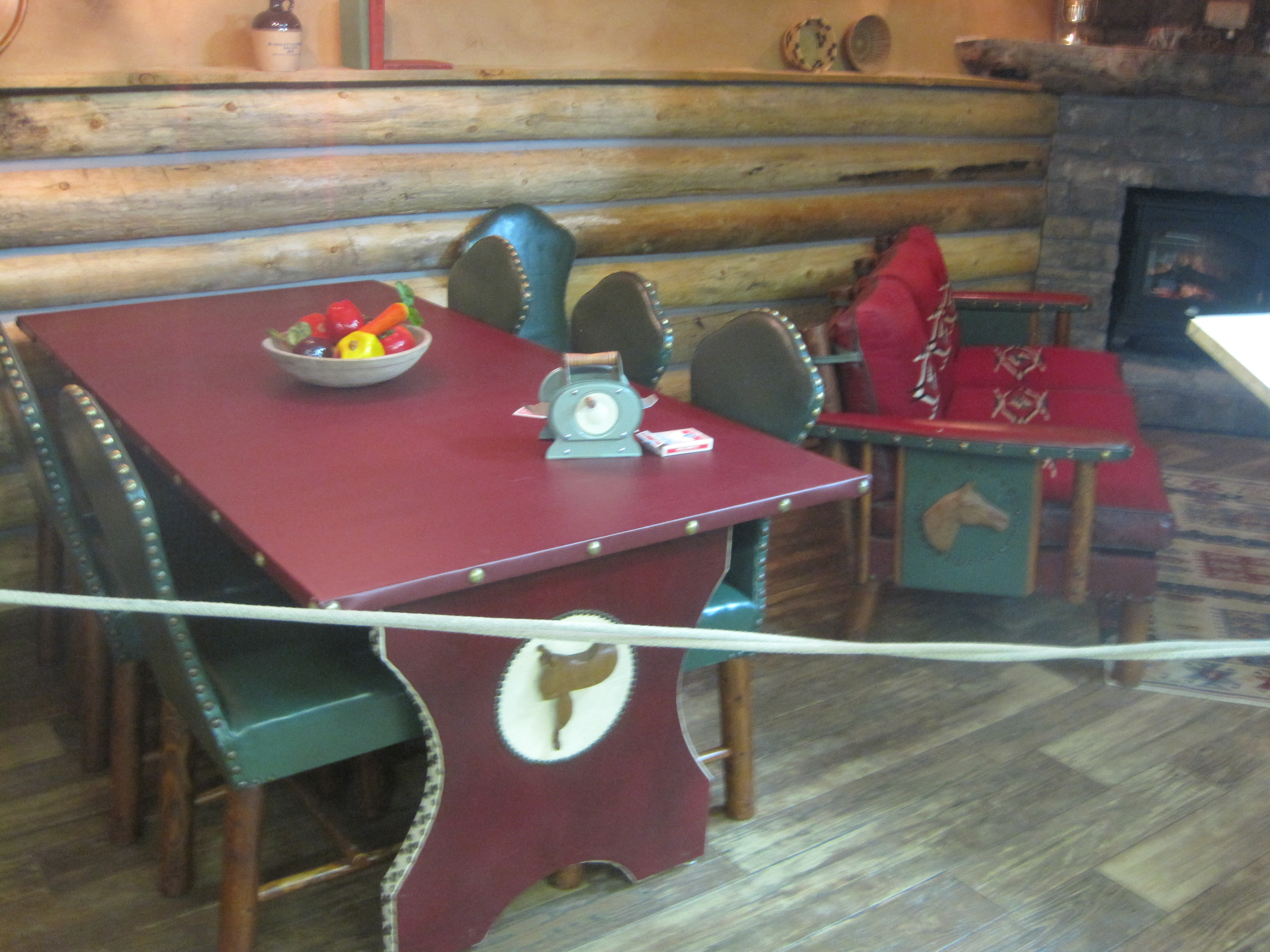
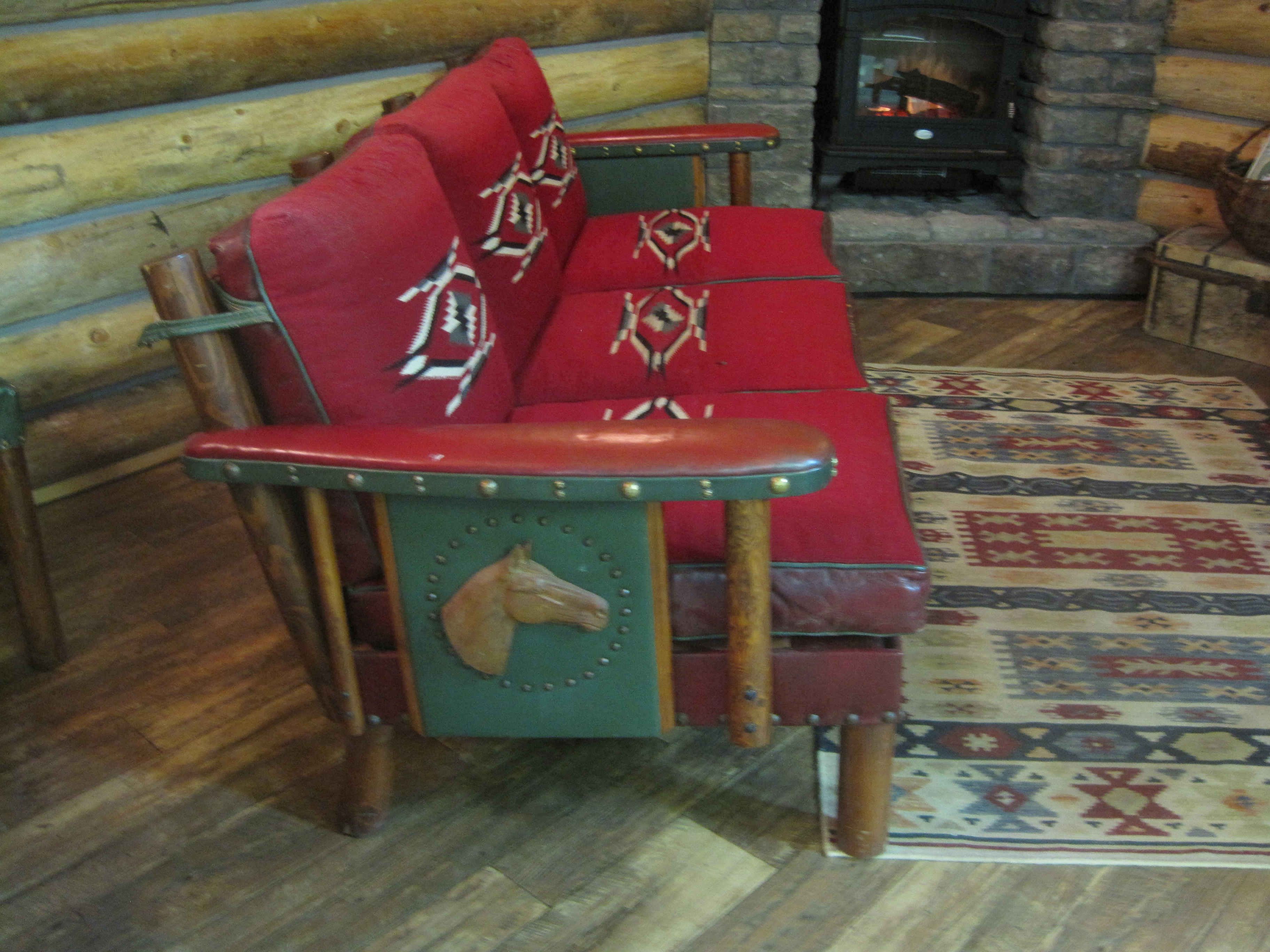
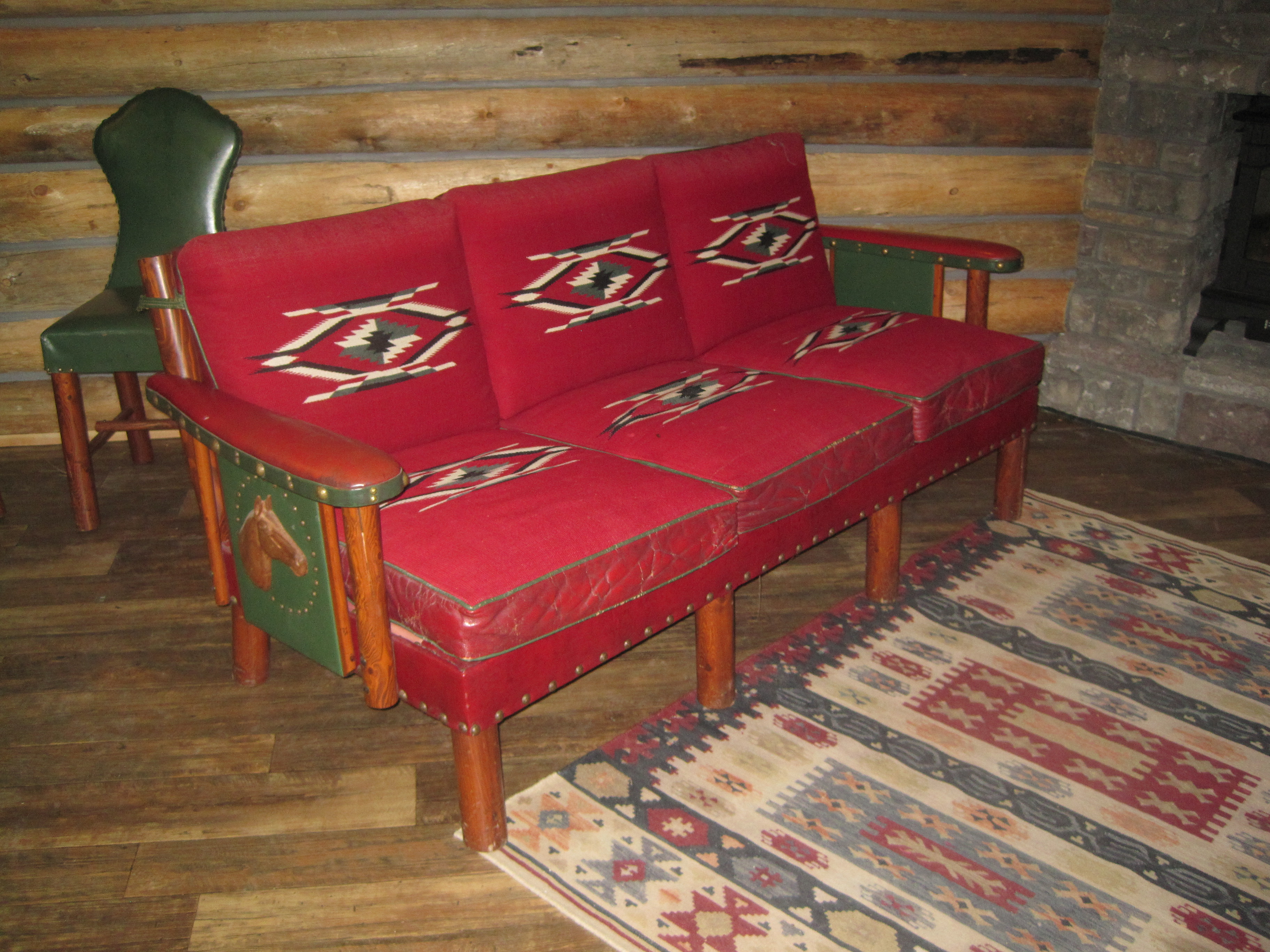
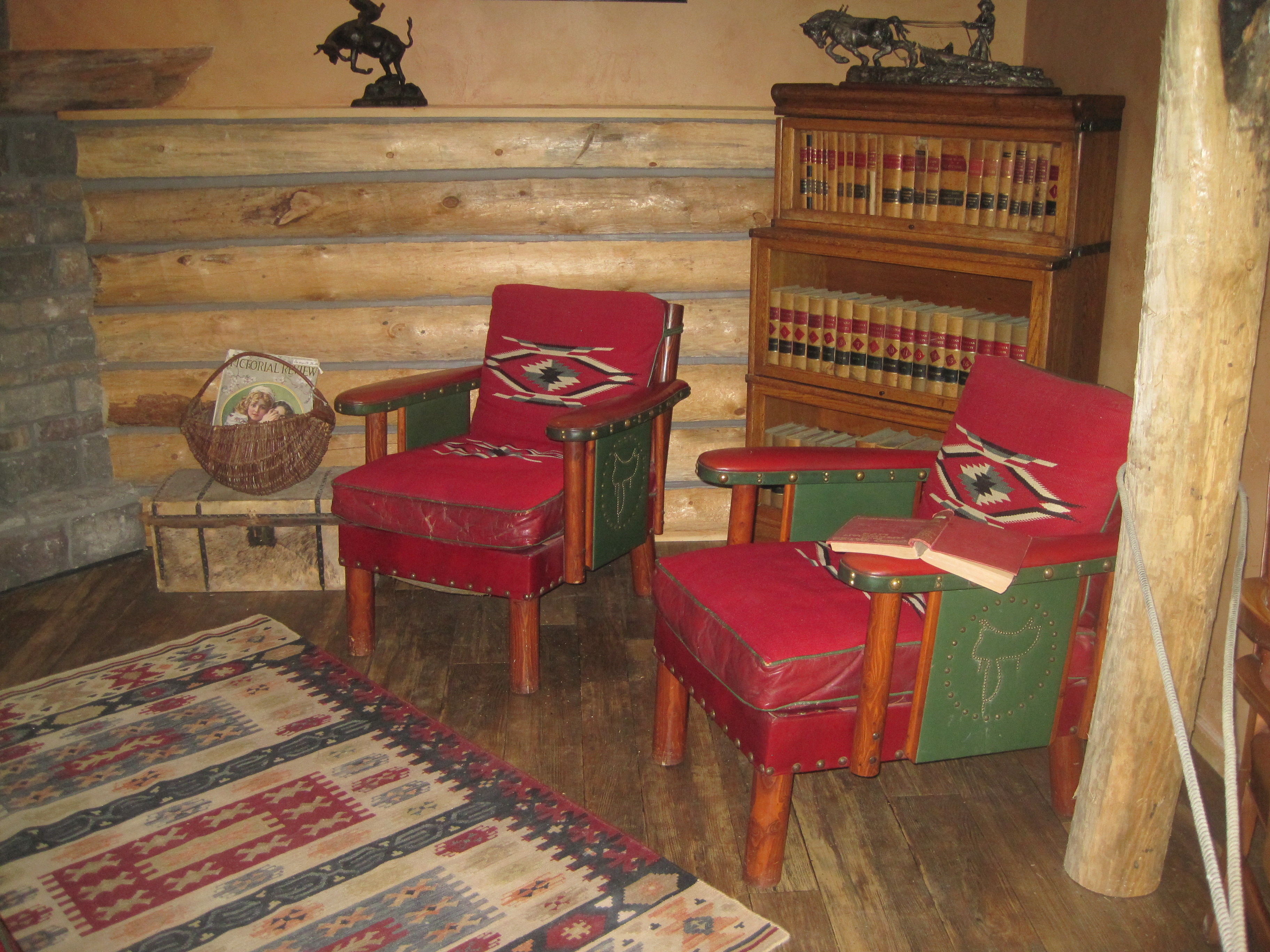
The Wyoming State Museum in Cheyenne has the best collection of Molesworth’s “western rustic furniture,” with many significant pieces from the former Ranch A of the wealthy eastern publisher Moses Annenberg.  But at the Valley County Museum in Glasgow, Montana (far from his earlier roots in Billings) is an interesting set of Molesworth’s designs, c. 1947, which once stood in the Western Room of the Glasgow public library.  Georgia Dignan commissioned the furniture in honor of her late husband, Lt. George Dignan, who had died in 1945 during World War II.  

Here are selected images of the Molesworth pieces in Glasgow Montana

Image


Image


Image


Image


This small but significant collection underscores the surprises you can encounter in the small county museums of Eastern Montana.  They are in every county seat, and yes these museums are often community heritage attics, with anything and everything, dependent on volunteers and good will to keep their doors open, and offer little in interpretation except to say “we are here and we have survived, and mattered.”  All true.  But sometimes the collections are valuable, and compelling.  This Molesworth furniture could have as easily ended up scrapped or in private hands once the local library board decided a new building was necessary.  But here it is, at the Valley County Museum–a valuable relic of mid-20th century decorative arts, Wyoming style, in a small northern plains town.

Soo Line Towns in Sheridan and Daniels counties

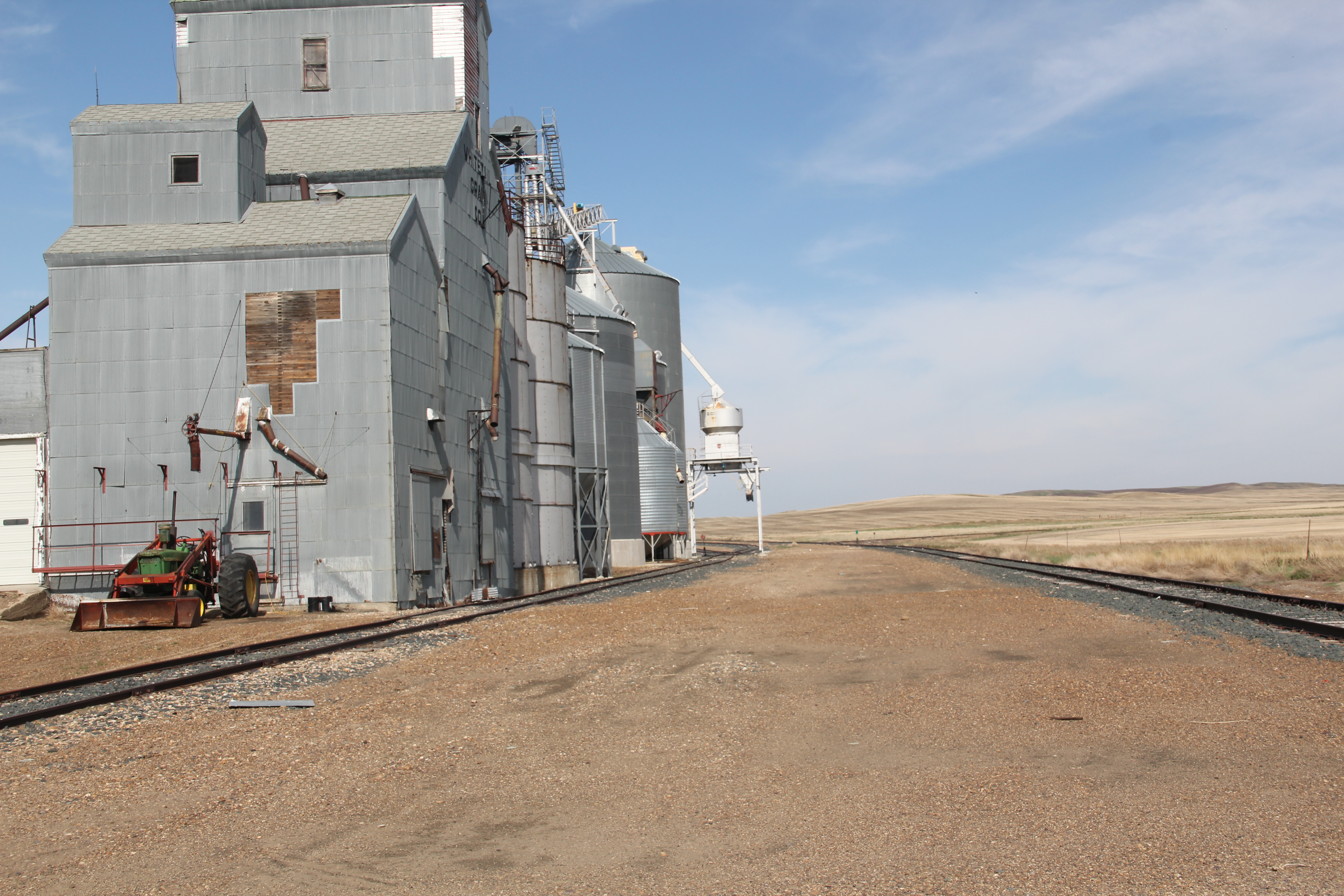
Twenty-six years ago, I wrote a brief essay titled, “The Soo Line Corridor of Northeastern Montana,” for Montana: The Magazine of Western History. I wanted to share images of resources and places that few Montanans knew about, much less ever visited. But it was an interesting corridor–an extension of the Canadian-based Soo Line into this corner of the state in the early 1910s. The railroad left behind small agricultural communities, punctuated by the company’s distinctive standardized combination-plan depots and grain elevators lining the tracks. What I found in the mid-1980s were compelling buildings that spoke of community pride, and boosterism. Those who created these spaces in the years before World War I thought they were establishing remote outposts with promise. But then came the crushing agricultural depression and resulting homesteading bust of the 1920s, compounded by the Great Depression of the 1930s. The communities hung on, barely, until the 1970s when towns like Dooley and Comertown became ghost towns. Whitetail and Outlook remained vital in the mid-1980s. But as I traveled into the region last month, I wondered what was left.

Dooley and Comertown are almost to the point that the next generation may mean they are little but archaeological sites. Good National Register work took place in these towns in the early 1990s–20 years ago–so they have been recorded, which is good, considering the conditions today.

Image


The rock with the metal plaque serving as a tombstone for Comertown is appropriate.

Image


Image


The story is even bleaker in the next town down the line, at Dooley. There the National Register-listed community church is in dire need of a new roof and preservation repair or it probably will not survive another 20 years.

Image


In 2005, the community had tried to permanently mark the landscape with their story by means of a huge boulder on which was etched the name and included depictions of landmarks now gone. But in less than ten years, the harsh environment of the northern plains had almost swept those images off of the boulder.

Image


Outlook, I hoped, would be a different story. But it has lost its National Register-listed Soo Line depot–it had its original pain scheme, outbuildings, and was in good condition when I was last there in 1988. Now only the corridor remains.

Image


The town’s cemetery tells the story of how many were once there, and a post office, a bar, and other scattered businesses remained. Not a ghost town, but like many northern plains towns, the decline from past prominence is startling.Image.

What about Whitetail–it is the first town after crossing the Canadian border on Montana Road 511 on the way to Flaxville in Daniels County.

Image


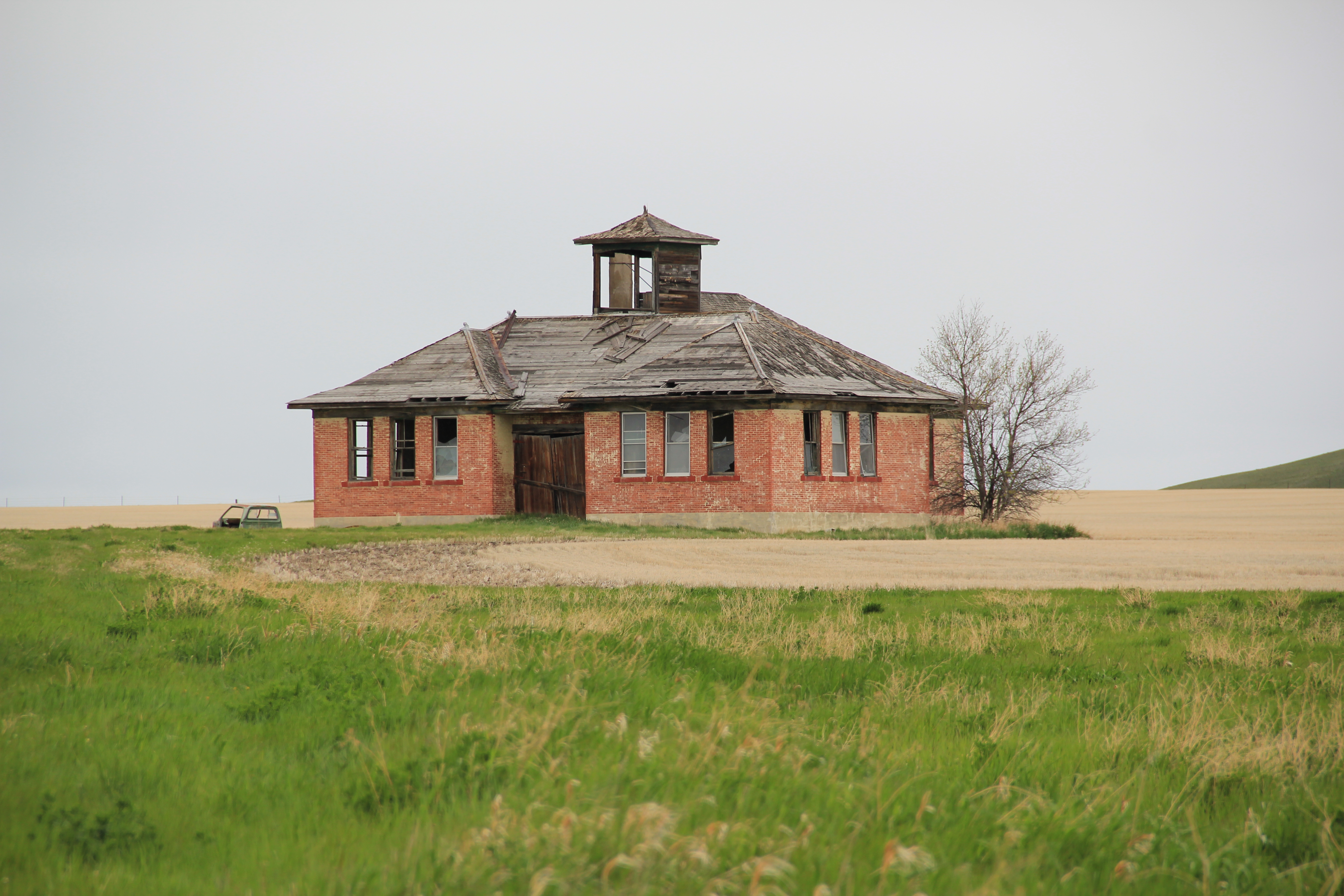
But the federal and Canadian decision to close the border crossing earlier this year landed a blow against what remained in the town. The c. 1913 community school, a true plains landmark when I first saw it in 1984, may not last another generation.

Image


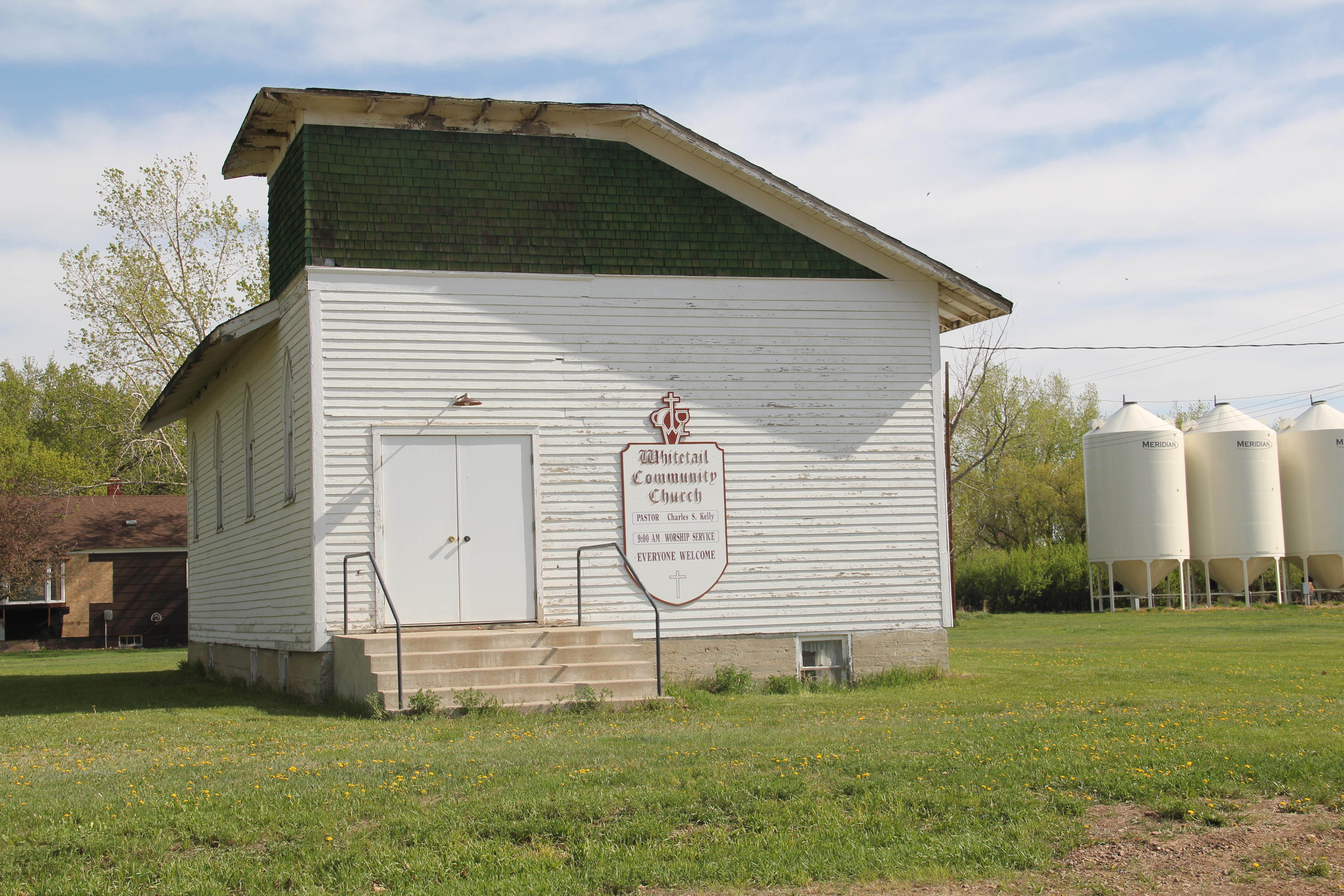
There is a community church and a post office, but one wonders for how much longer.
Image


As this final view of the corridor in Whitetail shows, outside of the grain elevators and tracks, there may be little to remind anyone of this time and story in Montana history.

Image

Fort Peck Dam Spillway

Image

Fort Peck Dam Spillway

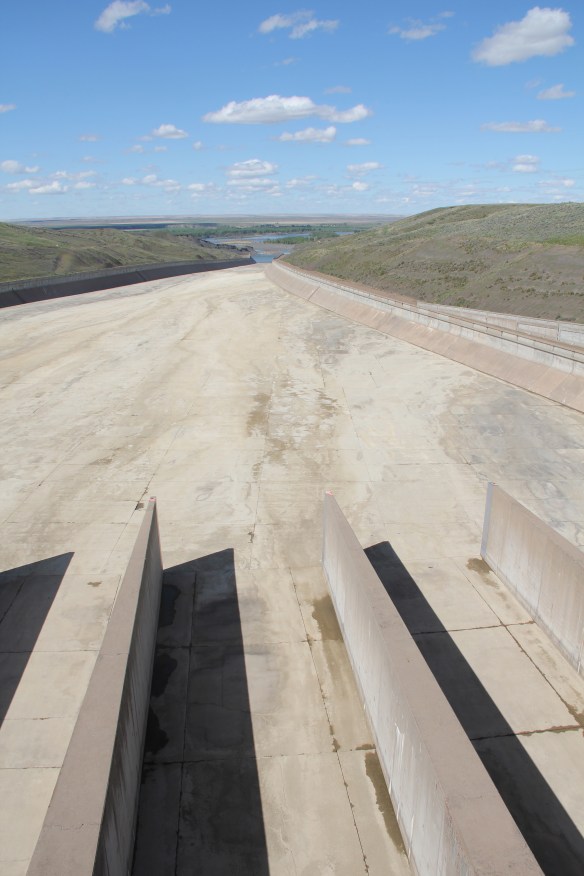
Two weeks of very concentrated fieldwork, touching most of Eastern Montana. Over 4000 miles of territory covered. Many, many places investigated, many questions raised and some questions answered. I am two days removed from the Hi-Line sojourn and over the next weeks I will explored in greater depth the many significant places and stories that Montanans have shared with me. This first image–of the iconic concrete Fort Peck spillway (mid 1930s), located in McCone County–is a teaser. But it speaks of the unexpected monumentality of the landscape, the starkness of the distances, and a theme to which I will return to again, and probably again: Montana reflects a marvelous natural beauty but it also reflects a decades-old attempt by men and women to conquer those resources, distances, and space by means of faith in technology. The spillway is just an overwhelming example–just as important are the irrigation ditches that crisscross the region; the two-lane roads that bisect it; and the bands of steel of the region’s railroad networks. Our search to master the northern plains continues, and the land, it is obvious to me, is up to the challenge.

Sand Springs School, Garfield County

Image

20130602-054917.jpg

One room schools are a huge source of interest among preservationists in the northern plains. Most are gone; some were preserved in building zoos (almost every Montana county museum will have a one-room school moved onto its grounds). Here in Garfield County, one if the state’s most sparsely populated places, is one that still operates. Quite a testament to education in a demanding country.

Erasing the Great Northern Image across the Hi-Line

Image

Erasing the Great Northern Image across the Hi-Line

One of the most surprising–for me, even shocking–patterns in the 21st century Hi-Line landscape is how many railroad depots have disappeared from the small towns. Certainly major towns that provide access to the Amtrak passenger service (Havre, Malta, Glasgow, Shelby) still retain their historic buildings. But most others are gone. Certainly the corridor itself remains and the grain elevators still dominate the scene, reminding everyone of the power of agribusiness today, but the stations that told you here is a Great Northern town are not there. The photo is from Rudyard in Hill County where residents took the station, moved it blocks away to the edge of the village, and use it now as a centerpiece for a community museum. In Kevin, Toole County, the depot was moved off the tracks (only slightly, it is still within view of the corridor) and made a Senior center. These places are now rare reminders of the Great Northern’s imprint on the landscape through the means of their standardized design, painted white, passenger stations.

Phillips County Courthouse

Image

20130525-221217.jpg

Here is another building I mentioned earlier this spring, wondering about what happened in the 25 years since I was last in Malta. The courthouse has not been past over for a new building. It is in good shape but you wish they had not added the vines. If unchecked the vines will soon cover the facade and they will eat away on the brick. The real casualty in Malta is the former Carnegie Library, now abandoned and wilting away. Losing that fine neoclassical building will leave a big hole in the town’s heritage fabric.

Ghost towns on Montana’s Soo Line Corridor

Image

20130524-190859.jpg

I discovered years ago that few Montanans, not to mention Canadians, recognized that the Canada-based Soo Line had extended a spur into northeast Montana in the early 20th century. Some of the towns created in the wake of the railroad remain but most are gone, marked as a spot on the state map but really they are only towns in people’s memories. The state historic preservation office 20 years ago placed Comertown on the National Register. The next town west , Dooley (shown here) is another worthy candidate. In 2005 residents past (and present?) placed a large boulder to mark the town, etching buildings and dates for posterity. Or so they thought. The etchings are already going faint in the harsh wind blown plains. The church remains–but for how much longer?

South gateway to Yellowstone valley

Sheridan, WY doesn’t call itself the south gateway but I consider it to be that. Sheridan is a good 2 days of driving from Murfreesboro. And after a respite at the Mint Bar (one of the best places in the west) I enter Montana in the morning light and get to work, stopping briefly in Hardin (the first county seat of the fieldwork–let’s see how many I make). Then a mid morning meeting with the O’Donnell family before I strike east.

20130520-190226.jpg

20130520-190236.jpg