Riverside Cemetery, Fort Benton

Riverside Cemetery dates to 1883, a time of considerable change and expansion in Fort Benton’s history. Just 2 years earlier, summer 1881, the U.S. Army left the fort, and it began a rapid decline. In the following winter of 1881-1882 the town began a building boom that led to the construction of the Grand Union Hotel by the end of 1882.

Grand Union Hotel

Freight traffic on the Missouri River also boomed and the River Press, the city’s leading newspaper for the next 100 plus years, published its first edition. 1882 also witnessed the city’s first electric lights and the construction of many new residences. And by the year resident had formed the Riverside Cemetery Association.

Gate to Riverside Cemetery

The loss of the Chouteau County Courthouse to fire in early 1883 didn’t seem to slow momentum at all. That spring voters incorporated Fort Benton—what had been a trading and military town was now a formally established town. Soon thereafter Riverside Cemetery was established on the Missouri River bluffs northeast of town.
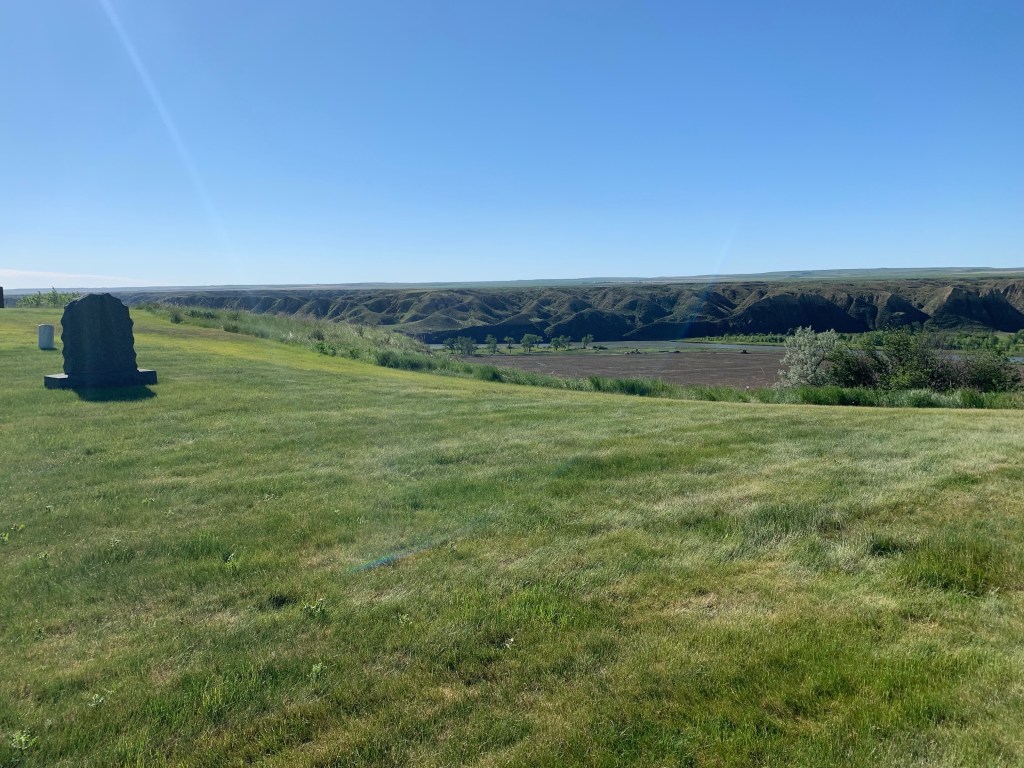
The new town cemetery had approximately 40 fenced acres and was ready for use by Decoration Day (now known as Memorial Day) in 1883. The cemetery also had reinterred graves from earlier in-town cemeteries at approximately the location of First Christian Church and behind Haas and Associates and Farmers Union Oil Company.
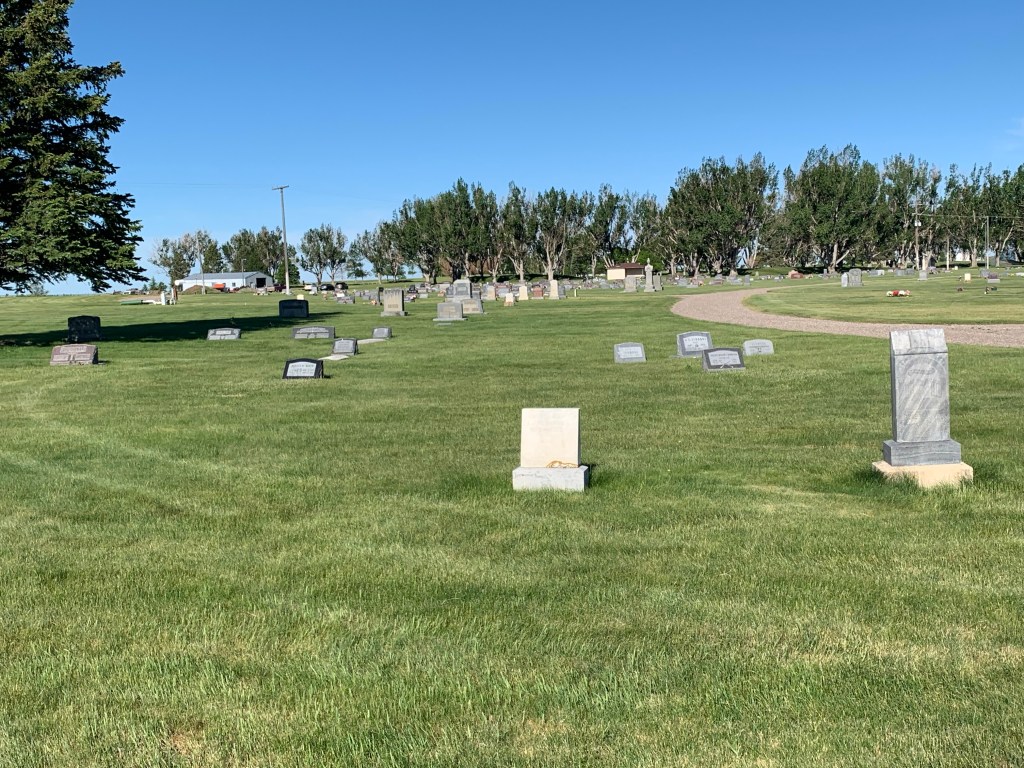
Today the gap between the initial cemetery and burials in the 20th century is noticeable. The early burials are on the east side while the modern section is on the east side clustered near a row of trees m. Clearly early tombstones have been lost—the number of grave depressions indicate that there are many additional burials that lack a grave marker.

East side of cemetery
Central section with the west section in the background among the trees. In general the west section dates to mid 20th century and later

The remaining grave markers from the late 19th century tell powerful stories. The Charles Fish (d. 1890) obelisk with urn marker below honored a Canadian native who served as a drummer boy with the 38th Wisconsin Infantry in the Civil War; he was only 15 years old when he joined.

The Patterson family section is one of the cemetery’s oldest, with the earliest tombstone dating to 1886.

Tombstones with cross themes mark the graves of Jane Jackson (d. 1885) and Edward Kelly (d. 1890).

This image of the Jackson tombstone is another visual example of the number of empty spaces in the east side of the cemetery. Existing depressions indicate that many burials without grave markers are in the section.

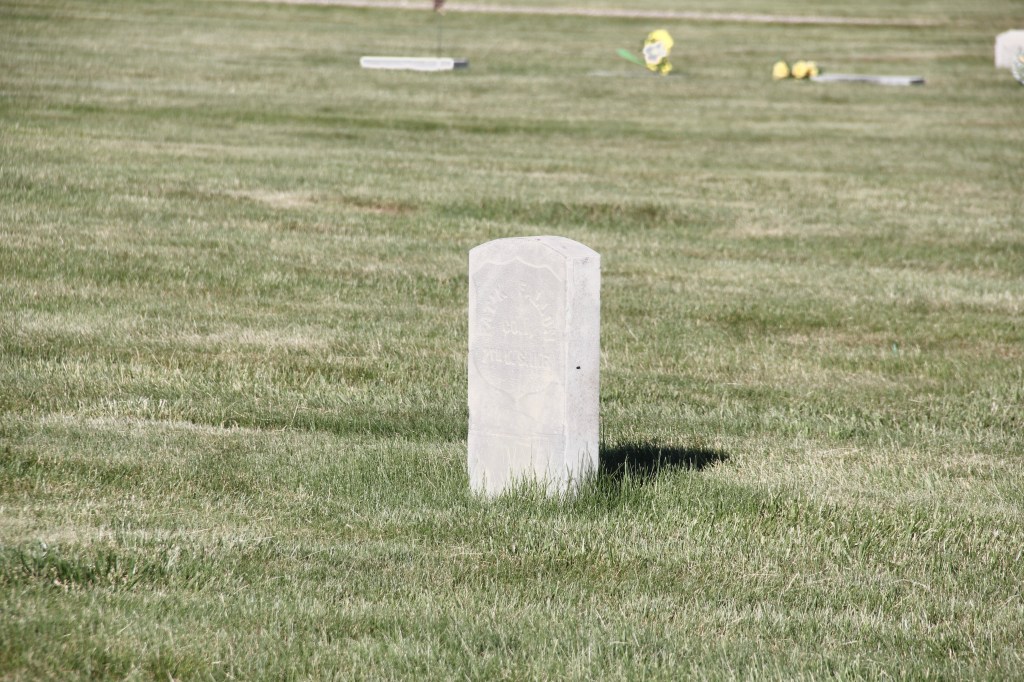
In 1891 the cemetery received its first U.S. military veterans markers. The one below was for Patrik (the spelling used on the tombstone) Fallon, a Civil War veteran. By now Fort Benton had grown to the point that its Decoration Day ceremony involved hundreds, led by the cemetery association, camps of the Grand Army of the Republic and soldiers from Fort Assiniboine.
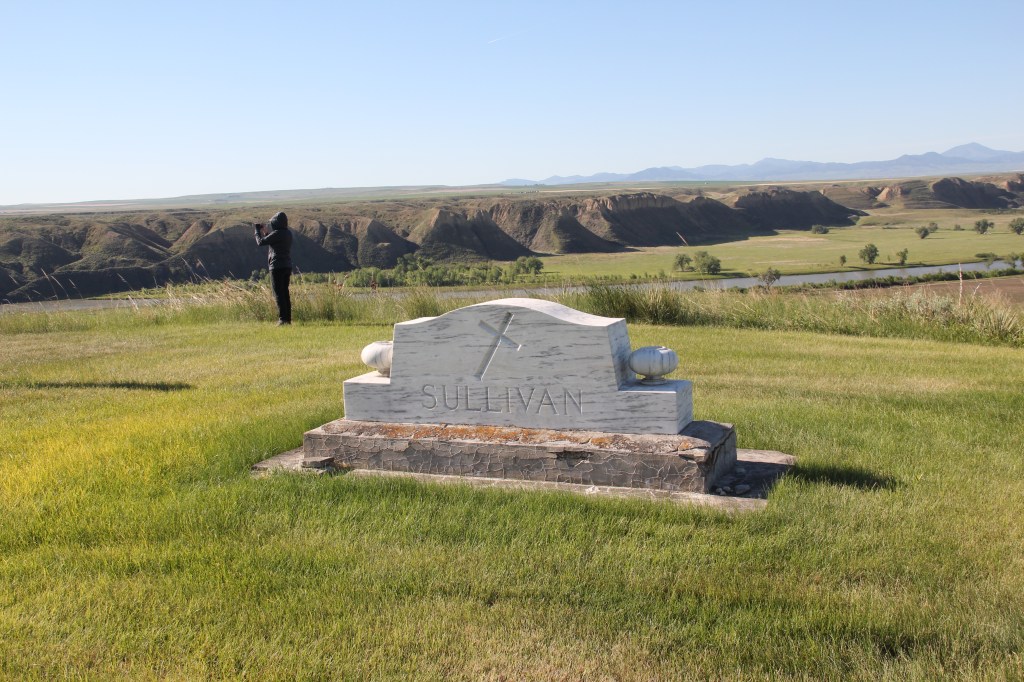
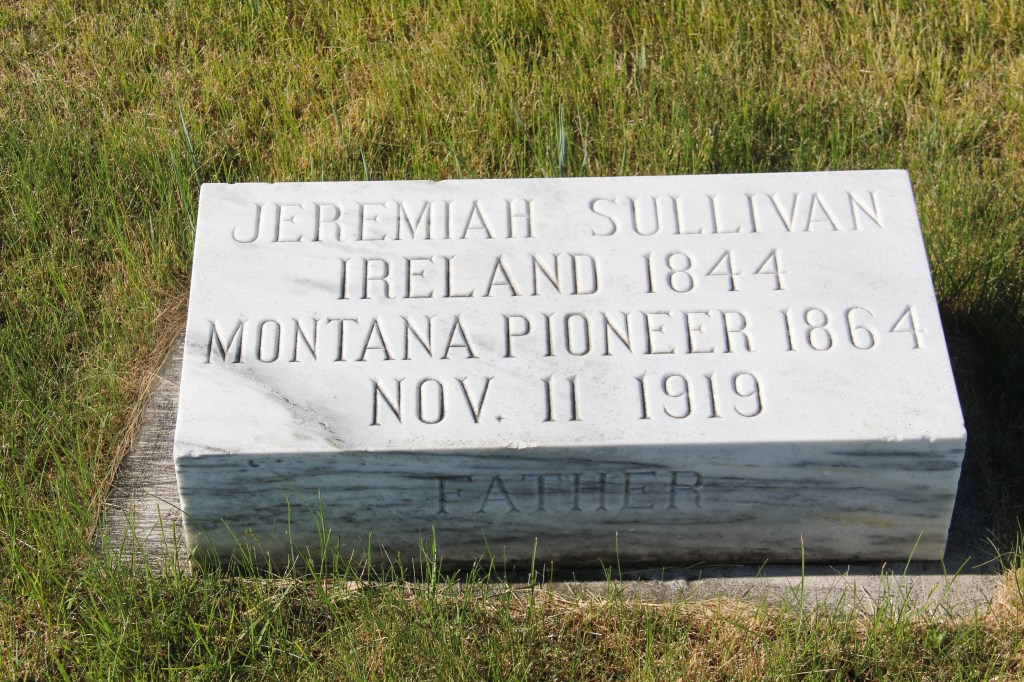
While the graves of many pioneers are unmarked, the Sullivan family located its graves near the edge of the bluff, truly an awe-inspiring setting overlooking the town, river, and railroad tracks.
Impressive tombstone art is scattered throughout the cemetery. The unique yet beautiful pressed metal crosses for brothers Julius (d. 1923) and Henry (d. 1924) Bogner belong, stylistically to the Victorian era, but were commissioned and installed in the Jazz Age.
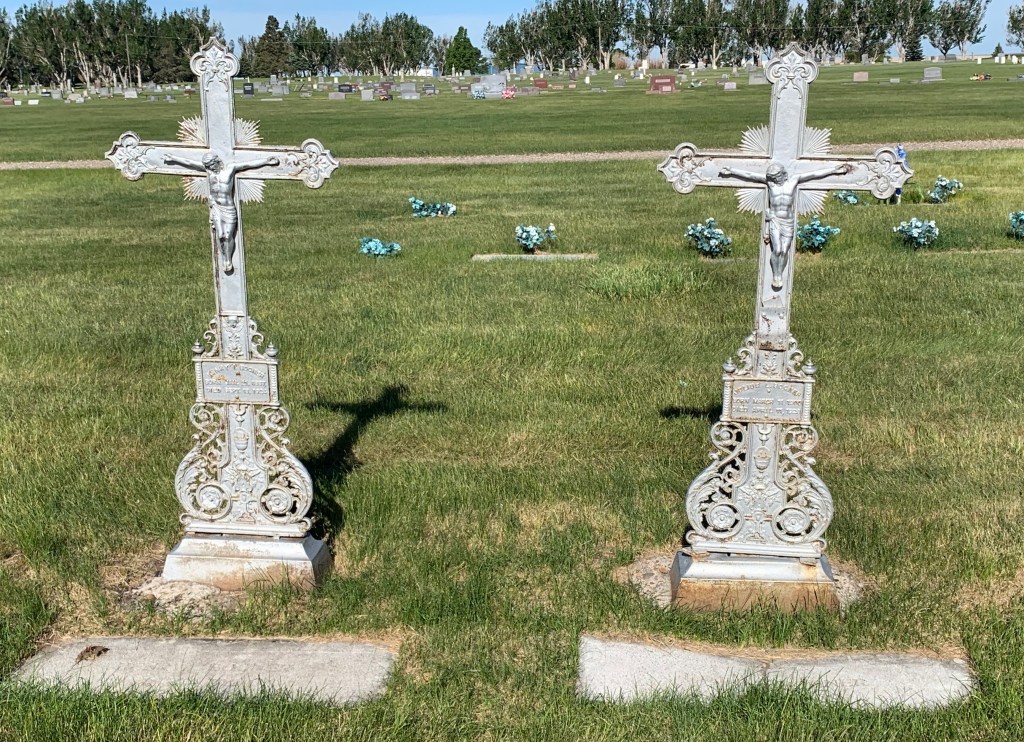
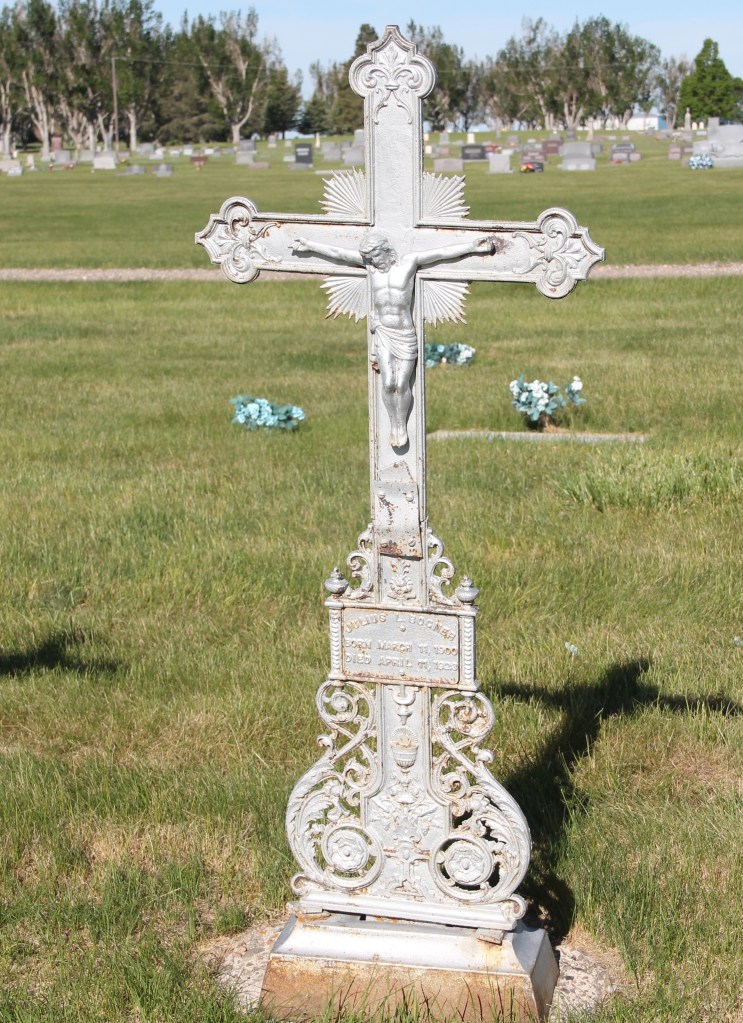
Julius and Henry Bogner
The Winfred and Margaret Stocking marker (c. 1910-12) is unusual in that a sizable base supports a triangular rock Boulder. Margaret Stocking upon her death in 1812 was identified as the first white woman to settle in Fort Benton in 1865.
The marker for Bessie Bright (d. 1917) has an open Bible motif, typically found in tombstones of the 19th century

Riverside Cemetery has an impressive veterans section, known as the Military Plot. Veterans from the Spanish American War of the 1890s to the conflicts of the 21st century are buried here.

The majestic flag pole was added in 2916.

Mount Calvary Cemetery, Lewistown

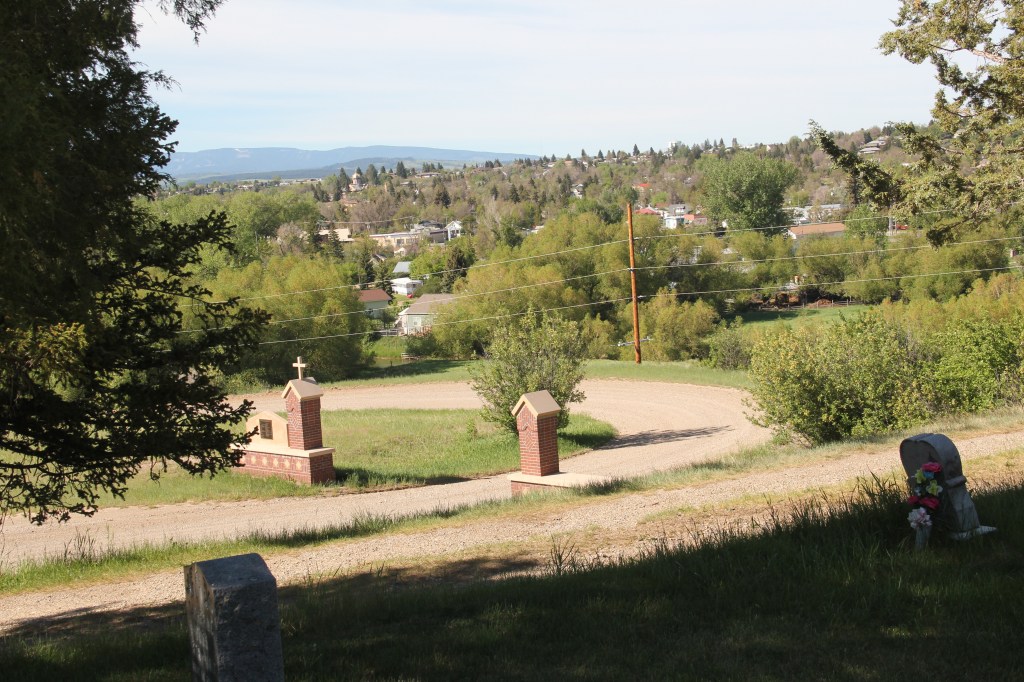
High on a hill northeast of downtown Lewistown is the historic Catholic cemetery, Mount Calvary, established in 1895. The cemetery is a bit challenging to find but well worth the efforts.

It is a significant property marking early settlement patterns in Lewistown, which was incorporated in 1899. But its greatest value is its wealth of funerary art.

Griffith cross tombstone c. 1915
Brooks mausoleum 1912
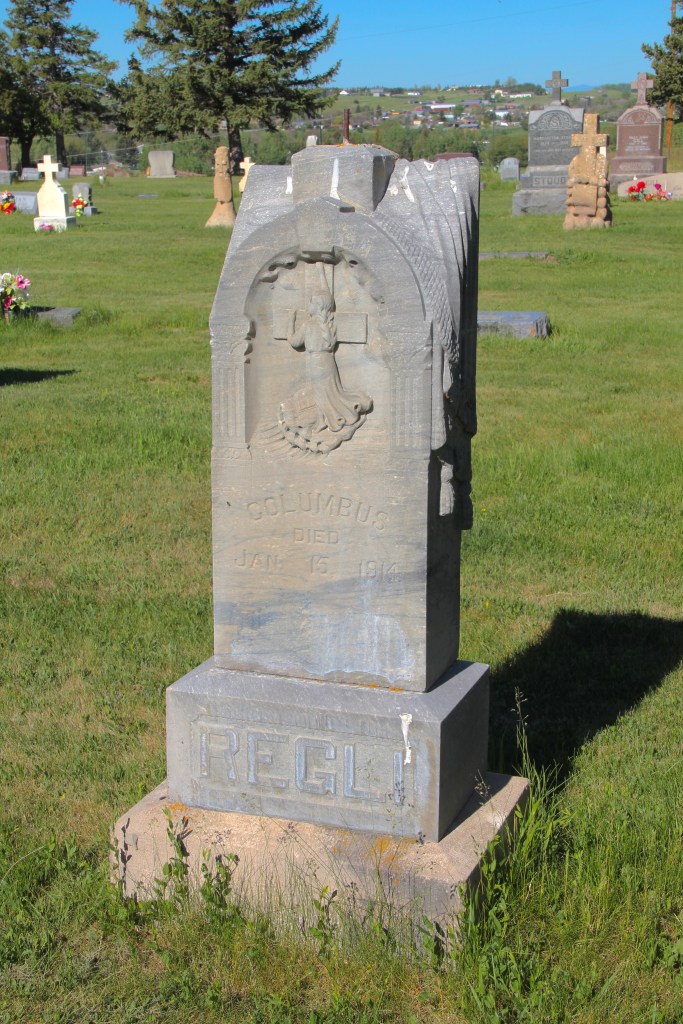
Columbus Regli, 1914 with a lovey insert carving of mourning
Burke gravehouse, c. 1921
The Hruska marker is near the Burke gravehouse
Biglen marker, statue has been damaged
Nearby the Biglen marker are burials of sisters who served the community at St Leo the Great Catholic Church and/or St. Joseph Hospital. South of those graves are an array of artistically expressive memorials.
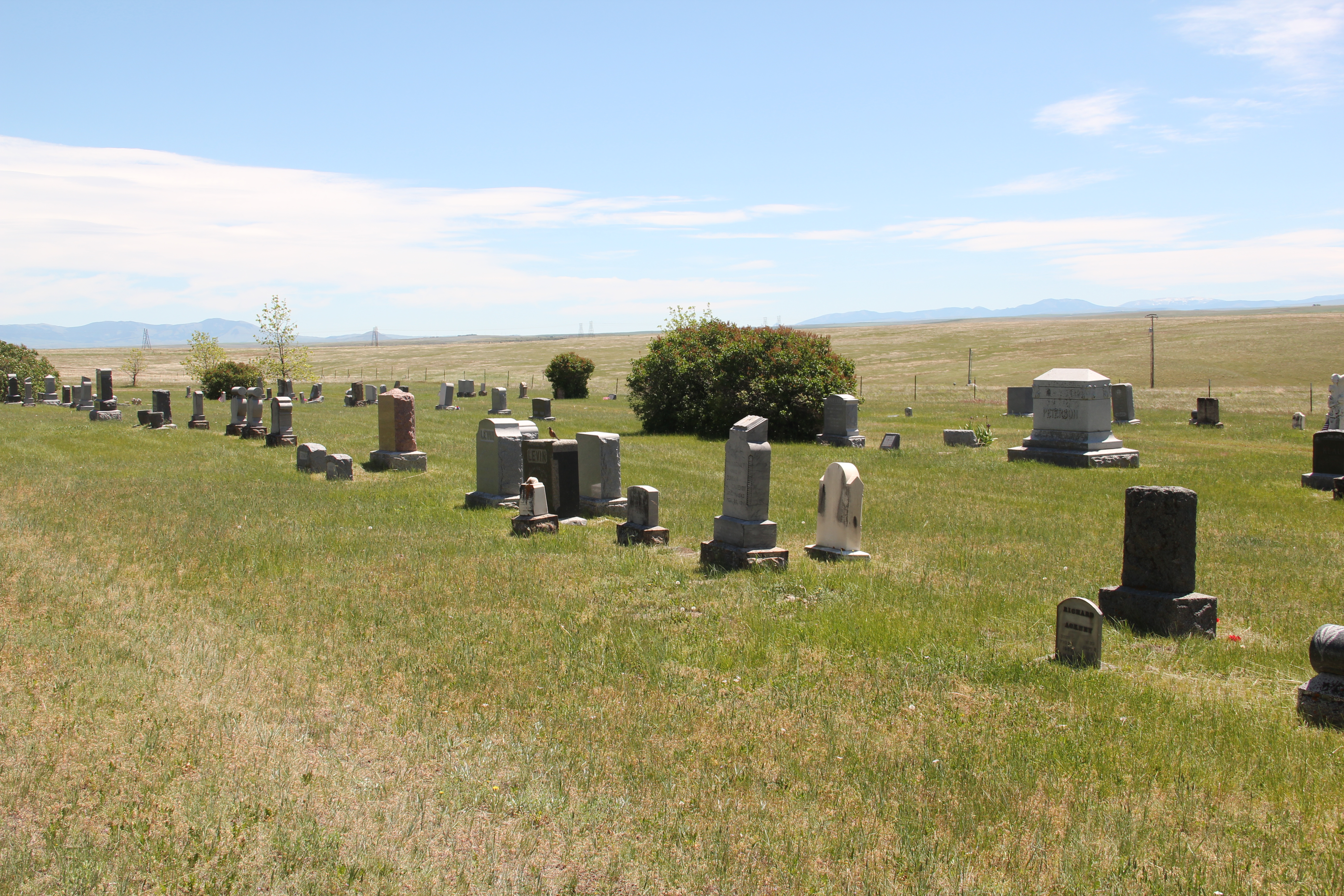
Older section, looking southwest

Mount Calvary’s first generation of burials is concentrated on the hill top. But this cemetery is large and still active. The lower section has numerous interesting tombstones from the second half of the 20th century.

“Old” Highland Cemetery in Great Falls

There are two Highland cemeteries in Great Falls, and for my money, the first Highland, now known as “old” Highland, is the more interesting and compelling funerary landscape. In fact, in its range of markers and the stories conveyed by the markers, Old Highland is one of the most interesting cemeteries in the state.

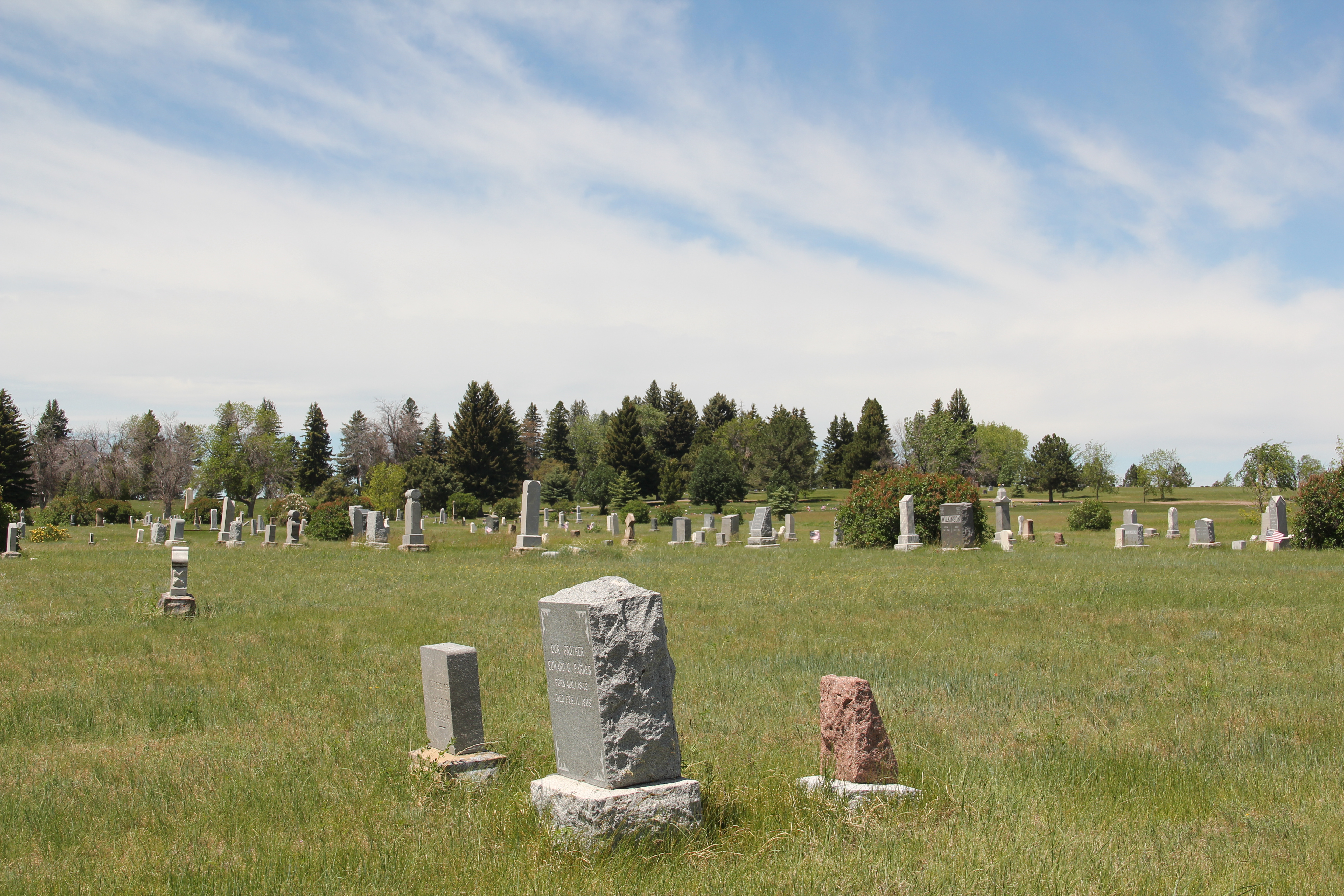
A paved drive divides the old from the new, but just exploring the grave markers themselves and their earlier dates separates the two cemeteries. The markers are so diverse in materials and form that it difficult to convey the place in a post of moderate length. But here goes.

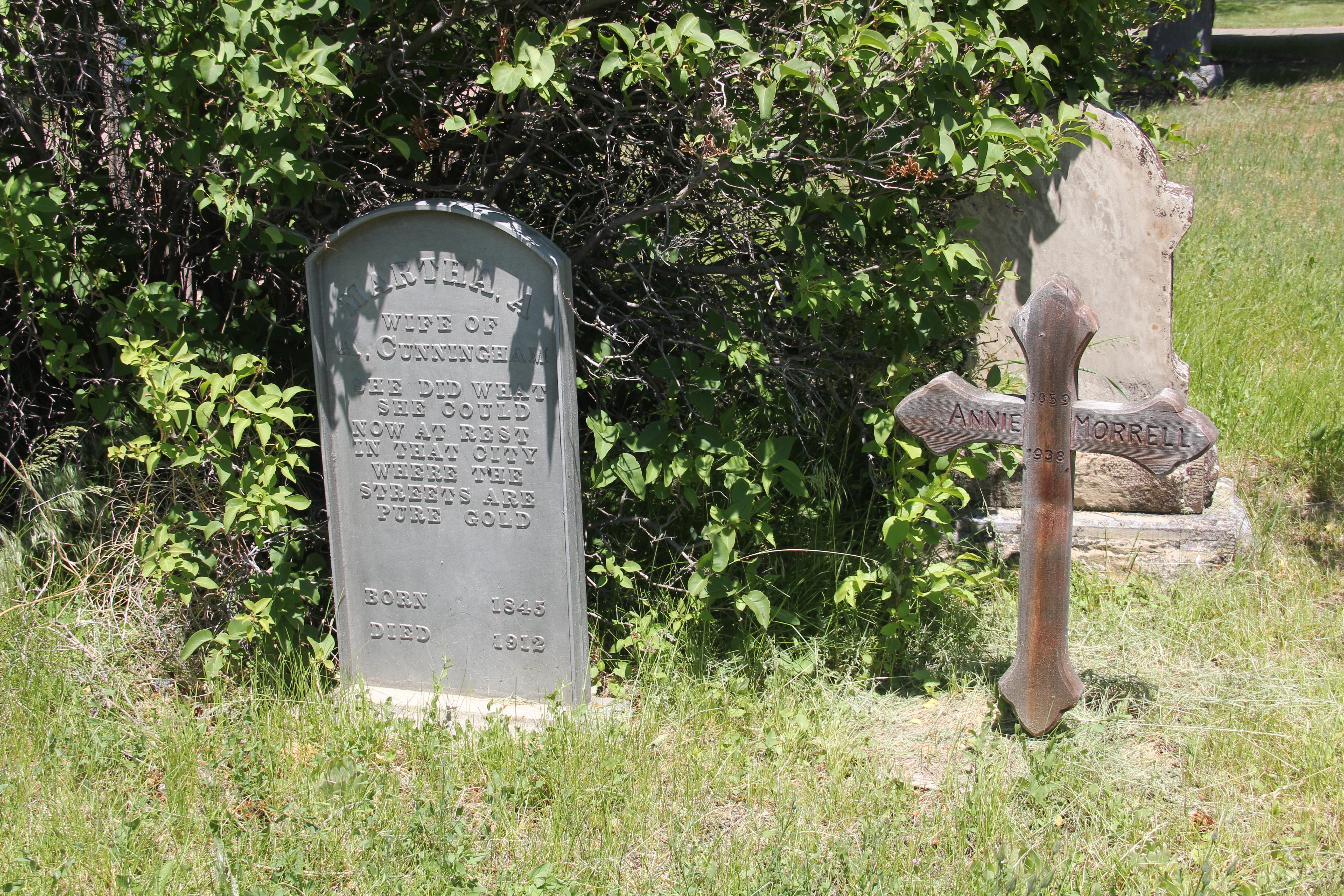
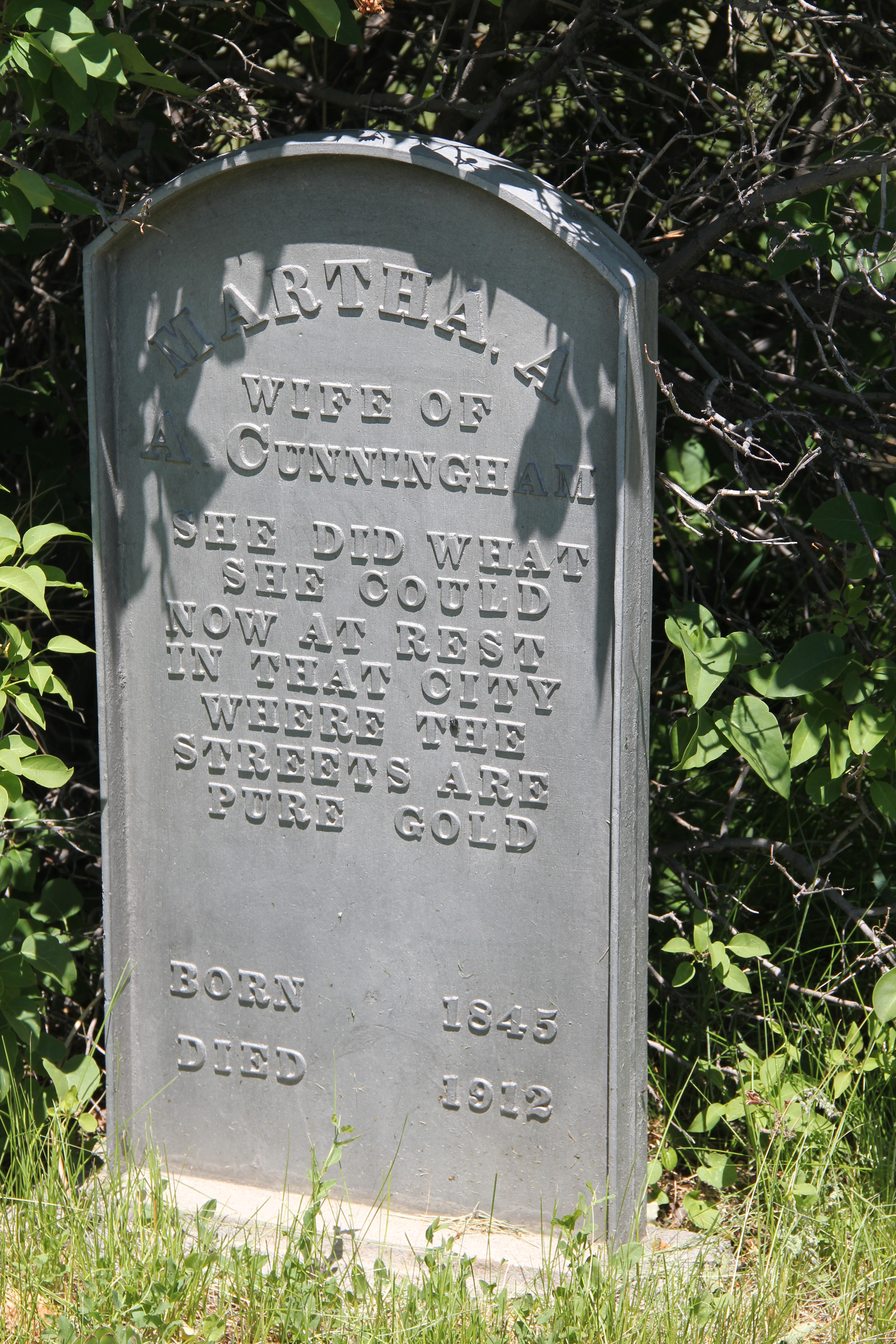
Martha Cunningham’s 1912 cast-iron marker was the first, of several, that I encountered. The marker reads: “She did what she could. Now at Rest in that city where the streets are pure gold.” Sarcasm in your marker–Martha I bet was an original.

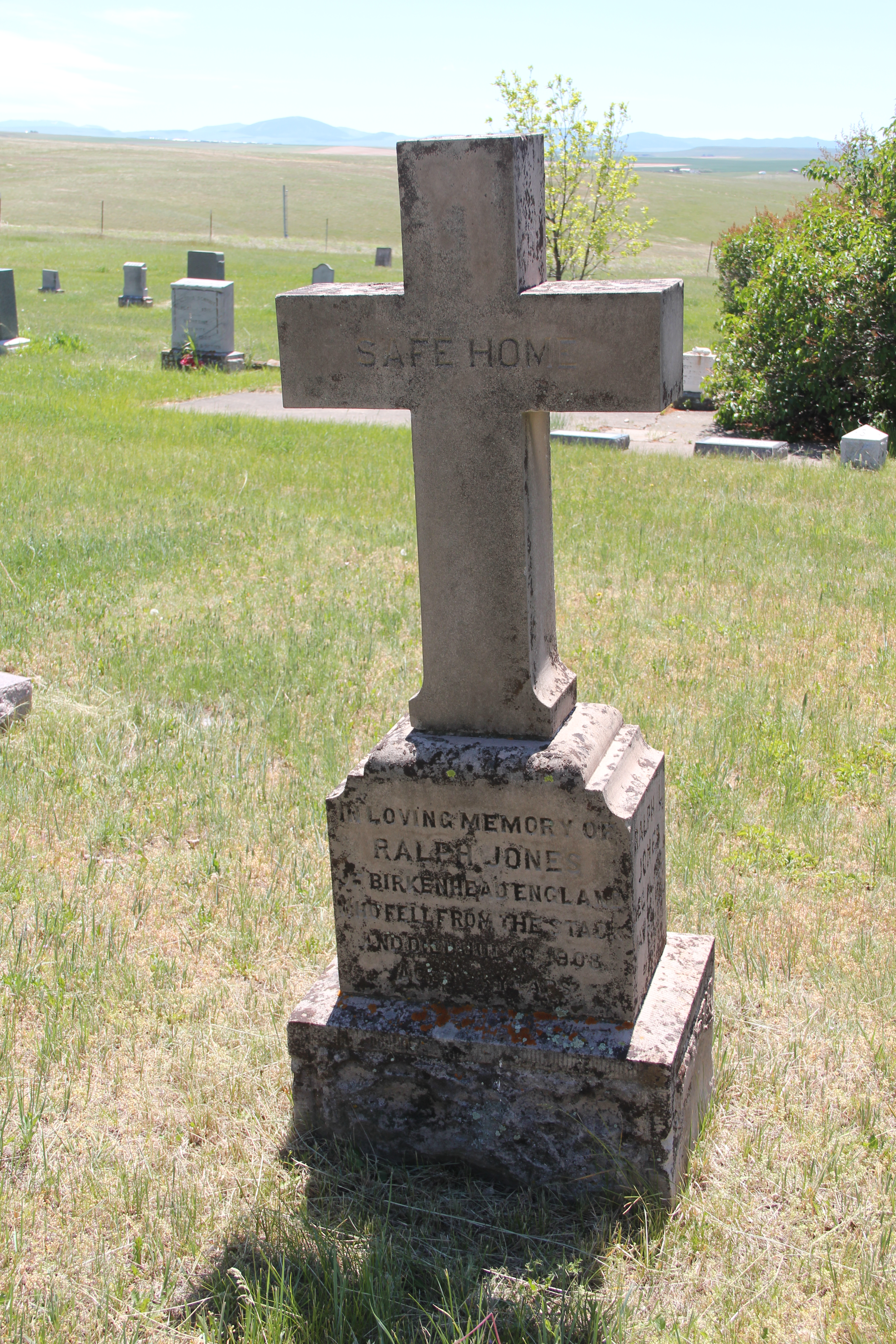
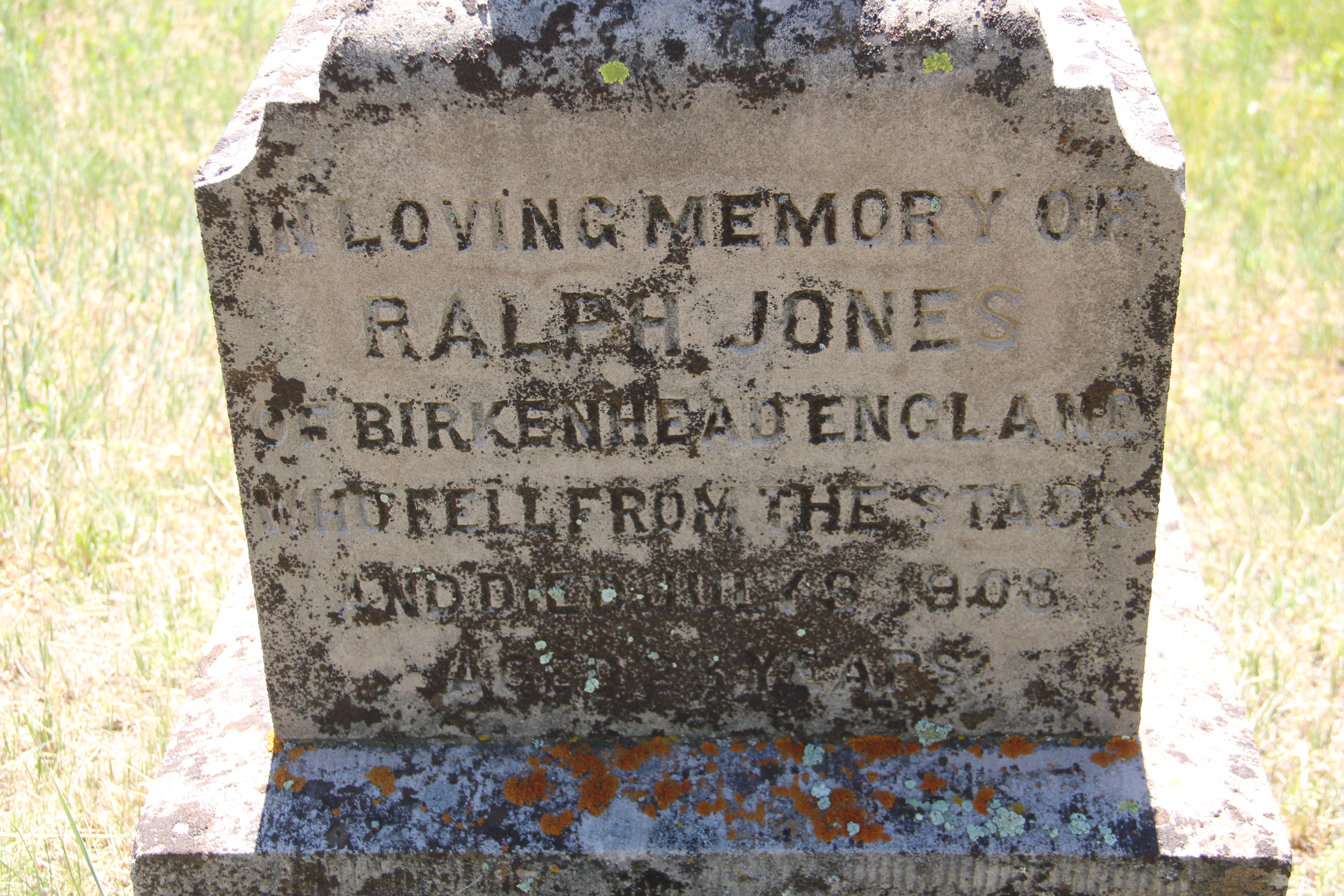
Ralph Jones, a mason from England, died while constructing the tower of the Anaconda Smelter in 1908. His friends erected the cross, with the words Safe Home, in his honor. Jones’ story is also told at annual cemetery tours.

Old Highland also has several Civil War veterans buried throughout the cemetery.

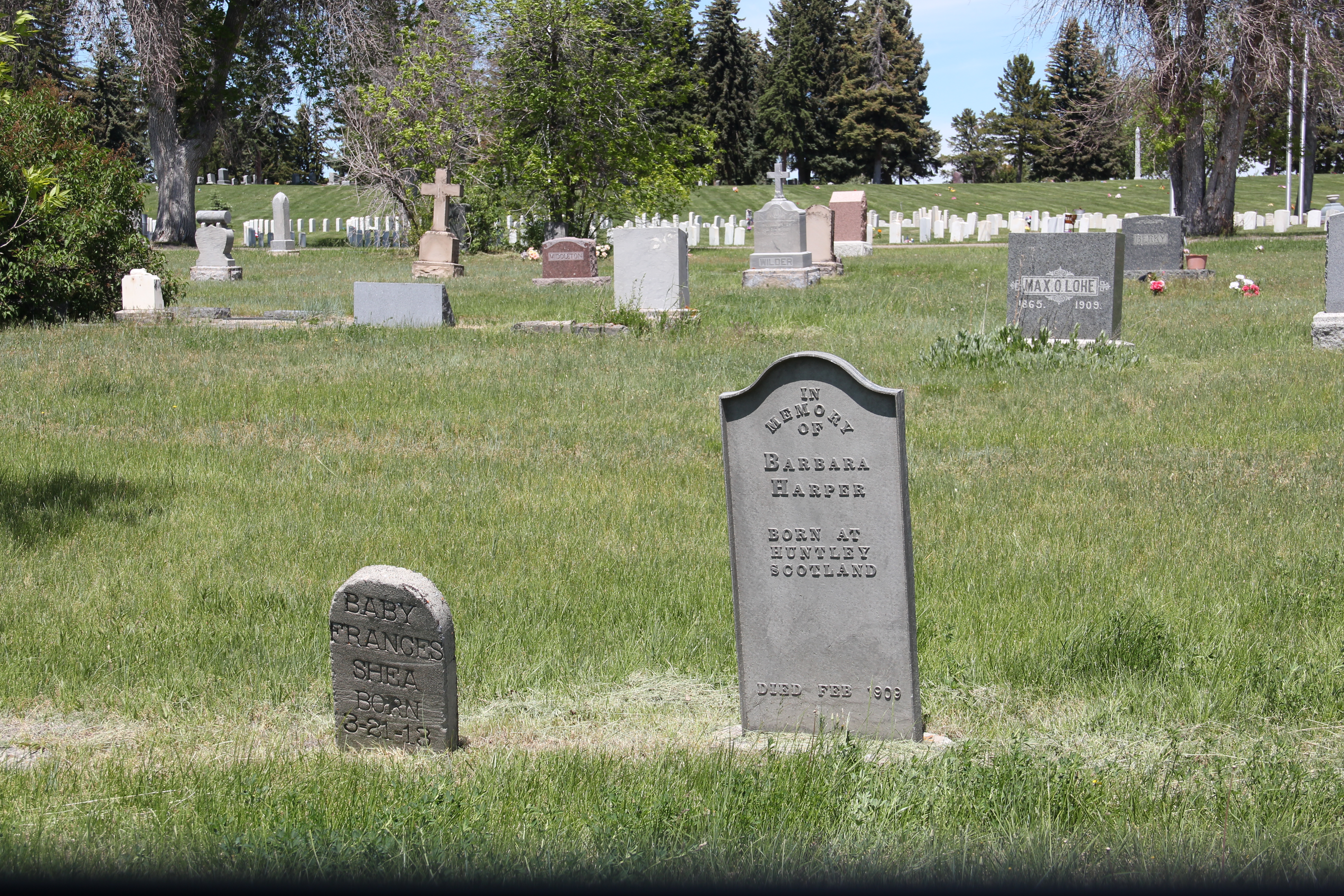
Barbara Harper’s metal marker is also noteworthy, but the most interesting metal marker by far is a small one in a corner of the cemetery. Alexander Leistiko died in 1906. His marker is pressed metal of two people at a cemetery, with the metal sculpture, complete with a skull motif, resting on a metal pedestal. I am a long ways from seeing every cemetery in Montana but this marker, thus far, is unique, and fascinating.

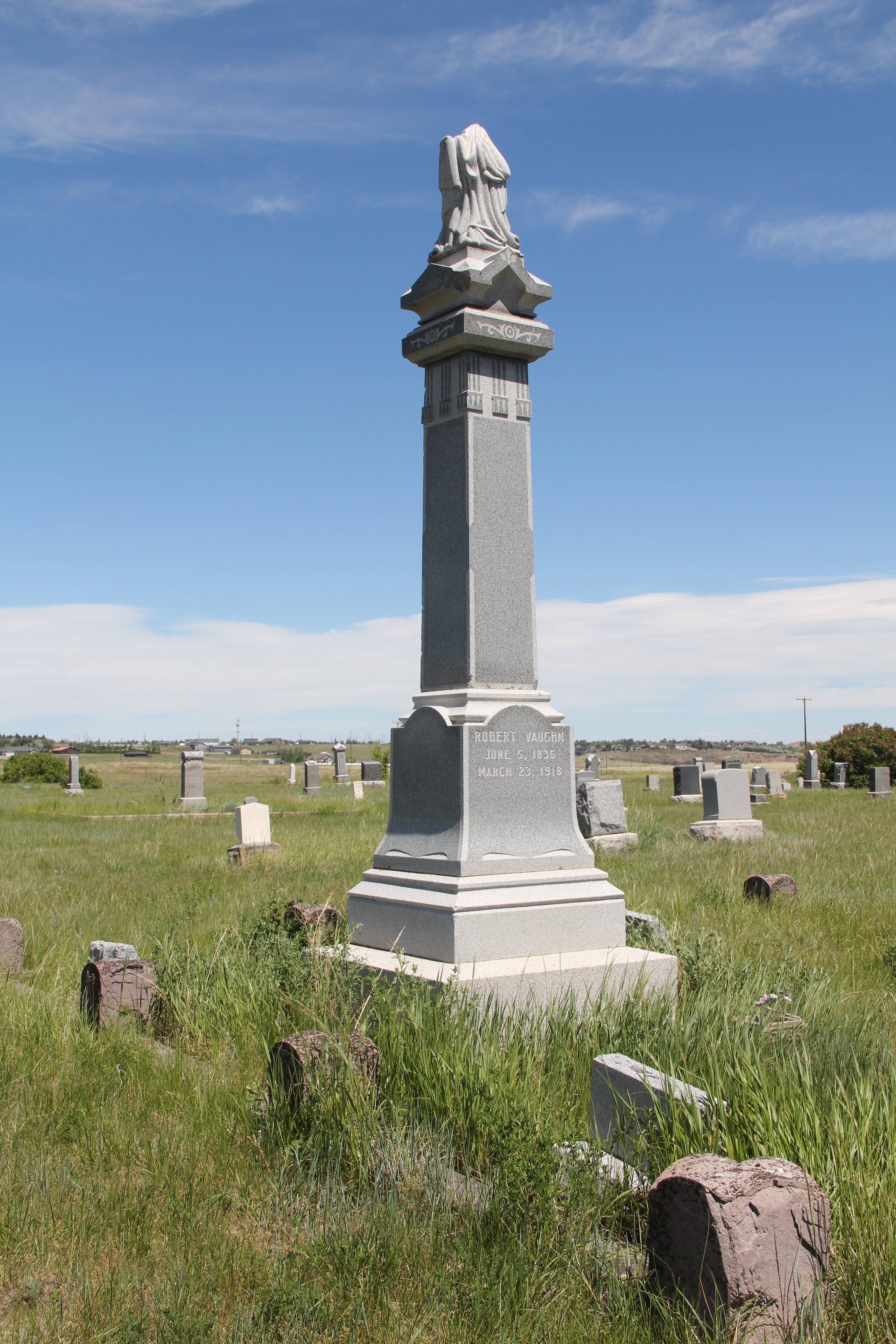
The artistic treasures of this cemetery just don’t end there. There is the grand obelisk for Robert Vaughn, a famous Cascade County rancher, dominating a low stone wall family plot.

Indeed, a few steps away from the Vaughn family plot, you can look to the north and see the treed landscape of “new” Highland Cemetery, and then look to the south and see the edge of the initial Highland cemetery.

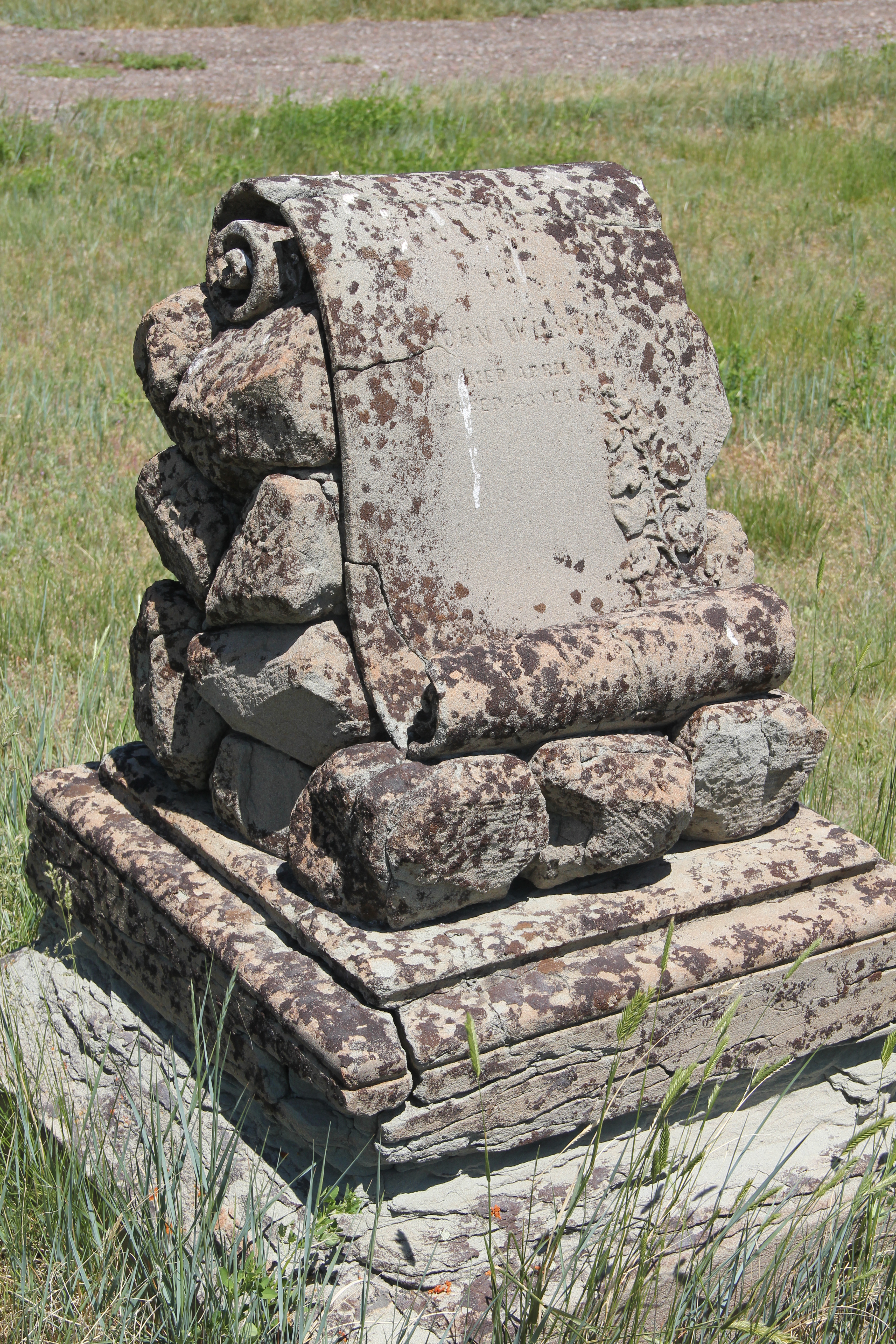
You would expect to find a more Victorian presence in the Old Highland markers since the place began in the late 19th century, The Delaney family plot, even with its overgrown ornamental planting, is an impressive statement of Victorian sensibility. The John Wilson marker of a decorated scroll over stones is just as impressive.

The heavy obelisk of Scottish immigrant James Stewart Tod (d. 1891). Tod lived with his family in Glasgow as late as 1891, being listed in a Scottish census for that year. But in the summer of 1891 he was in Montana as a merchant but died soon after arrival. The local Board of Trade (the precursor to the chamber of commerce) praised Tod for his character and service.

The Caulfield family plot also memorized service, in this case to the Great War.

There is no such to see and say about Old Highland Cemetery. I will revisit this place, hopefully soon.