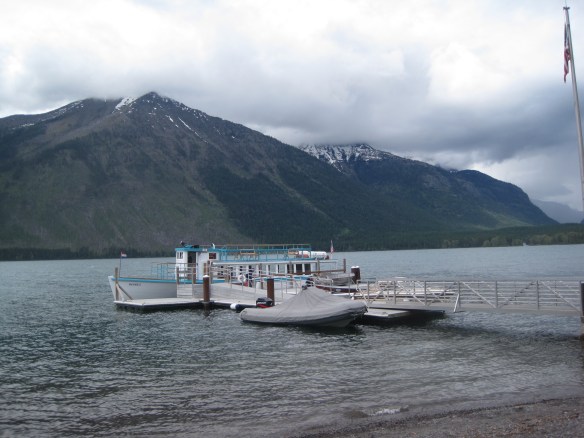
The second week of January 2018 was one of both good and bad news for historic preservation in the Big Sky Country. First came the good news out of the State Historic Preservation Office in Helena about the National Register of Historic Places listing of two more Lake McDonald boats at Glacier National Park. The DeSmet, shown above, has long been my favorite. It has navigated the calm waves of the lake since 1930. Designed and built by John Swanson of Kalispell, the boat became an important way that the increasing numbers of automobile visitors to Glacier could experience the lake and it helped make the Lake McDonald Lodge a stronger resort experience. Quite an amazing piece of craftsmanship from Swanson, and so few of his creations remain today. And as the photo above documents, the boat visually complements the setting–a reminder that the human presence is so small and insignificant compared to the majesty of the mountains.
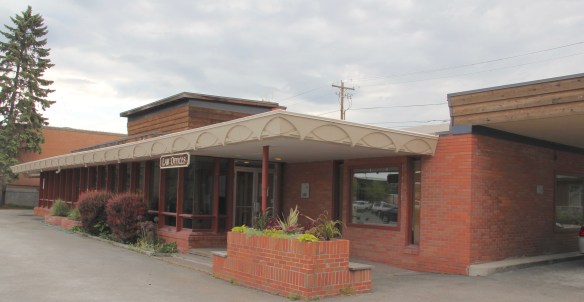
The bad news also came from Northwest Montana: the demolition of the Frank Lloyd Wright-designed Lockridge Medical Clinic in Whitefish. Now there is no way in Montana to have a direct experience with a work from America’s best known and greatest architect. I have spoken about the preservation needs of this architectural jewel earlier in this blog–and like the loss of the Mercantile Building in Missoula last year, development pressures lacked the patience, and the vision, to see anything but a possible empty lot, where a modern “historic” take–the fake past in other words–could stand.
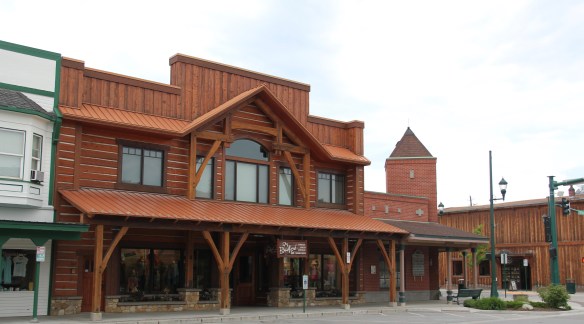
Such an attitude in Whitefish is doubly disappointing because in the 35 years I have visited this great mountain railroad town, the real history continues to disappear in favor of a fake, quasi-western feel past, as above. Call this progress if you will but in reality it is just another step into the abyss where Whitefish will longer be distinctive but just a place, like hundreds of others, trying to create a sense of identity and capture again what they once had.
 Somehow it is most appropriate that my 300th post for Revisiting the Montana Landscape would find me back at Glacier National Park, especially the west side or Flathead County part of the park. From the first visit in 1982, Glacier always intrigued me–at first because of the tie between park creation and railroad development, then the Arts and Crafts/Chalet architecture associated with the park, and then high mountain Alpine environment. In the years since, I have eagerly grabbed a chance to get a cabin by Lake McDonald and just re-charge for a few days.
 For the 1984-1985 state historic preservation plan work, however, I did not visit the west side of the park–the bulk of the travel took place between mid-February to mid-May 1984, meaning only the lower elevations such as Apgar Village were accessible. But already the state historic preservation office was aware that a major effort was underway to identify and nominate key properties within the park to the National Register of Historic Places, and by the end of the decade that process was largely complete. The National Park Service identified a range of historic resources from the turn of the 20th century to the Mission 66 program of the National Park Service during the 1960s–Glacier became one of the best studied historic landscapes in all of Montana.


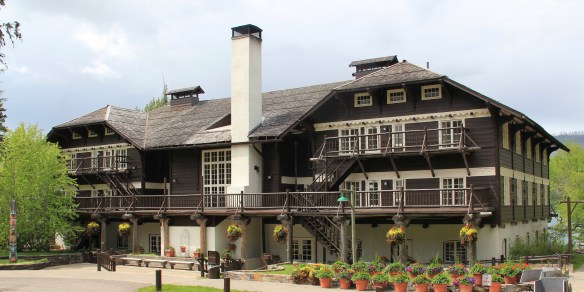
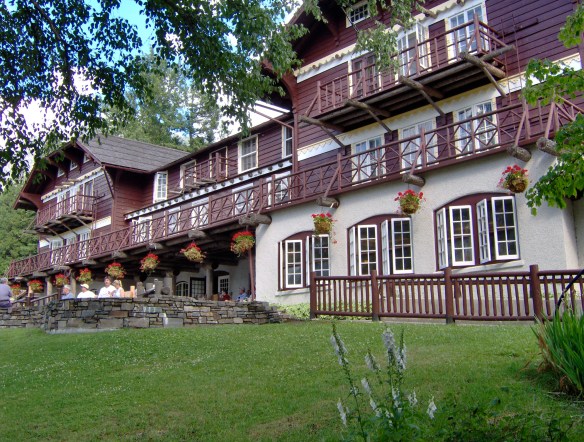


 Register as an excellent example of Mission 66-associated architecture within the park. Burt L. Gewalt of the Kalispell firm Brinkman and Lenon was the architect.
 Great Northern officials considered the lodge to be the center of the mountain experience on the park’s west side. From there visitors could take overnight hikes to two other facilities, shown below, the Granite Park Chalet to the northeast or the Sperry Chalet to the southeast of Lake McDonald, both of which are also listed in the National Register.

 Montana's Historic Landscapes