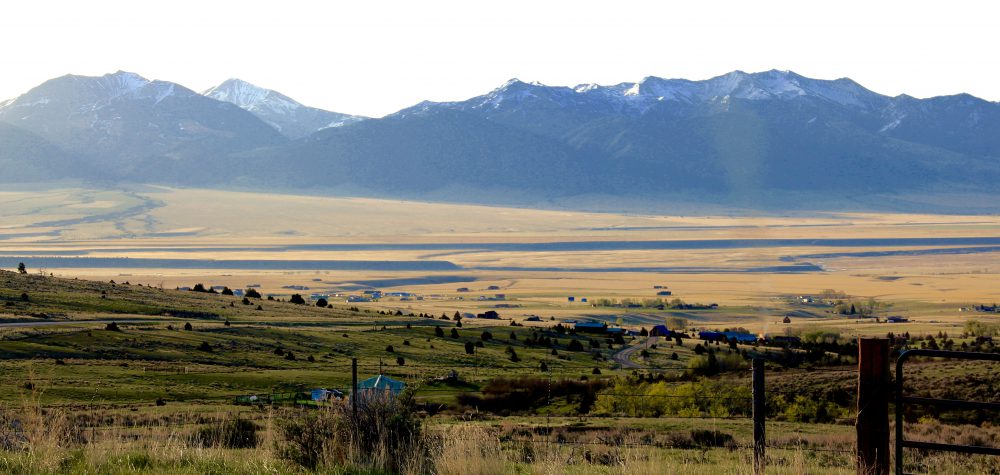
In the state historic preservation plan work of 1984-1985 I was hardly alone when I gave scant attention to resources between World War II and the Vietnam War. At that time, the “50-year rule” of the National Register meant that officially, at best, we should be only considering buildings from the very first years of the New Deal. The state office already had gone beyond the so-called rule, however, with nomination projects in Essex and Eureka, Montana. We understood that the “rule” was really a guideline. But still no one thought about the 1950s and 1960s–too recent, and not as threatened as the resources from the Victorian era through the turn of the 20th century, especially in Butte.
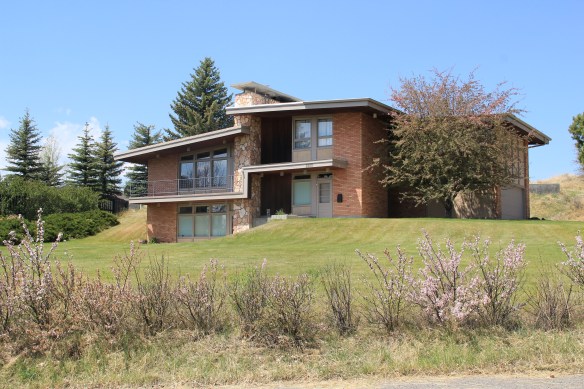 You don’t think Montana modernism when you think of Butte, but as this overview will demonstrate, you should think about it. I have already pinpointed contemporary homes on Ophir Street (above). The copper mines remained in high production during the Cold War era and many key resources remain to document that time in the city. For discussion sake, I will introduce some of my favorites.

Uptown Butte’s D. A. Davidson Building: a spaceship has landed on Main Street.
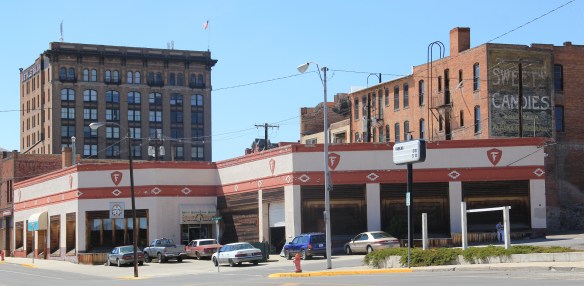
Certainly I should have paid more attention to such Art Deco landmarks as the Emmanuel Conception Church, by J. G. Link Company, 1941, or even in Uptown the classic corporate design of the Firestone Tire Center and service station.


 I looked at schools constantly across the state in 1984-1985 but did not give enough attention to the late 1930s Butte High School, a classic bit of New Deal design combining International and Deco styles in red brick. Nor did I pay attention to the modernist buildings associated with Butte Central (Catholic) High School.
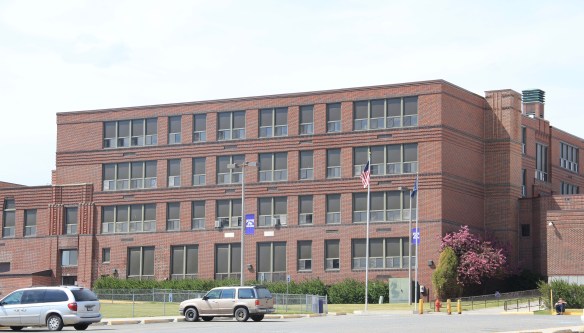
Butte High School, a New Deal project of late 1930s


Then there are two really interesting schools from the late 1950s and 1960s: John F. Kennedy and the Walker-Garfield elementary schools. I have already discussed in an early post about the JFK School.
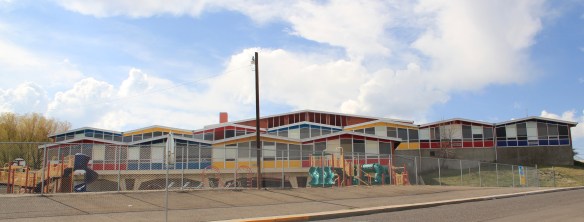


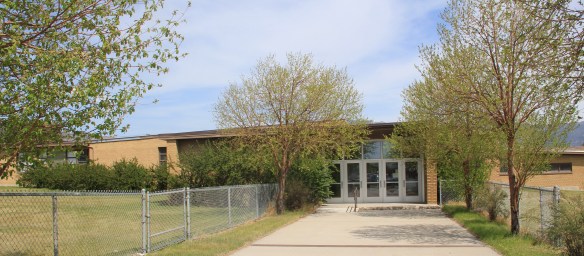

 You would think that I would have paid attention to the Walker-Garfield School since I stopped in at the nearby Bonanza Freeze, not once but twice in the Butte work of 1984. I
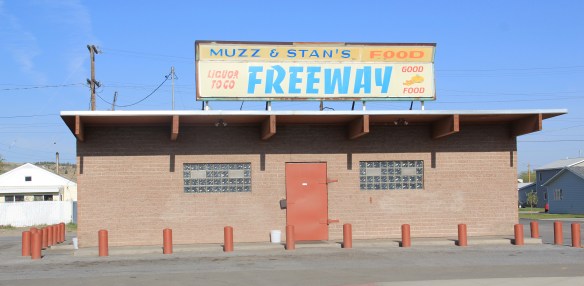
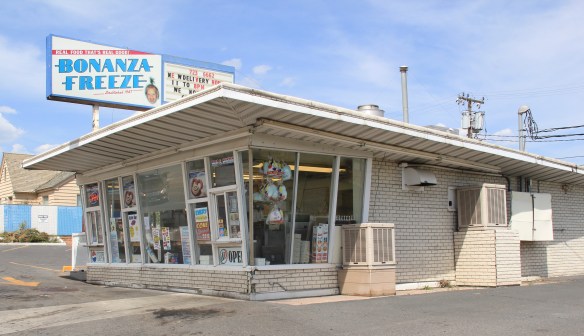 never gave a thought about recording this classic bit of roadside architecture either. Same too for Muzz and Stan’s Freeway Bar, although maybe I should not recount the number of stops at this classic liquor-to-go spot.
Uptown has its modern era jewels, like the D.A. Davidson building above, but largely in how owners tried to give older structures facelifts with contemporary designs in the 1960s and 1970s. Back in 1984 we dismissed such building as “remuddlings” and sometimes they were exactly that. But when you step back and consider it, the additions were new layers of history added to those of the past, creating a physical document with chronological depth, and interest.


Garages were not new to the city in the post-World War II era but automobile ownership increased in the post-war years, and the demand for downtown parking from residents who had moved into the suburbs never slacked for years. The demand led to a lot of parking lots in place of historic buildings but it also led to the Silver Arrow Garage and shopping centers, one of my favorites from that time.

Probably my favorite Uptown modernist building is both an office and production facility–the sleek International-style Montana Standard Building. Not only is the Standard the touchstone for community news, the building is an important addition to the city’s 20th century architecture.


Butte public buildings also embraced the new era in design. The Butte Public Library is not so successful, with its understated classicism in a modern setting being neither particularly effective nor compelling. The Uptown Butte Fire Station however is an excellent example of contemporary style.


There is such a thing as Butte Modernism. While the city may not have the number of classic 1960s and 1970s buildings of, say, Billings or Great Falls, it has enough to mark those years of change and transition from the first half to the second half of the twentieth century in the Copper City.

The Civic Center is another great modern era building from J.G. Link Company.
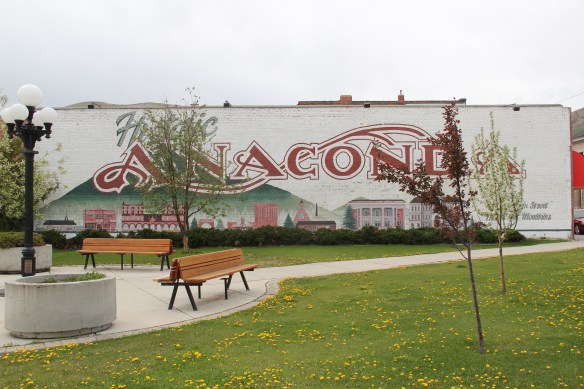 The public landscape of Anaconda has already been touched on in this blog–places like Washoe Park, the cemeteries, or Mitchell Stadium for instance. Now I want to go a bit deeper and look at public buildings, both government and education in this smelter city.
 Let’s begin with the only building in Anaconda that truly competes with the stack for visual dominance, the imposing classical revival-styled Deer Lodge County Courthouse. When copper baron Marcus Daly created Anaconda in the 1880s it may have been the industrial heart of Deer Lodge County but it was not the county seat. Daly was not concerned–his hopes centered on gaining the state capitol designation for his company town. When that did not happen, efforts returned to the county seat, which came to Anaconda in 1896. The courthouse was then built from 1898-1900.

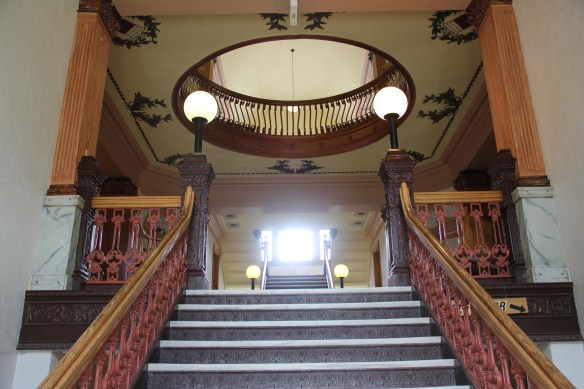
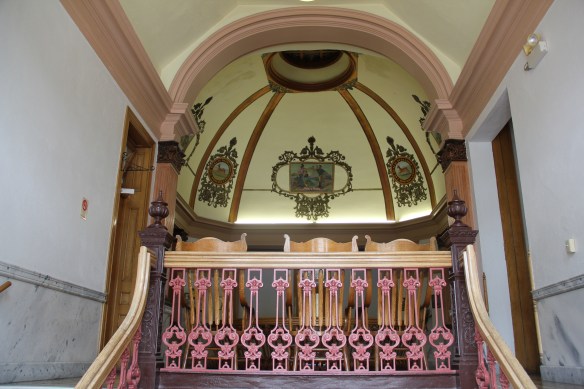
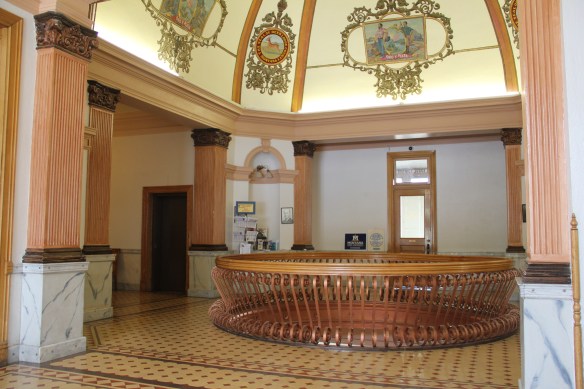
 in Montana is the lavish interior of the central lobby and then the upper story dome. The decorative upper dome frescoes come from a Milwaukee firm, Consolidated Artists. Newspaper accounts in 1900 recorded that the completed courthouse cost $100,000.
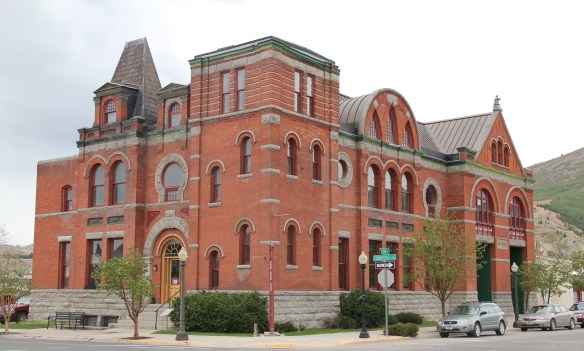 The bombastic classicism of the courthouse was at odds with the earlier more High Victorian style of City Hall, built 1895-1896, and attributed to J. H. Bartlett and Charles Lane. But classicism in the first third of the 20th century ruled in Anaconda’s public architecture, witness the Ionic colonnade of the 1931-1933 U.S. Post Office, from the office of Oscar Wenderoth.
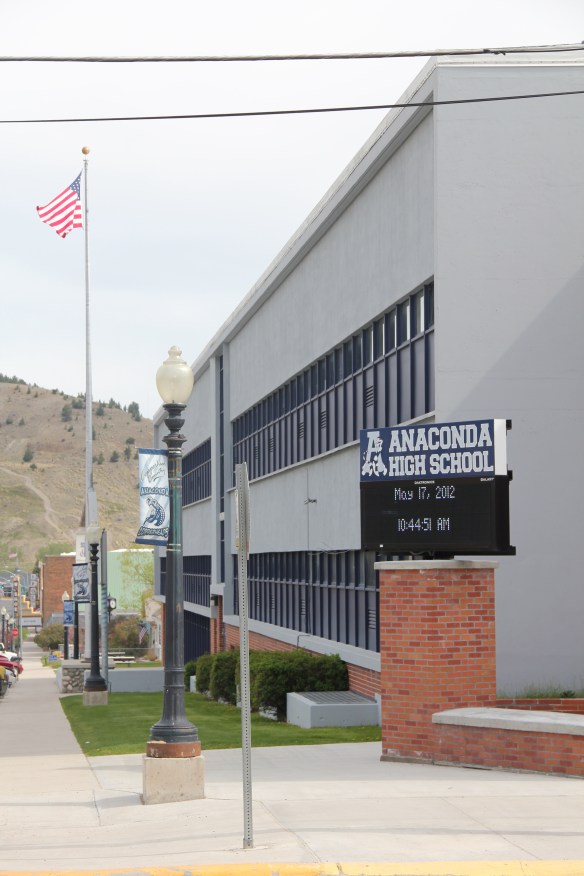
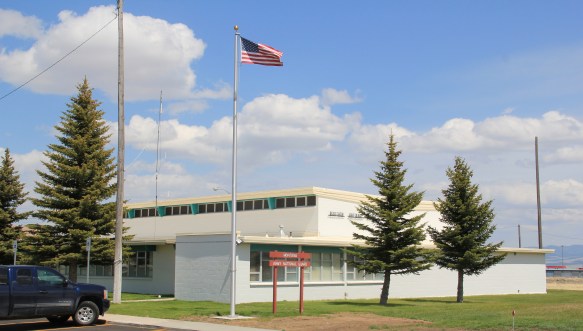
 Once Anaconda, bursting at the seams following the boom of World War II, chose to upgrade its public schools, it took a decided turn away from traditional European influenced styles and embraced modernism, as defined in Montana during the 1950s.
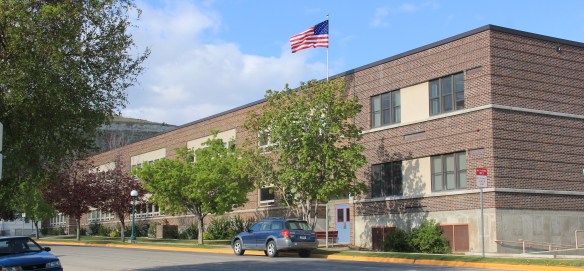 The long, lean facade of Lincoln Elementary School (1950) began the trend. Its alternating bands of brick punctuated by bands of glass windows was a classic adaptation of International style in a regional setting. The modernist bent continued in 1950-1952 with the Anaconda Central High School, the private Catholic school, now known as the Fred Moody middle school, only a few blocks away. Except here the modernist style is softened by the use of local stone, giving it a rustic feel more in keeping with mid-20th century sensibilities and the Catholic diocese’s deliberate turn to modern style for its church buildings of the 1950s and 1960s (see my earlier post on College of Great Falls).


 Montana's Historic Landscapes