
I asked earlier: what was the fate of this rural courthouse in Scobey. Answer: alive and well. More to come from a few miles south of Canada.
I asked earlier: what was the fate of this rural courthouse in Scobey. Answer: alive and well. More to come from a few miles south of Canada.
Sheridan, WY doesn’t call itself the south gateway but I consider it to be that. Sheridan is a good 2 days of driving from Murfreesboro. And after a respite at the Mint Bar (one of the best places in the west) I enter Montana in the morning light and get to work, stopping briefly in Hardin (the first county seat of the fieldwork–let’s see how many I make). Then a mid morning meeting with the O’Donnell family before I strike east.


Today’s drive paralleled a portion of the Lewis and Clark Trail I had never visited. Now being a proud board member of the Lewis and Clark Trust, I needed to visit Arrow Rock, Missouri. Wish I had stopped before. A stunning town of mid 19th century buildings, together with the vistas of the river. A must stop on the trail.
Storms impeded afternoon fieldwork and the storm I avoided has now hit at Des Moines.


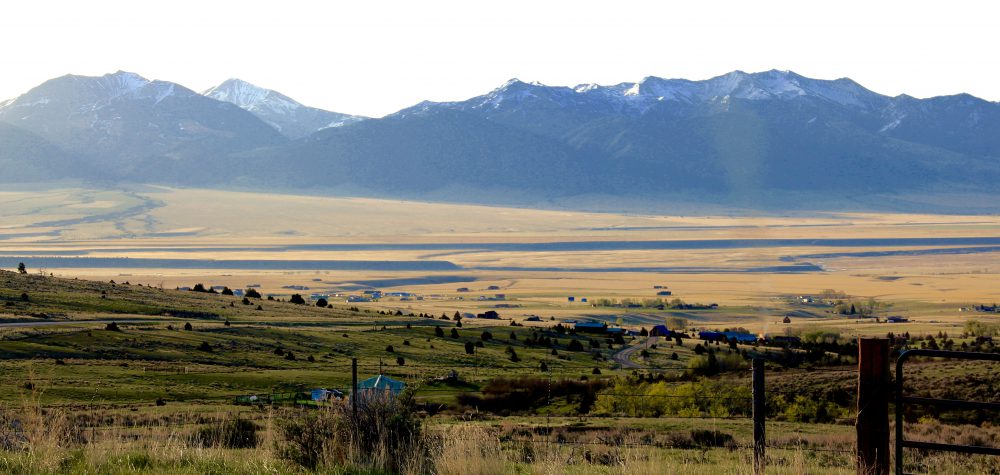
Here is my last pre-fieldwork post, an image from 2011 that reminds anyone of the starkness yet the grandeur of the Hi-Line Country landscape. Agricultural and oil mixed together on the horizon–this image may be from US 89 south of the Hi-Line but it represents a major contrast that characterizes the region–but the scale of the late 20th century wells pales in comparison to the landscape of fracking. The tension is there; can’t escape it. Yet those same two-lane roads beckon–and I am eager to be immersed into the vastness of it all once again. See you from the road, starting Sunday.
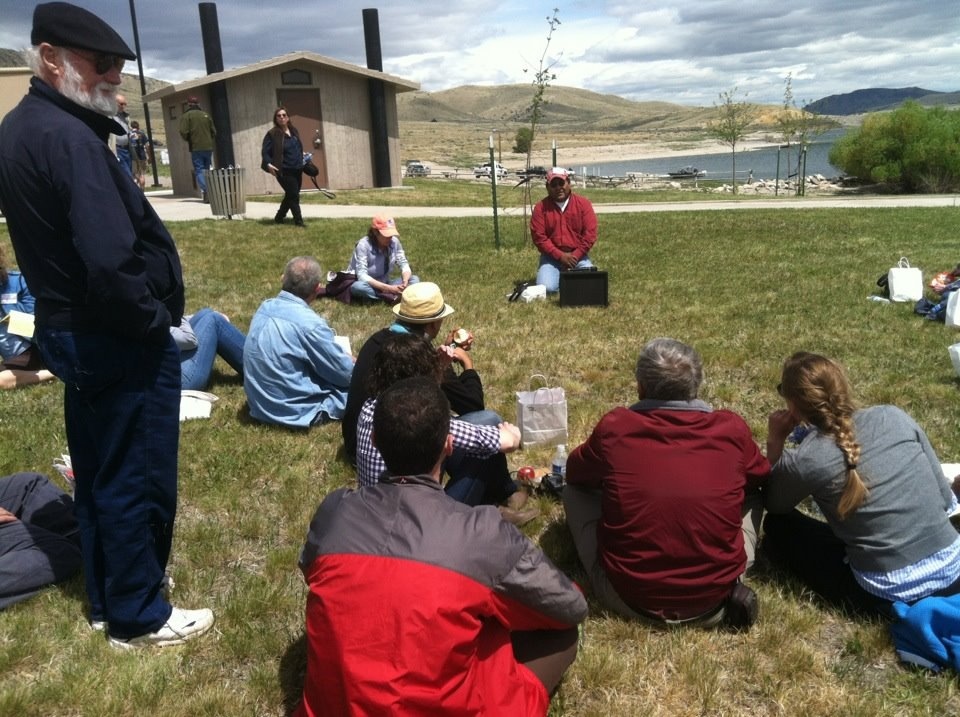
So many of the blogs in the last 3 weeks have spoken of looking and seeing change over a generation. But just as important as close viewing is close listening. The voices of Montana sound different from those of my native Tennessean but I often heard similar tales: themes of community, family challenge, opportunities lost and gained, the heavy hand of power be it capital or the federal presence, and the stories of the deeper past, called intangible by some but oh so tangible to those who touch it, feel it daily. The landscape loses meaning without the voices. The voices are lost without the landscape.
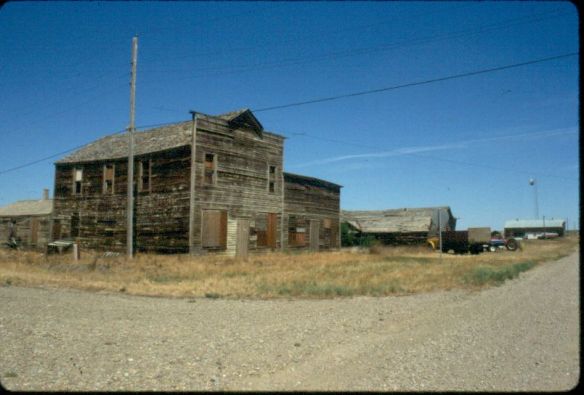
In 1984 I began my statewide fieldwork on the Hi-Line with Toole County being among the first stops. Here I encountered Devon, a town name that denotes rural beauty from Great Britain, but here along the Great Northern Railway and U.S. 2 it had become a forgotten place. I soon discovered that many other Devons existed in the region, and I talked about a good many of them in the “Travelers Companion to Montana History” book. Since that time, Don Baker has written “Ghost Towns of the Montana Prairie” that documents even more of these places. Three decades later, my basic question is: how many of these ghosts have now blown away leaving only scattered foundations behind? Those that remain are powerful physical documents of the Homesteading Era, which 100 years ago still held such hope and promise for the region.
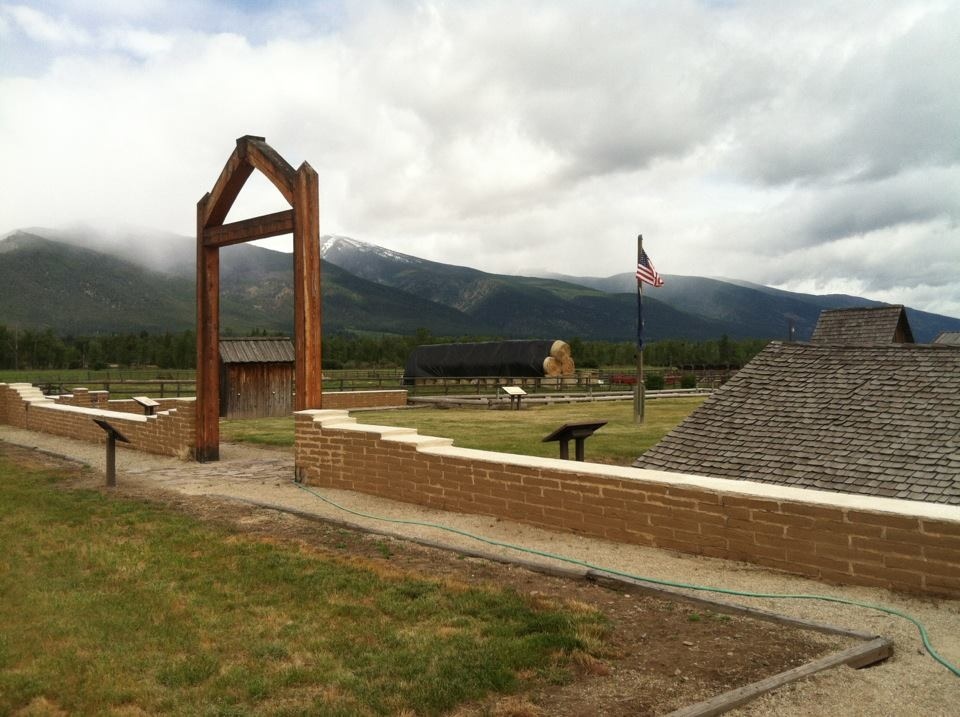
Vast improvement in presentation and interpretation is a very clear trend that I found last year in the southwest corner of Montana. Fort Owen outside of Stevensville was one such place, here under the stewardship of the state. It was good to see improvement over 25 years but at the same time, the story at Fort Owen is BIG and nationally significant, I would claim. And the property today does not do justice to the park. Then there is the danger of development in and around Stevensville completely overwhelming the site. What will be the status of state historic sites and parks in northern Montana?
Then there is the personal side of exploring Montana’s historic landscape. My son Owen is named for this little but important place in a really big country.

My first stop in Montana will be Billings, the metropolis of eastern Montana. There new uses as a performance have made the Art Deco styled Babcock an important contributor to downtown life and business. In the 1980s most Hi-Line county seats had a movie house–have they survived the video, satellite, Internet onslaught? What about the transfer to digital technology for films? I will start to find out in less than 2 weeks.

Along the old main streets of the towns along U.S. 2 there is a wonderful array of historic store signs, many for restaurants and bars, others for stores or movie houses. These all speak to a time when U.S. 2 was a major east-west artery, long before interstate travel dominated auto and truck travel. In places like Shelby the row of signs can make the place look dated, but for heritage tourism travelers the signs beckon today as much as they did 60 years ago.
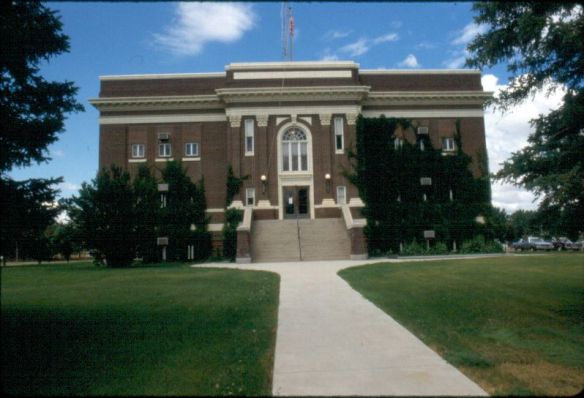
This image comes from my last quick trek through part of northeast Montana in 1988. The unstated classical beauty of this courthouse in Malta impressed then, and I trust it will still be as well maintained and preserved 25 years later. I’m in Malta at the end of Memorial Day weekend. Compared to Tennessee, where I have now worked for 28 years, courthouses and their grounds often appear as afterthoughts in the Montana landscape. Whereas the central courthouse square plans of Tennessee are at the center of the historic commercial district, I was reminded in my 2012 work in southwest Montana that often the Montana courthouses are on the margins (like the Beaverhead County Courthouse in Dillon) or nestled within residential districts (like in Deer Lodge). In the railroad towns of the Hi-Line, the depots are at the head of town and serve as the entrance to the primary commercial district. This spatial difference speaks both to when Montana county seats were created and to the overwhelming influence of the railroads in the region one hundred years ago. It is one of the most interesting patterns in the Hi-Line’s historic landscape.
 Montana's Historic Landscapes