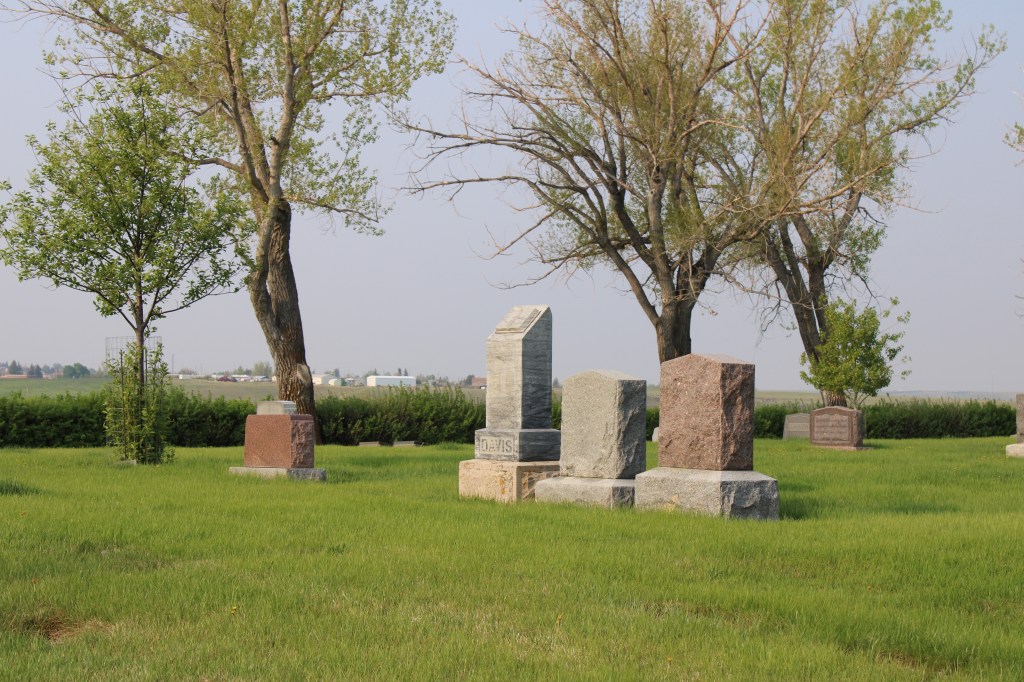
The Chester Cemetery is among the oldest historic places in Liberty County. The town of Chester was incorporated in 1910 during the homesteading boom of the northern plains. Liberty County was formed in 1919. But the cemetery dates at least to 1904; the earliest marker I found dated to 1905.
Carrie Mitchell, d. 1805
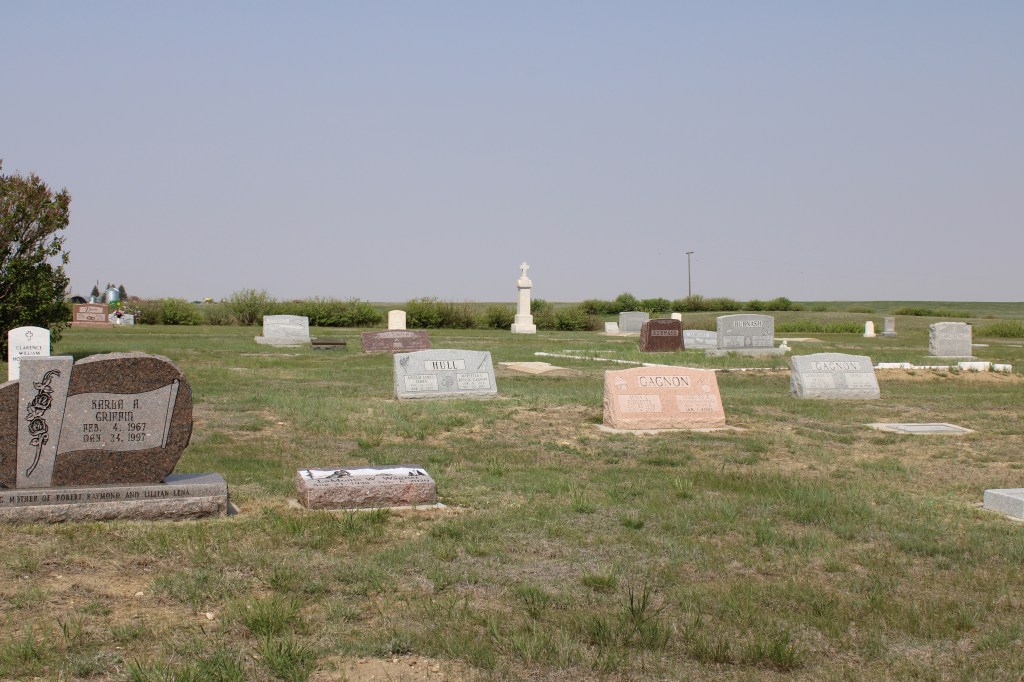
As in other Hi-Line towns, the cemetery began as a Catholic cemetery, part of an early 20th century initiative from the Diocese to establish cemeteries throughout the region. I have not determined when the property took the name Chester Cemetery. But by 1910-11, and town growth, you find more grave markers from that decade.
Note the Catholic cross memorial at the center rear of this image.
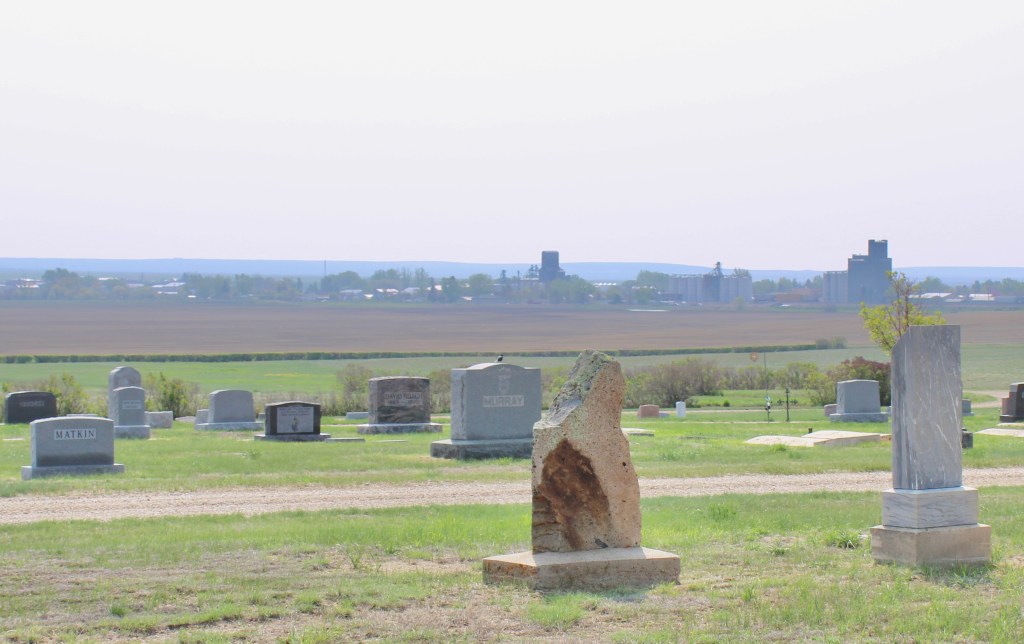
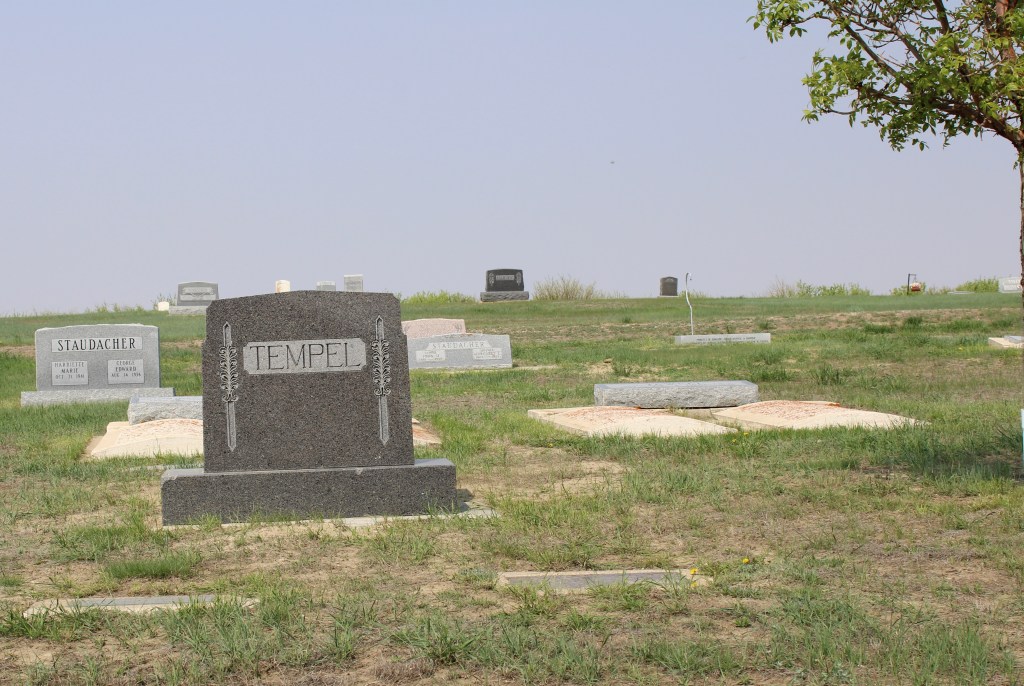
The cemetery is northwest of town on a dirt road. A 1929 newspaper account of a winter funeral noted that the funeral procession had to follow a snowplow plus three heavy trucks, loaded with railroad ties, to clear and then pack down enough snow to be able to reach the cemetery. The cemetery location creates an interesting dialogue between spaces. Even in the smoky air of May 2023 you can see grave markers facing the town, visible by the grain elevators along the Great Northern corridor.
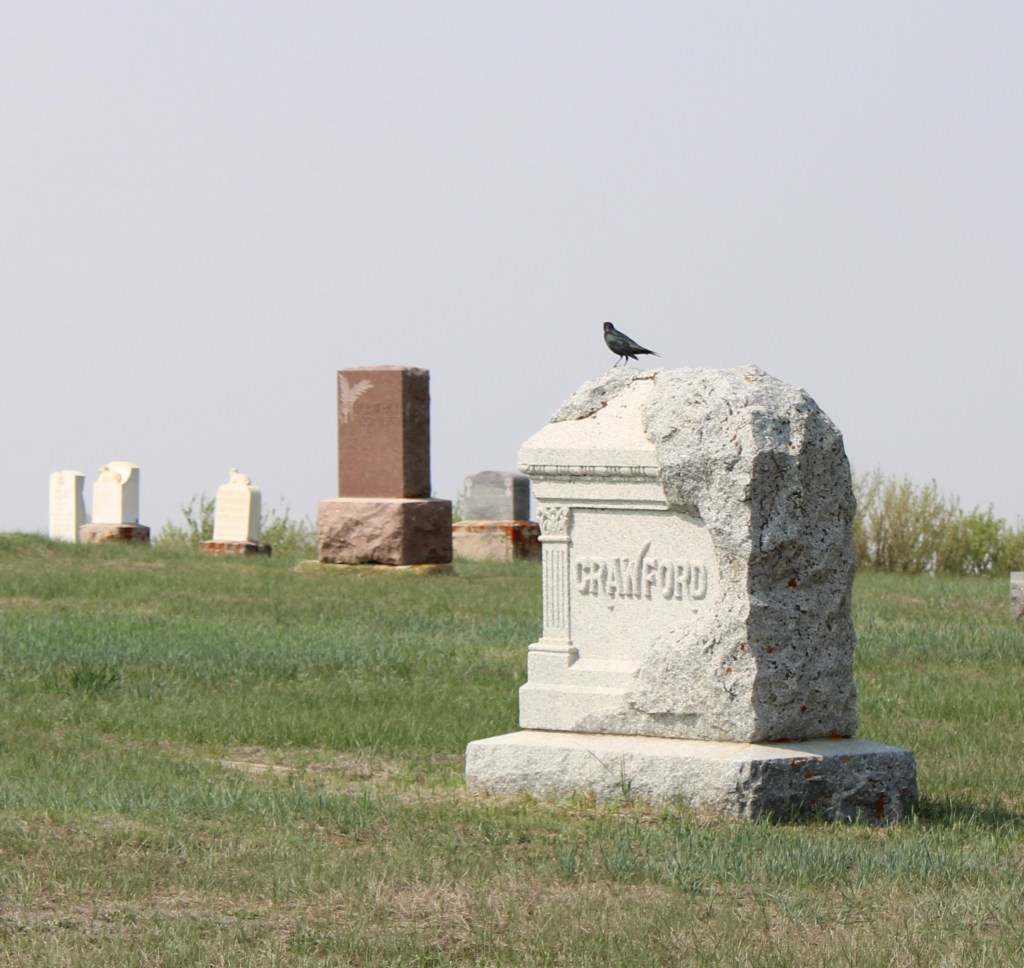
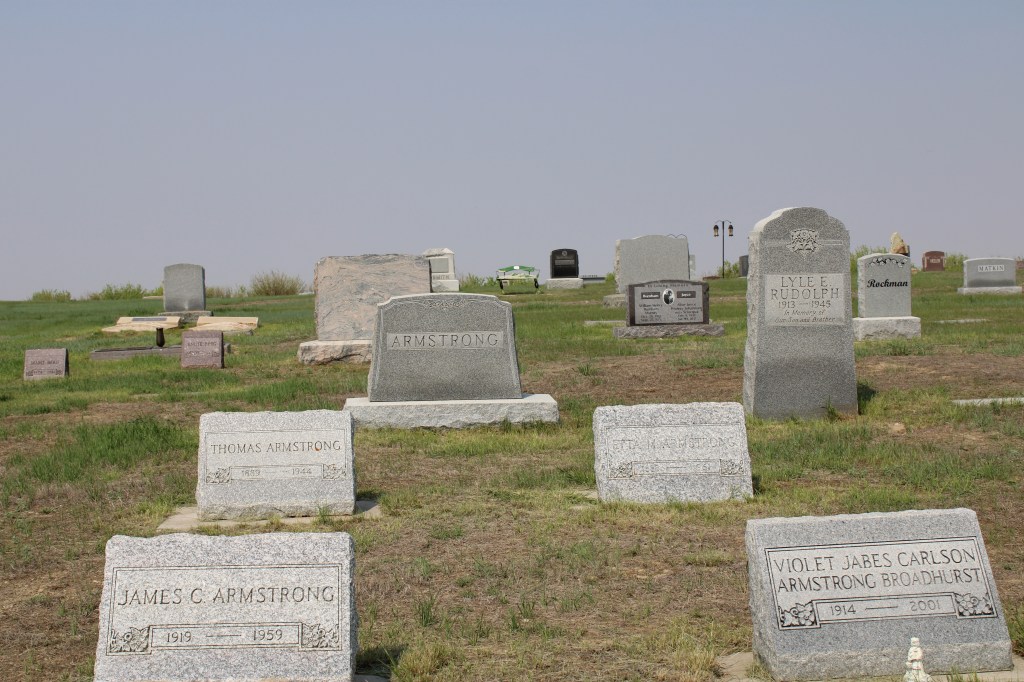
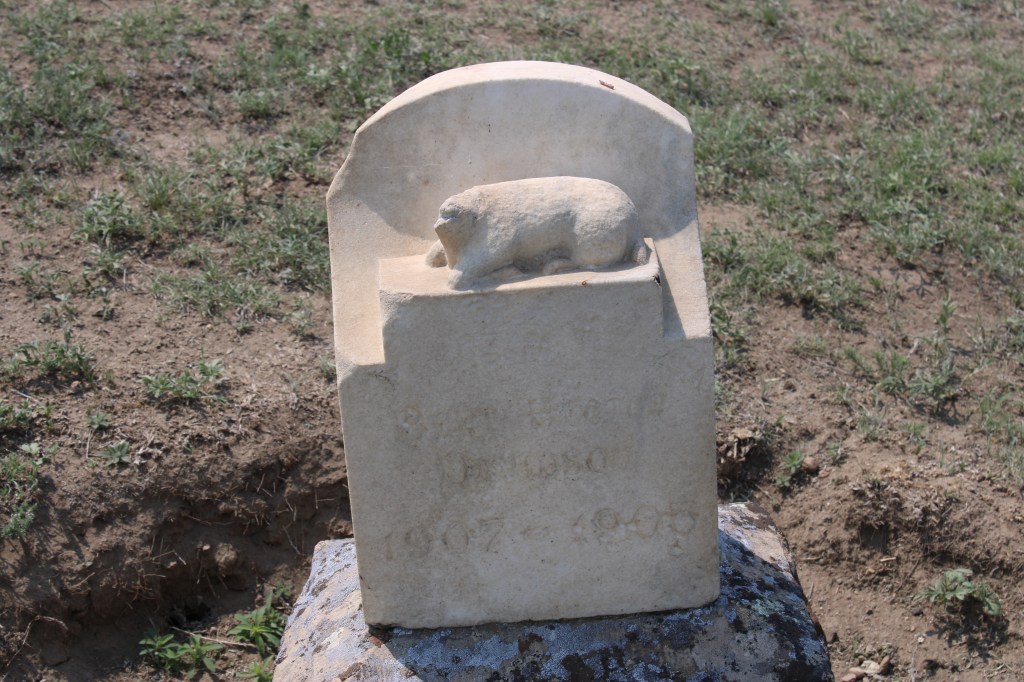
The cemetery has numerous artistic markers of note although most are smaller stone rectangles.
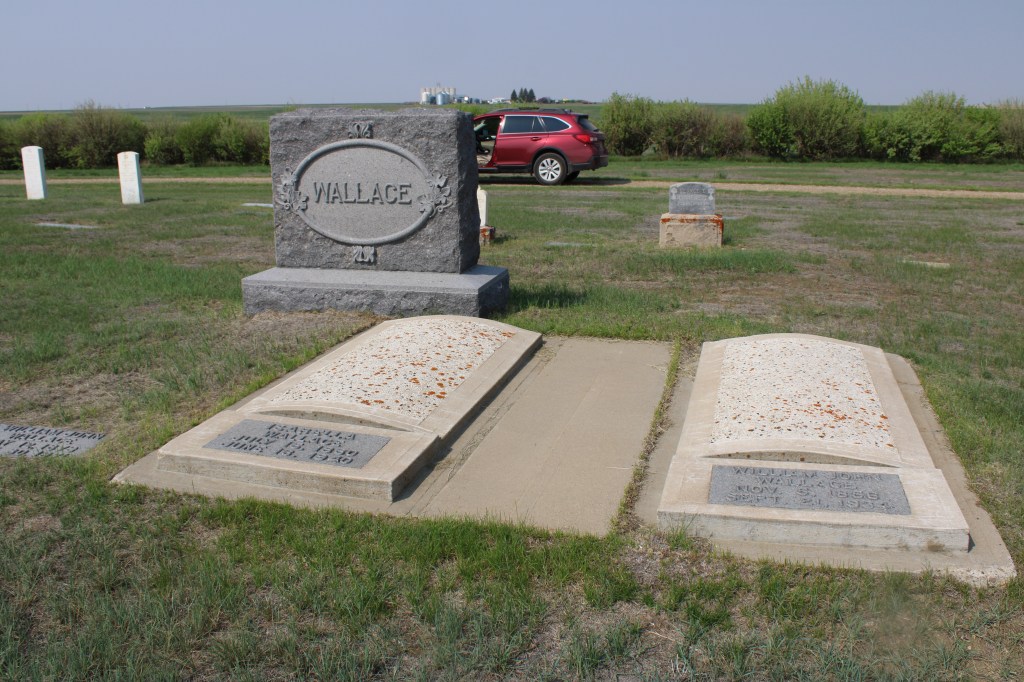
The Wallace family marker is interesting because both graves were covered with a concrete vault-like rectangle. I have encountered many concrete grave coVera in the south but not so many in the west. Chester Cemetery has many more than usually found in Montana cemeteries.
Military veterans are buried throughout the cemetery. Recently a special veterans memorial was installed near the entrance. Its plaque states: “The Price of Freedom. All Gave Some. Some Gave All.”
Chester Cemetery is worth a visit. Over one hundred years old, its markers document the historic ebbs and flows of this plains country town.
July 1, 1905, the Havre Plaindealer reported that K. K. Devlin had donated three acres south of the new city reservoir for a Catholic cemetery, eventually named Calvary Cemetery. The newspaper said that engineers platted the ground on June 28, and that the first internment, the child of Joseph Gussenhoven, had been buried in the afternoon. The paper proclaimed that “The site selected is an ideal spot for a cemetery. The land slopes gently from the city reservoir to the south and east and can all be irrigated nicely from the reservoir. . . The lots will all be larger than the lots in the old cemetery [Mount Hope] thus affording ample room for trees and shrubs.”
Calvary Cemetery, May 2023
One of the engineers had already recommended to the Mount Hope Cemetery Association to secure a “cemetery site for the city adjoining the present site selected by the Catholic people. The surroundings are naturelly [sic] most beautiful. It is close to the city and at the same time in a quiet and secluded spot and when the grounds are sown to grass, and trees and shrubs adorn the driveways and walks, it will be the most beautiful burial place in the state.” Plus the city engineer added, the grounds “can be irrigated and beautified as a nominal cost.”
The newspaper closed with what could be considered the epitaph for the old city cemetery: “The expense incurred and improving the old cemetery was necessary but to beautify the place requires water and the expense of obtaining it would be beyond the reach of the city for some years to come.”
The news upset many citizens since the city had just made the effort to upgrade Mount Hope. Two weeks after the first burial at Calvary, the Havre cemetery committee reinspected Mount Hope and “returned more fully convinced than ever that the present site could be sufficiently watered and beautified at slight expense by the driving of a new points similar to those that have been so successful in the dry well system of the waterworks and the pumping of water by use of a windmill.” The committee counted 150 graves at Mount Hope and reported that the relatives of the dead did not want the bodies moved. “Efforts to raise water will at least be made before there will be any further consideration of removal,” according to the Havre Herald of July 14, 1905.
The tone was different by the fall. The Havre Herald of November 3, 1905, recorded that “the board of trustees of Mount Hope cemetery” authorized that the cemetery be put “in good shape,” with repaired fences, walks, and drives. But the newspaper also reported that “Negotiations are under way for the purchase of land for a new cemetery adjoining the Catholic grounds.” That cemetery is the present Highland Cemetery.
From 1905-1906 numerous burials continued at Mount Hope despite the controversy over its future. The 3 year old Margie Kaepernick was buried on July 4, 1905.
Kaepernick marker, 1905
Marian Munger and Mary Lawler were interred, respectively, in September and October. Popular card dealer P. J. “Jack Flynn” was buried about a week before Christmas in 1905. His death even brought about an ode from a friend published in the Havre Herald on February 2, 1906.
The city continued to hold its Memorial Day commemoration at Mount Hope in 1906. A detail from Ft. Assinniboine led the parade, which began at the corner of Second Street and Third Avenue, winding its way through Havre before reaching the Mount Hope Cemetery. Following the U.S. Army soldiers were: the Citizens band of Havre, Civil War veterans, Spanish-American veterans, Relief corps, Clergymen, City officials, Odd Fellows, Knights of Pythias, Eagles, Great Northern band, Shop men, and Labor unions.
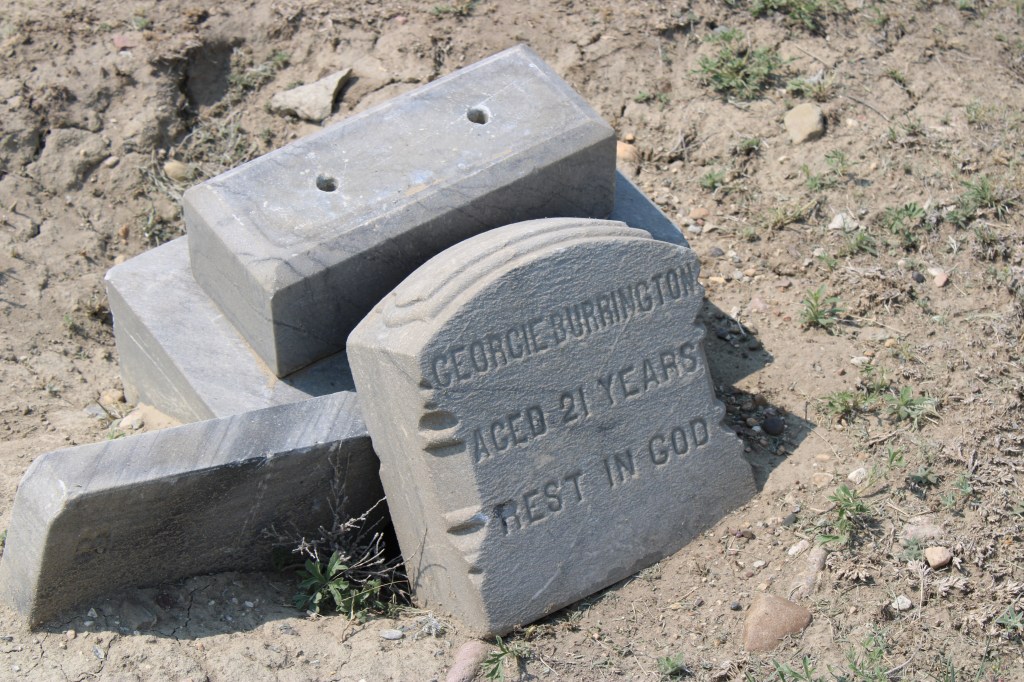
Yet as Highland Cemetery opened in 1906, joining its neighbor the Catholic Calvary Cemetery, the number of burials at Mount Hope Cemetery declined, judging from accounts published in the local newspapers. George Barrington, the son of a veteran Great Northern Railroad engineer, died in a scuffle over a pistol outside of the Gold Bug saloon. He was buried in August 1908.
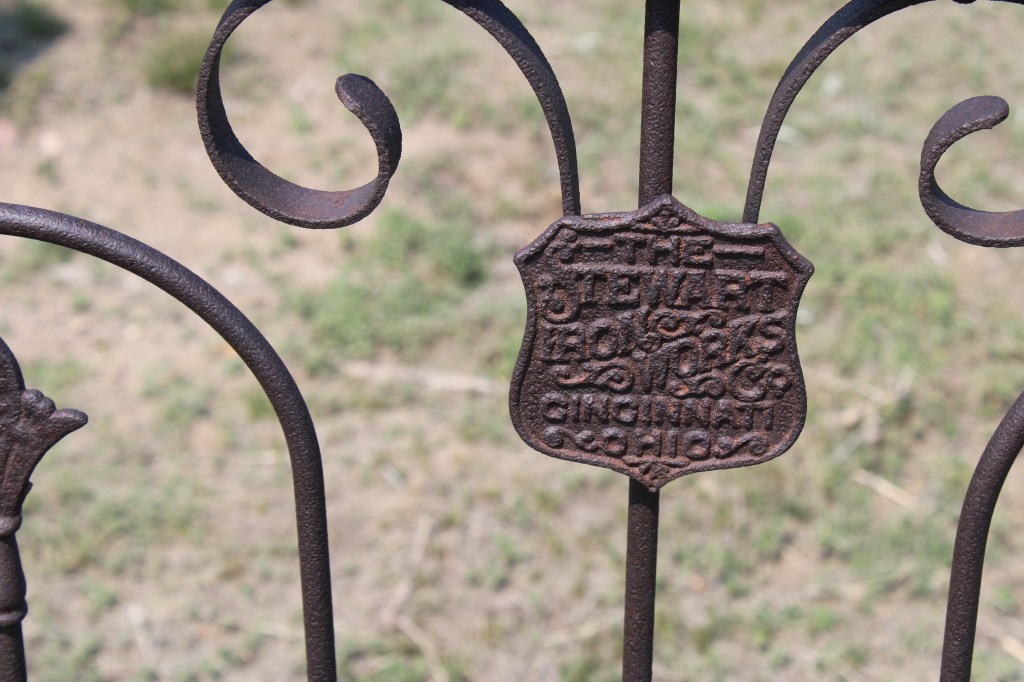
Members of the Masonic lodges in Havre and Glasgow turned out in numbers for the burial of Graham Williamson in March 1909. In May 1909, the Havre Monument Works installed a “handsome iron fence” made in Cincinnati OH, to mark the family plot of C. B. Van Alstine.
Van Alstine plot.
But then in May 1909 burials took place at Mount Hope Cemetery that may be considered the event that began the cemetery’s third historic period as the public burial ground for the unfortunate and marginalized in the city. Joseph Kirschweng escaped from the state asylum at Warm Springs returned to Hill Countyand killed his wife and children before committing suicide. All four were buried at Mount Hope.
In October, Rev. William Jackson, an African American minister who once served at Fort Assiniboine before becoming the pastor of the African Methodist Episcopal Church in Havre was buried at Mount Hope. Two years later, Martha Allen, a member of the AME church, was buried at Mount Hope with “one of the largest funeral corteges ever seen in the city.” (Havre Plaindealder, May 6, 1911). Two years later in August 1913 an abandoned baby found dead at city hall was buried at Mount Hope while in September William P. Farrow, “the stranger who was run over by a switch engine,” was buried at the cemetery (Havre Promoter, September 12, 1913). Victor Urkins, a Great Northern shop employee who allegedly committed suicide, was buried at Mount Hope in October 1913. Then in November came the funeral of Lucy Barnes, the wife of W. H. Barnes, a longtime resident and former domestic employee of Robert L. McCulloch at Fort Assiniboine, who also was African American and member of the AME Church. Most of the Japanese burials here took place from 1909 to 1920.
Burial accounts in the local newspapers about Mount Hope Cemetery become few and far between by the time of World War I. Three of the last stories were about Chinese residents: Wong Hoy Lang in 1921; N. Len, who was a gardener in 1922; and Lo Bow in 1924. Lo Bow “had lived in Havre for the past 30 years and was interested in the restaurant business at the time of his death.” (Havre Promoter, September 23, 1924). 1924 was the last year Mount Hope Cemetery would be mentioned in local newspapers for decades to come.
Standard histories tell you that Cut Bank, the seat of Glacier County, dates to 1891. But significant numbers of permanent settlers did not arrive until the first years of the 20th century, following a major investment by the Great Northern Railroad to build a huge steel bridge and railroad offices, shops, and a roundhouse. The Fort Benton River Press on February 12, 1901, reported that “Cut Bank is rapidly assuming a metropolitan appearance.”
The initial railroad boom soon slowed until the homesteader movement brought new growth. In 1911 town officials agreed to discuss the creation of a permanent town cemetery with state officials. Between 1911 and 1914 citizens formed the Crown Hill Cemetery Association and the first documented burials in the local newspaper took place in 1914.
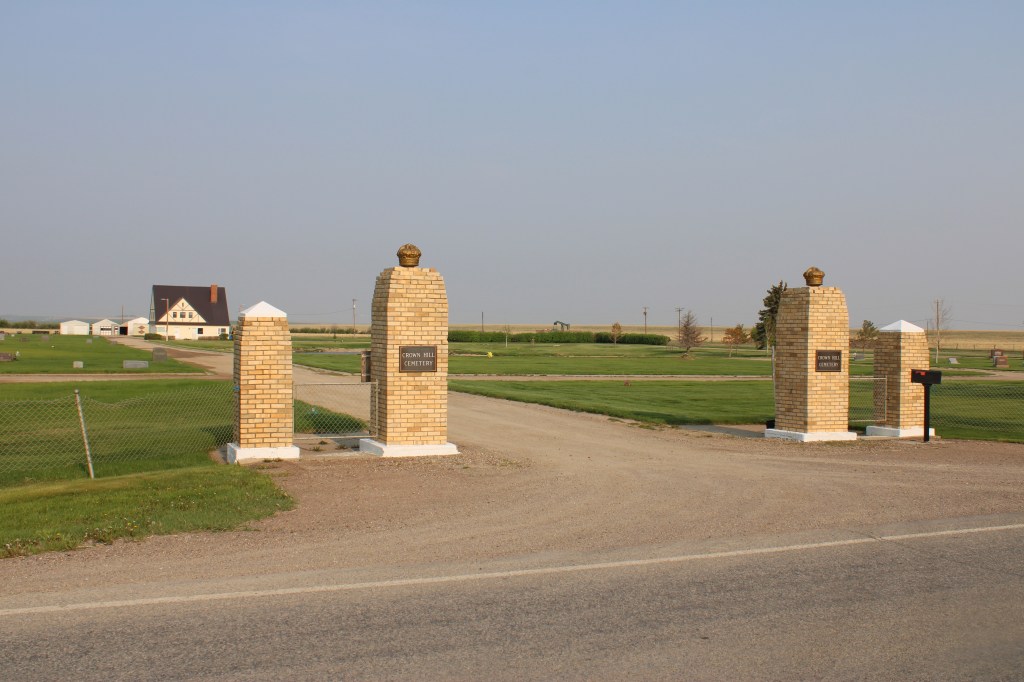
Entrance to Crown Hill Cemetery
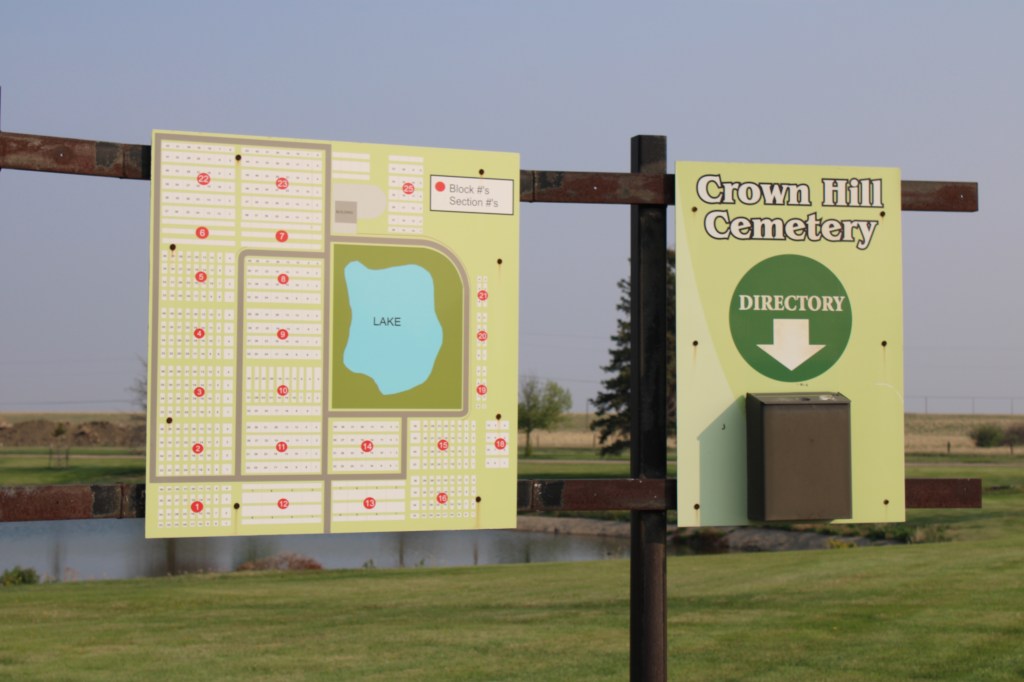
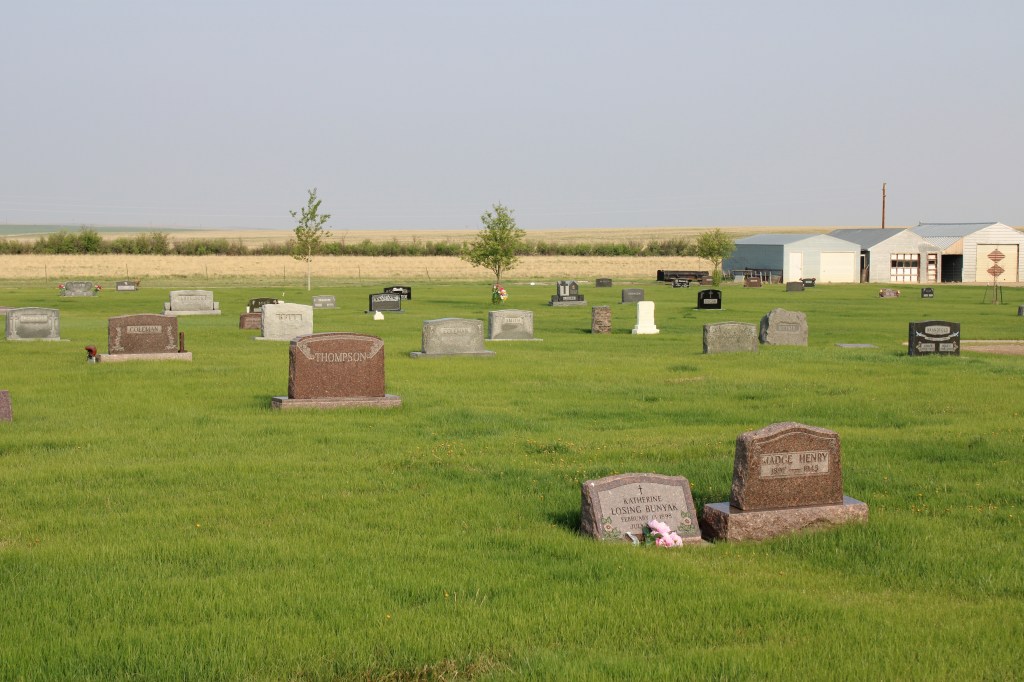
Located north of town the cemetery is on a slight rise and has an impressive view of Cut Bank to the South. A small lake is the focus of the cemetery plan.
See the grain elevators to the south.
Otherwise the cemetery contains long rows in a rectangular manner and there are few huge grave markers, instead many dignified and subtly designed markers cover the grounds.
There are several interesting markers and many note a fraternal lodge association.
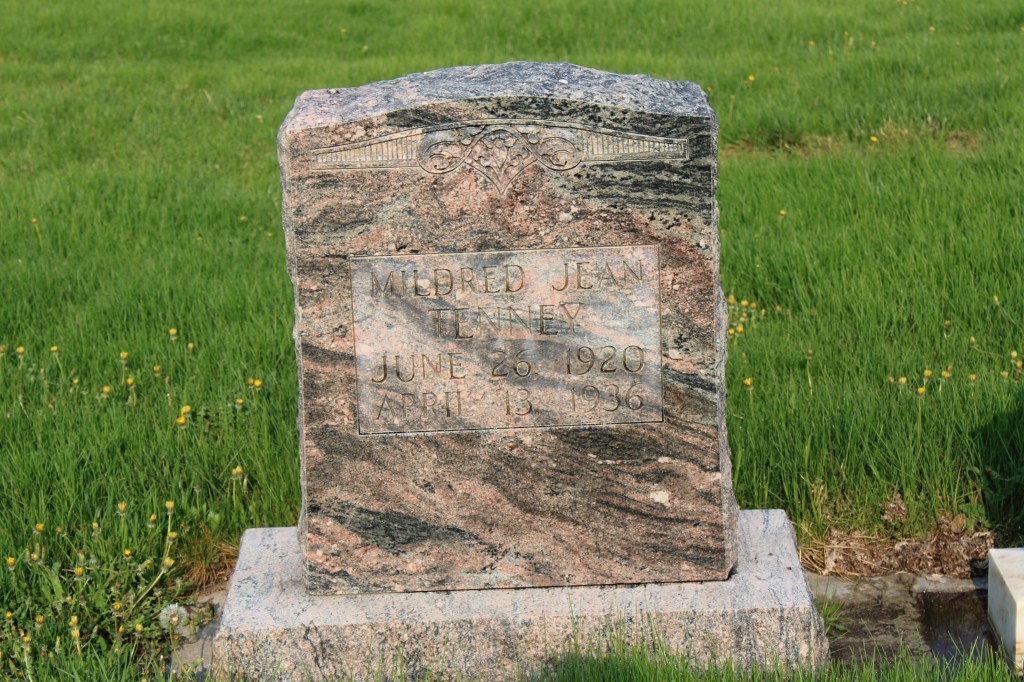
The Thomas marker is one of the oldest.1936 marker with Art Deco styling
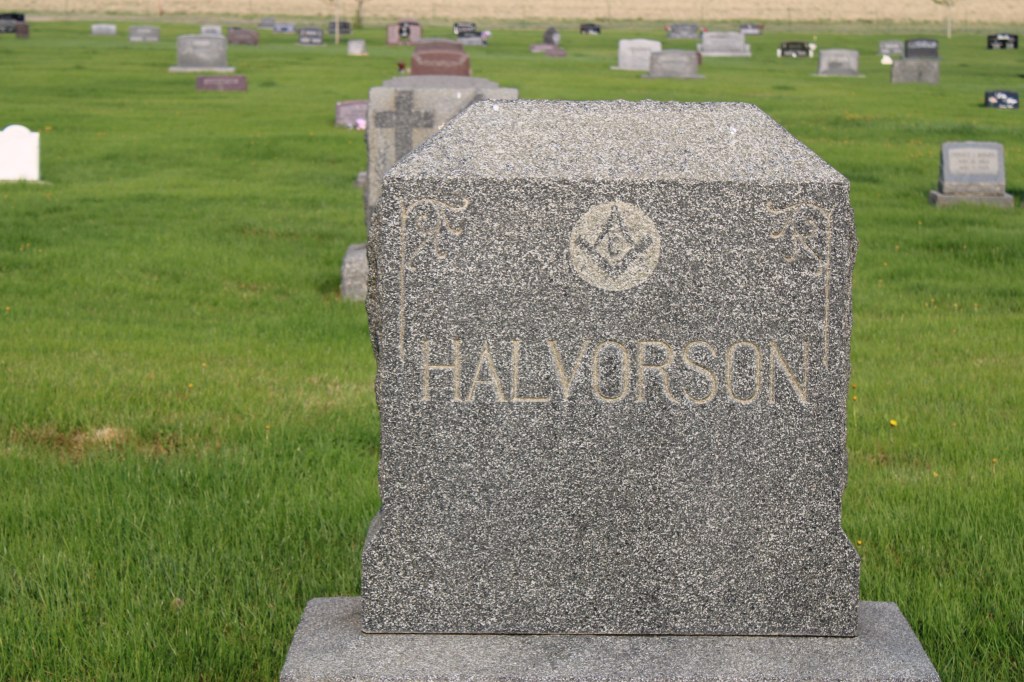
The Halvorson marker dates to be death of Mrs. Harry Halvorson who died in 1924. At that time her funeral was the largest ever held in Cut Bank. The Midland Empire of April 22, 1924 reported that 650 attended the funeral and that 77 cars went from the town Masonic Hall to the cemetery. A member of the Rebekah lodges in both Cut Bank and Shelby, Halvorson’s funeral attracted other lodge members from Shelby, Conrad, Valier and Browning. Her husband was the senior member of the Halvorson mercantile company, which started in 1901.
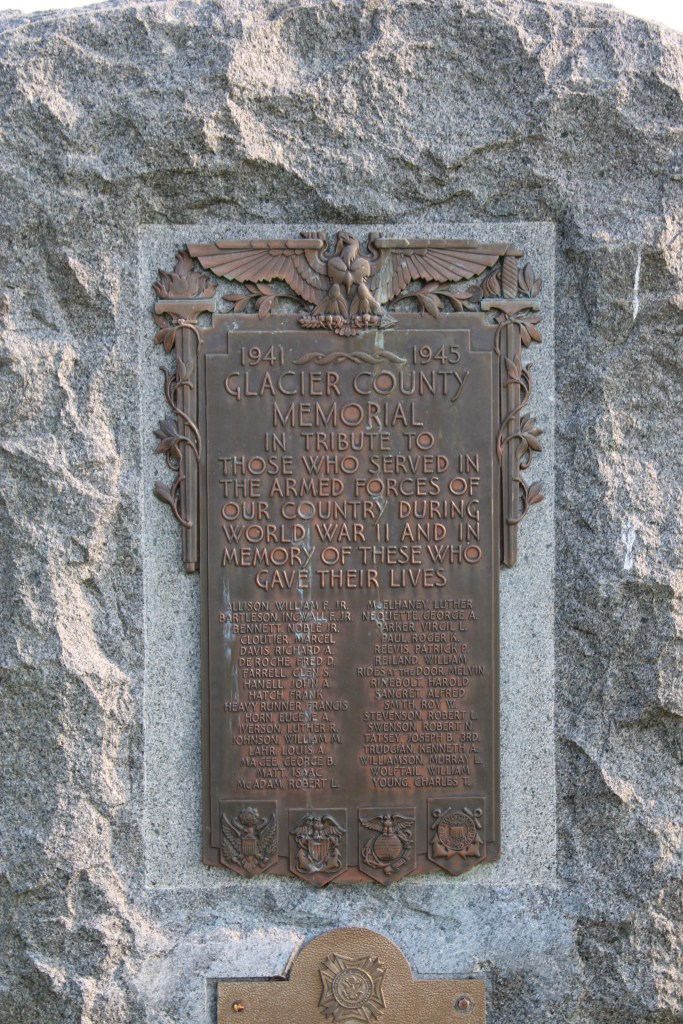
Another important marker is the veterans memorial from World War II. Cut Bank played a significant role as a satellite air field for the Great Falls Army Air Base. In 1942-43 pilots trained here in flying the B-17 Flying Fortresses. In 1948 the army conveyed the base to the town for civilian use.
Perhaps an unattended consequence of the military air base is that winter temperatures at Cut Bank was regularly available to national media, which played up the mage of Cut Bank as the coldest place in the lower 48 states. Cut Bank embraced the image, as this bit of roadside sculpture below attests. It stands at the eastern entrance into town on US Highway 2.
Crown Hill Cemetery is one of the oldest properties in Cut Bank open to the public. The cemetery is well maintained, well manicured and a testament to the respect and dignity local residents give to their past.
Standard histories tell you that Cut Bank, the seat of Glacier County, dates to 1891. But significant numbers of permanent settlers did not arrive until the first years of the 20th century, following a major investment by the Great Northern Railroad to build a huge steel bridge and railroad offices, shops, and a roundhouse. The Fort Benton River Press on February 12, 1901, reported that “Cut Bank is rapidly assuming a metropolitan appearance.”
The initial railroad boom soon slowed until the homesteader movement brought new growth. In 1911 town officials agreed to discuss the creation of a permanent town cemetery with state officials. Between 1911 and 1914 citizens formed the Crown Hill Cemetery Association and the first documented burials in the local newspaper took place in 1914.
Entrance to Crown Hill Cemetery
Located north of town the cemetery is on a slight rise and has an impressive view of Cut Bank to the South. A small lake is the focus of the cemetery plan.
See the grain elevators to the south.
Otherwise the cemetery contains long rows in a rectangular manner and there are few huge grave markers, instead many dignified and subtly designed markers cover the grounds.
There are several interesting markers and many note a fraternal lodge association.
The Thomas marker is one of the oldest.1936 marker with Art Deco styling
The Halvorson marker dates to be death of Mrs. Harry Halvorson who died in 1924. At that time her funeral was the largest ever held in Cut Bank. The Midland Empire of April 22, 1924 reported that 650 attended the funeral and that 77 cars went from the town Masonic Hall to the cemetery. A member of the Rebekah lodges in both Cut Bank and Shelby, Halvorson’s funeral attracted other lodge members from Shelby, Conrad, Valier and Browning. Her husband was the senior member of the Halvorson mercantile company, which started in 1901.
Another important marker is the veterans memorial from World War II. Cut Bank played a significant role as a satellite air field for the Great Falls Army Air Base. In 1942-43 pilots trained here in flying the B-17 Flying Fortresses. In 1948 the army conveyed the base to the town for civilian use.
Perhaps an unattended consequence of the military air base is that winter temperatures at Cut Bank was regularly available to national media, which played up the mage of Cut Bank as the coldest place in the lower 48 states. Cut Bank embraced the image, as this bit of roadside sculpture below attests. It stands at the eastern entrance into town on US Highway 2.
Crown Hill Cemetery is one of the oldest properties in Cut Bank open to the public. The cemetery is well maintained, well manicured and a testament to the respect and dignity local residents give to their past.
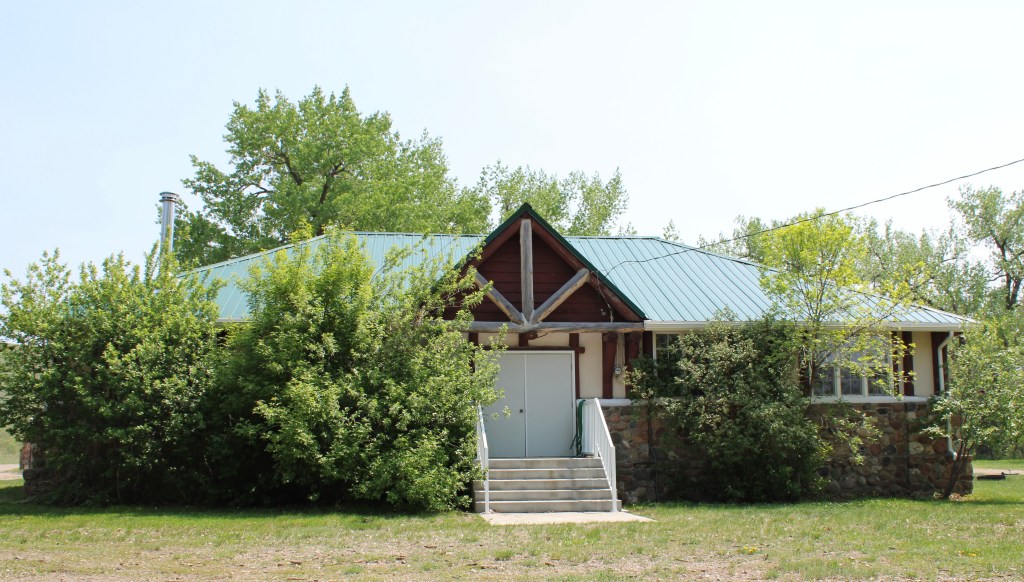
North of the railroad town of Zurich along US Highway 2 in Blaine County is Zurich Park, a New Deal era landmark from 1936-1937.
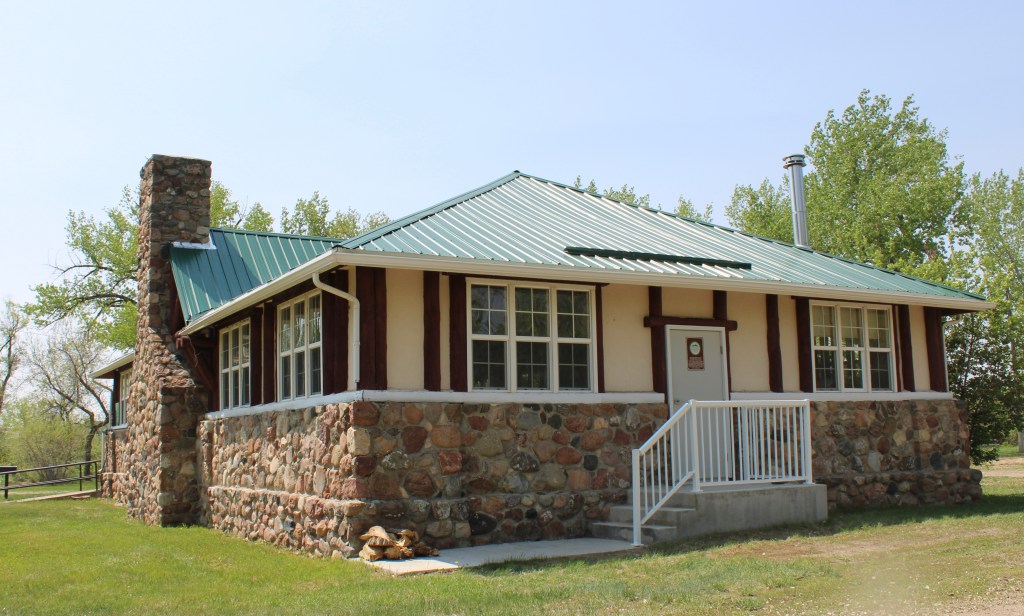
Originally called the Zurich Recreation Park, it developed as one three recreation areas in the planned South Wagner Resettlement Project. And the park in turn centered on the Community hall built at the park’s entrance.
The Chinook Opinion on July 16, 1936 reported the initial plans for the park. The facility was centered on 30 Mile Creek, not far from the river and you crossed one of the canals of the Milk River Project as you approached the park from Zurich.
Milk River Project
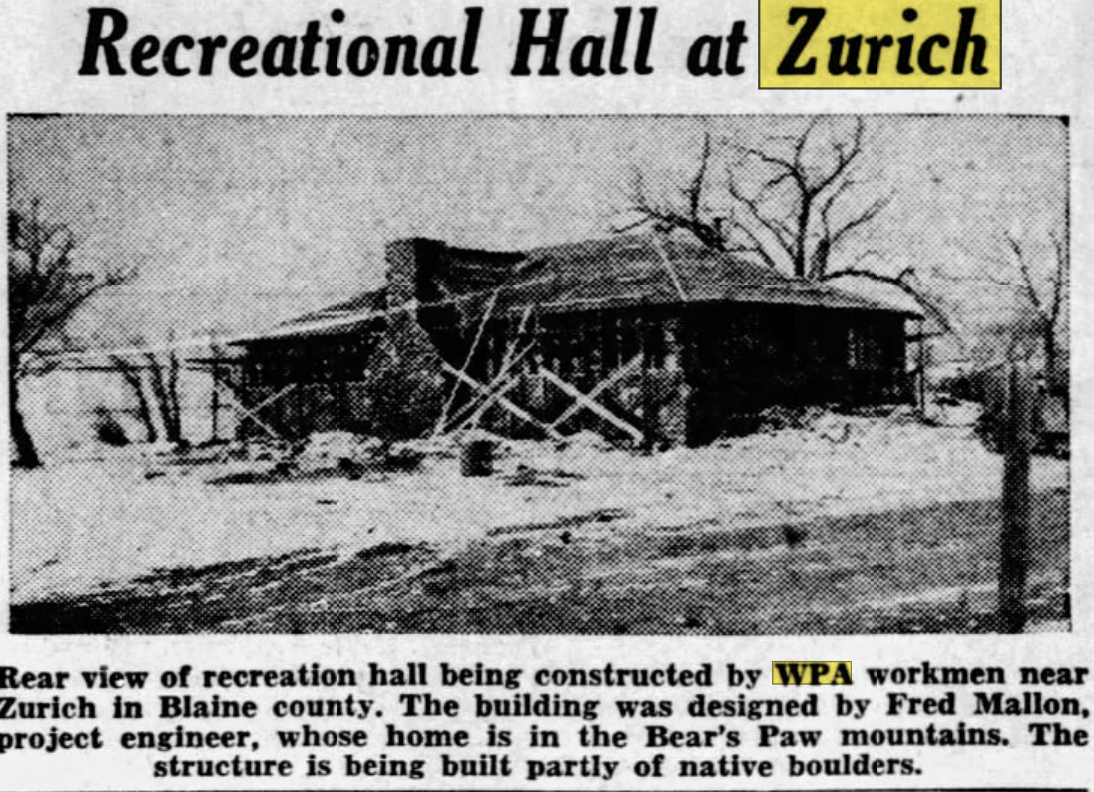
The community hall was 30 by 60 feet. 25 men, supervised by Floyd White of the county, constructed the building and other park features. The newspaper reported that the community hall “will be of native stone, logs and rough timber in rustic effect, plans having been drawn by Fred Mallon, project engineer” for the Resettlement Administration. The newspaper added that “This type of building will have the advantage of being more permanent, more attractive and will provide more labor and cost less for materials.”
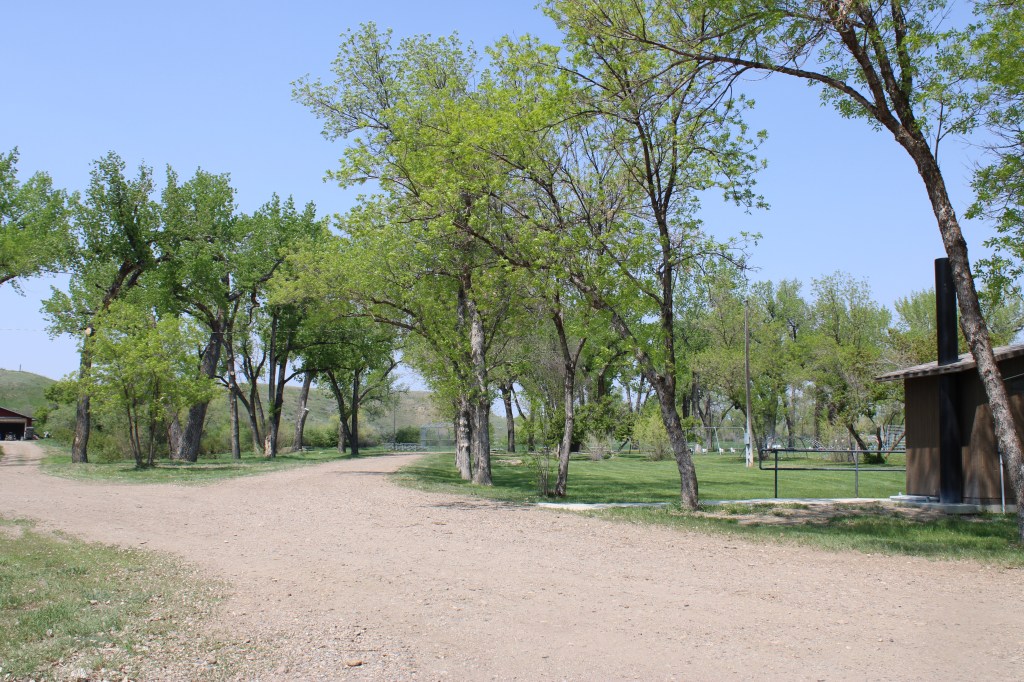
The park initially included a swimming area, picnic facilities and playgrounds.
In the winter of 1937 the Great Falls Tribune published a photograph of the almost completed community hall, with snow piled about the building. By the time summer rolled around the park was ready for use.
It served not just Zurich but hosted groups from Chinook and Harlem for decades. It quickly became a recreation and community center for all sorts of activities and meetings. The newspaper ad below was in the Harlem News of October 27, 1939.
For instance, regular district meetings of the Soil Conservation Service, the Beet Growers Association, 4-H clubs and home demonstration clubs met at the community hall. In 1939 the city of Chinook, who appreciated that local children had refrained from heavy use of fireworks, hosted a party at the park and bussed some 200 kids from Chinook for the afternoon event with hot dogs and ice cream. Even 40 years later the community hall was constantly in use by all sorts of groups.
In 1966 Chinook Lions club members gave the park and hall a facelift, installing five new picnic tables. The Harlem club joined in the effort and added six new picnic tables. Both groups made improvements to the playgrounds. The Chinook Opinion of June 9, 1966 reported: “These tables were built by the Chinook and Harlem high school shop department[s]. It is understood that a new resurfacing of the highway to the park [today’s Park Road] will be done this summer, and the park will be put in first class shape.” Zurich Park remains well maintained today as these images prove. Rural life and community events have changed in the 21st century but Zurich Park remains as an important legacy of the Great Depression decade.

























 Montana's Historic Landscapes