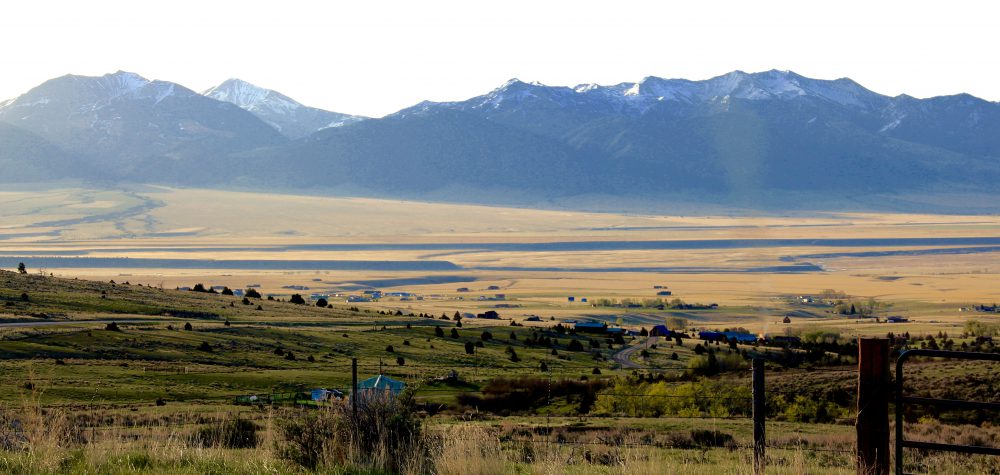
The Missoulian a few days ago had a splendid article about the demonstration of a beaverslide hay stacker at the Grant-Kohrs National Historic Site in Deer Lodge.
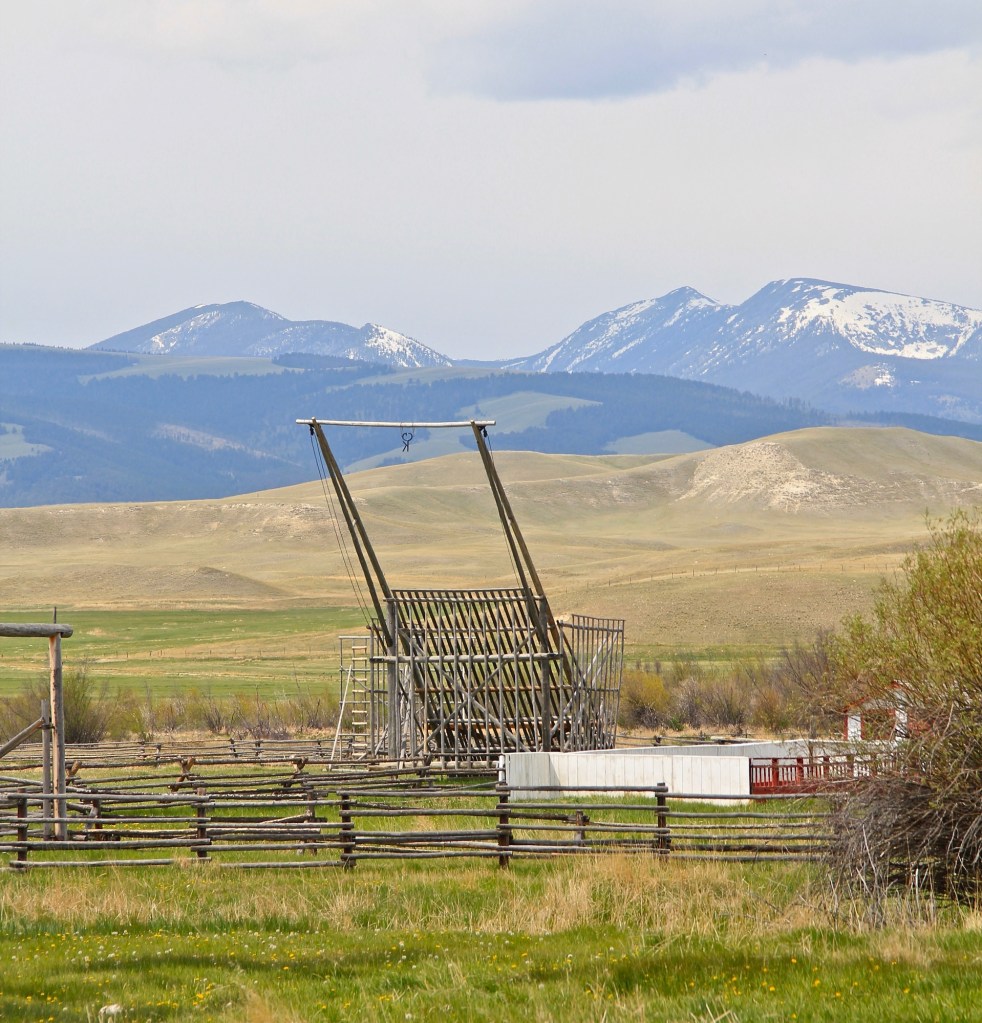
The Deer Lodge Valley is a good place to find these ingenious machines, invented in the early years of the 20th century. Indeed in my 1984 work on the state historic preservation plan I encountered my first beaverslide near Galen, as shown below.

But to see the biggest concentration go to the Big Hole Valley in Beaverhead County. They were invented there in 1908. It takes two teams of horses to pull the hay up the slide and then drop it into the squarish pen, creating the hay stack.

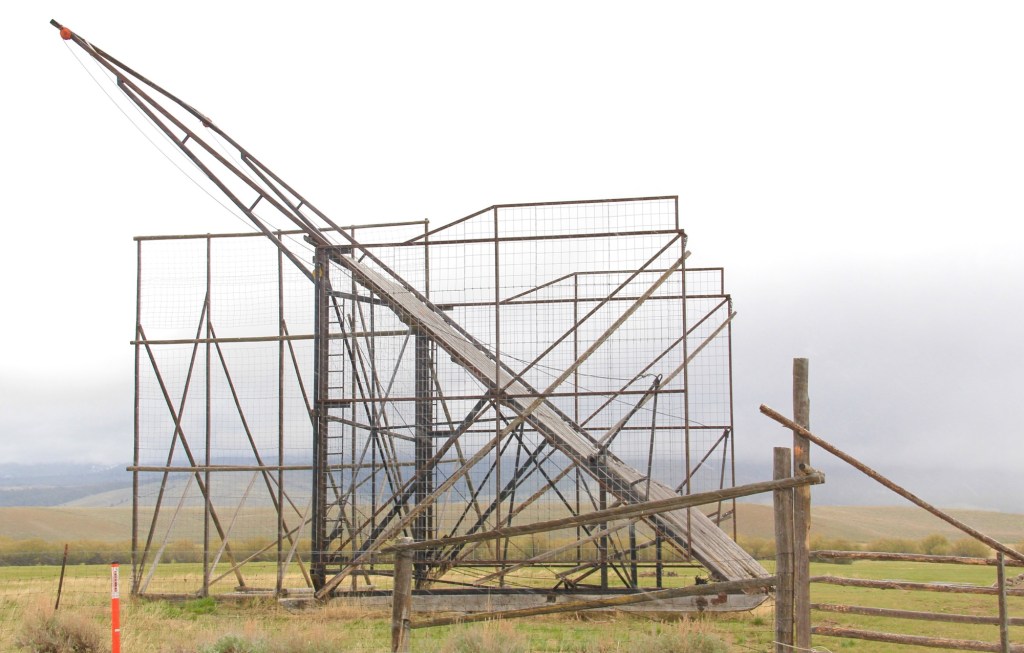

You can find great examples along the county’s historic roads.


Powell County along the Blackfoot also has a scattering of the hay stackers.


40 years ago I was certain that the beaverslides were not long for this world. Several folks at community meetings spoke of how many had disappeared. Yet ranch families were not ready to let them go, for tradition’s sake and the fact that loose stacked hay keeps better than modern machine baled hay. Beaverslide hay stackers remain part of the rural landscape of western Montana.

 By the late 1980s there was little doubt that a substantial development boom was underway in Flathead County. In the town near the Flathead Lake, like Bigfork, above, the boom dramatically altered both the density and look of the town. In the northern half of the county Whitefish suddenly became a sky resort center. In 1988, during a return visit to Montana, I did not like what I encountered in Flathead County–and thus I stayed away for the next 27 years years, until the early summer of 2015.


 Montana's Historic Landscapes