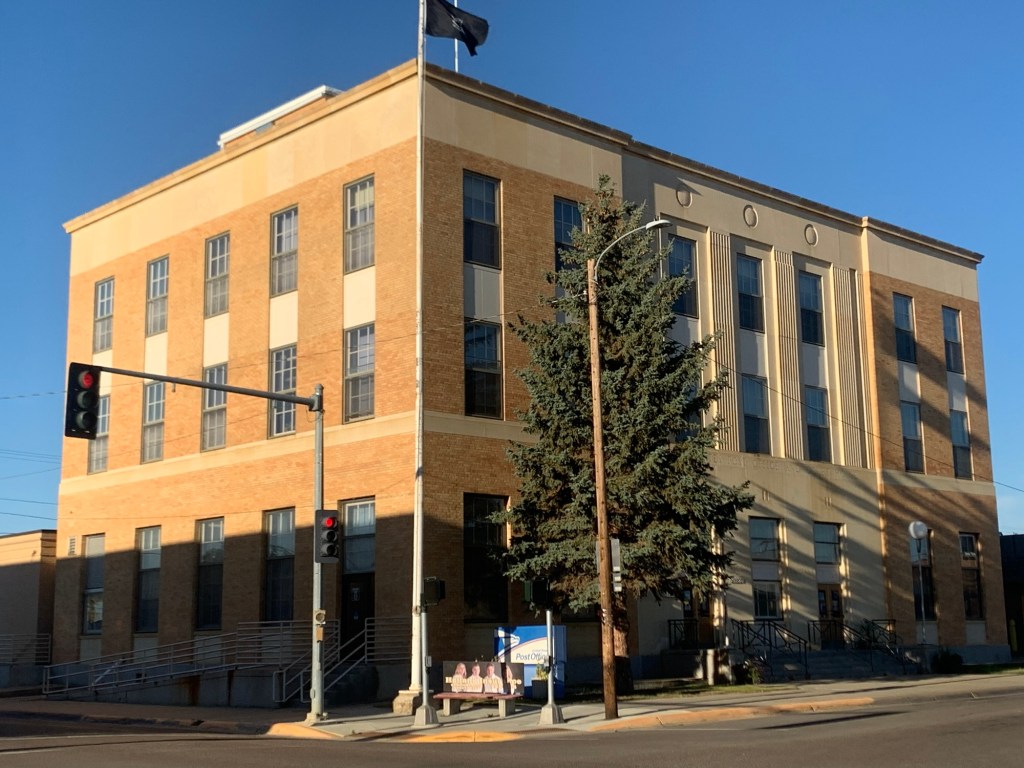
Glasgow’s amazing Federal building

One of my favorite, if not #1 itself, Depression-era buildings in Montana is the amazing Federal building in Glasgow. First, this triumph of New Deal design from 1939 is a powerful statement in the public architecture of northeast Montana.

As you may know, Glasgow embraces its reputation as the most isolated place in the nation, that it is the definition of the middle of nowhere (a reputation however that I really challenge). But the restrained classicism of the building is refined and tasteful, perfect of the region.
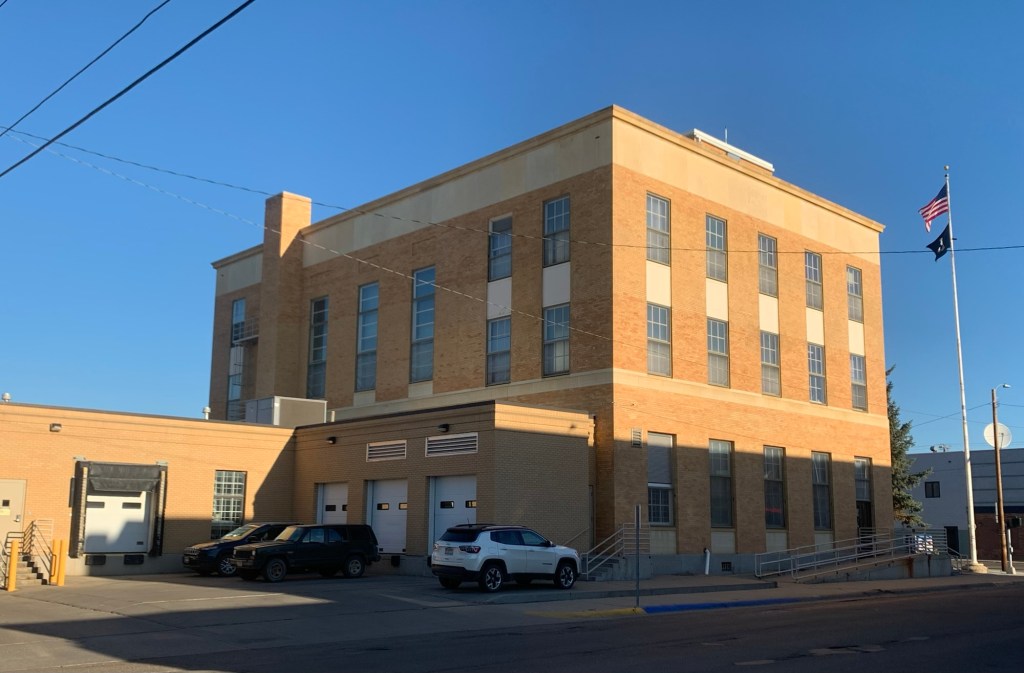
Second, I really admire the building because it is so intact after 86 years of use. Yes, there are some alterations, but when you step into the post office lobby, you do feel like you stepped back in the 1930s.
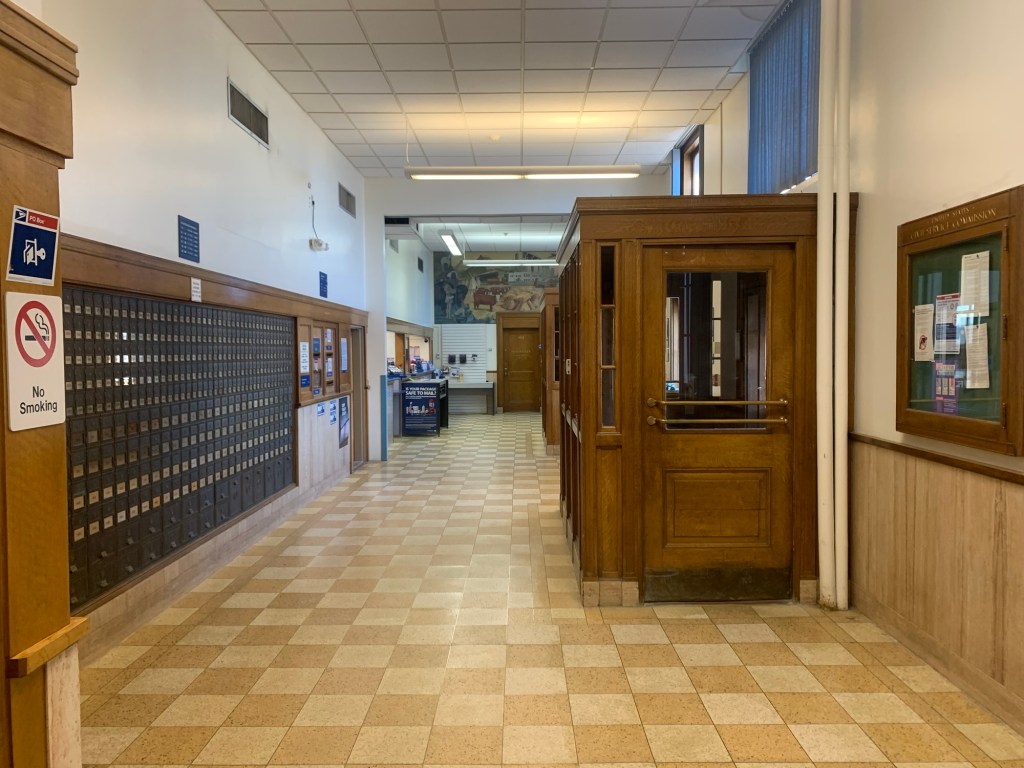
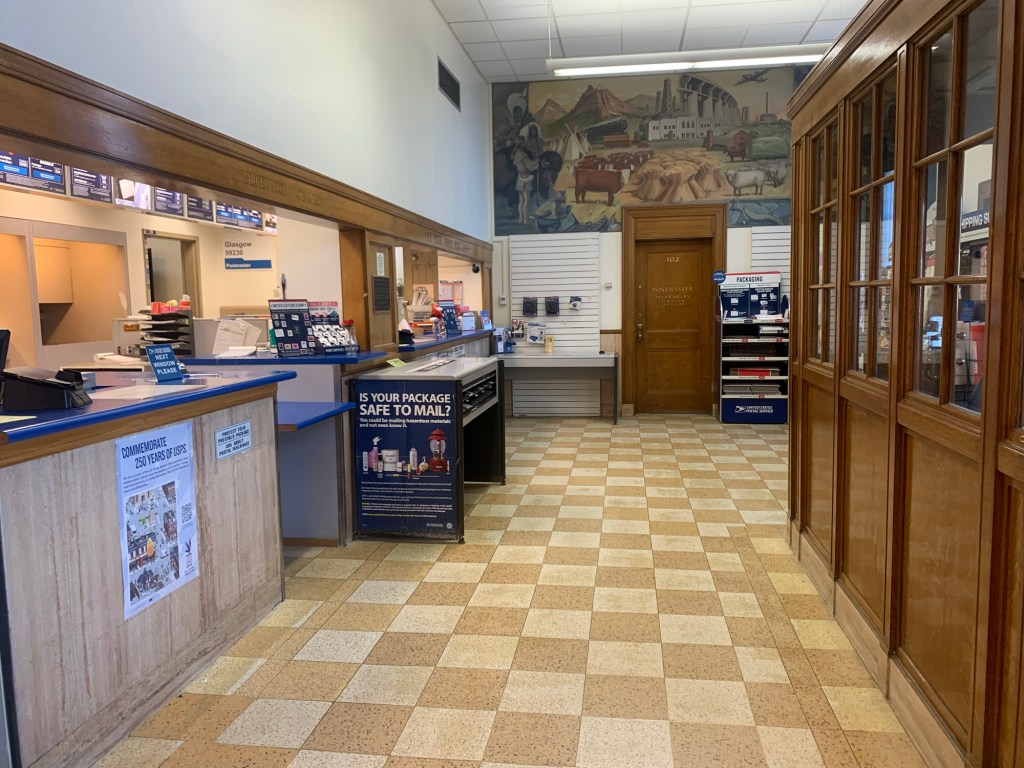
Then there is the wonderful mural, “Montana’s Progress,” by Forest Hill. Completed in 1942, as the county’s other major, and huge, New Deal project, Fort Peck Dam and powerhouse, was gearing up to maximum production for World War II.

The left side speaks to the Native American past and the nearby presence of Fort Peck Reservation. There’s even a reference to gold panning, which never happened along this section of the Missouri. Then the right side reference the coming of settlers and the parceling of once open land into regular measured surveys.

The center section speaks to the Progress, predicted to come, centered on railroads, agriculture (cattle, wheat, hay, sheep), and industry, with the commanding image of the amazing Fort Peck spillway ( already world famous to an earlier feature story in Life magazine) and in the top corner, a sugar beet refinery.

The bomber flying above it all of course spoke to the immediate present , of World War II, but it also correctly predicted the future. The town and county would have its greatest period of prosperity in the 1950s and 1960s with the Glasgow Air Force Base.

What a historic document of its time and what an amazing building, still serving the community almost 90 years later.
Glasgow on the Hi-Line

IMG_2790

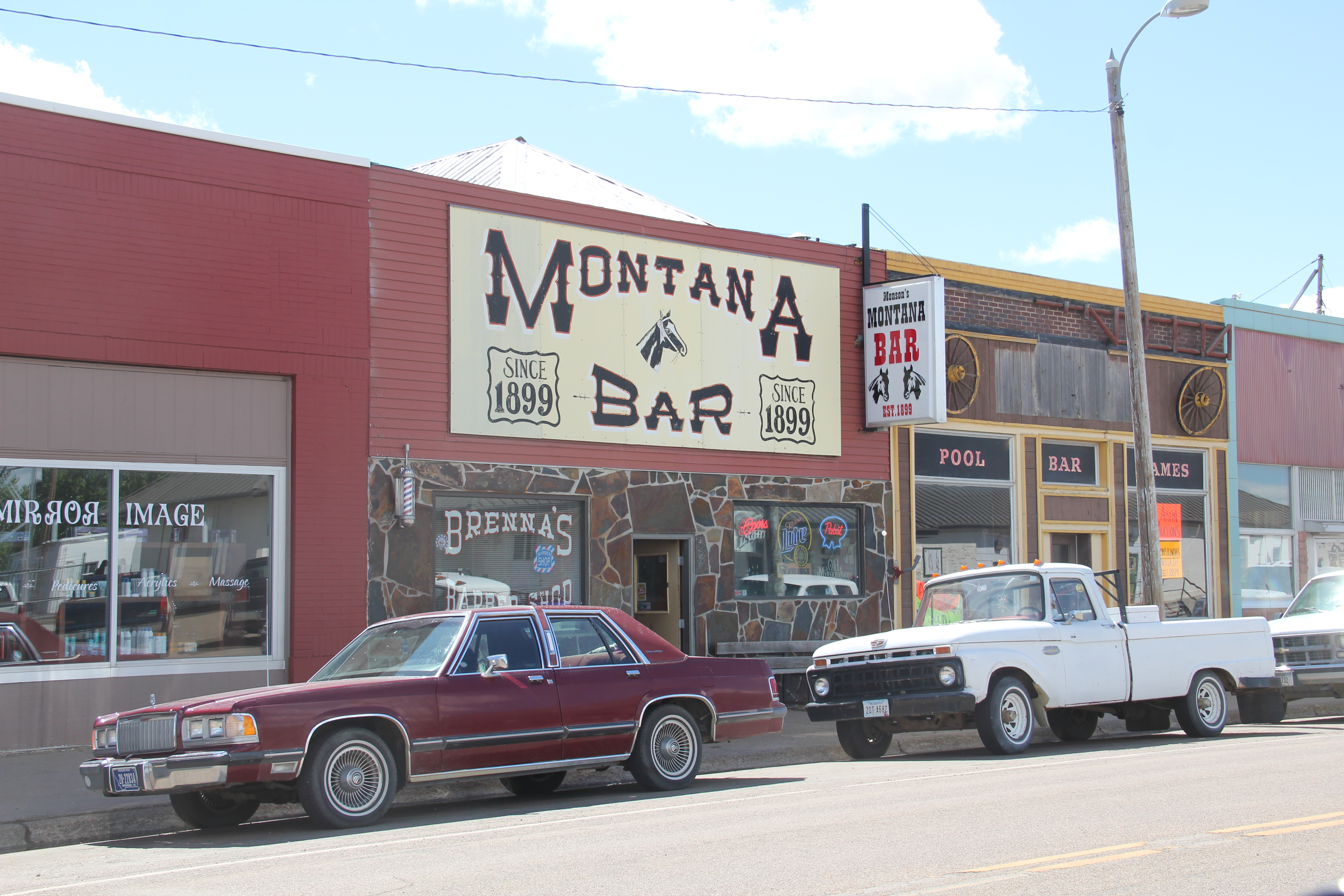
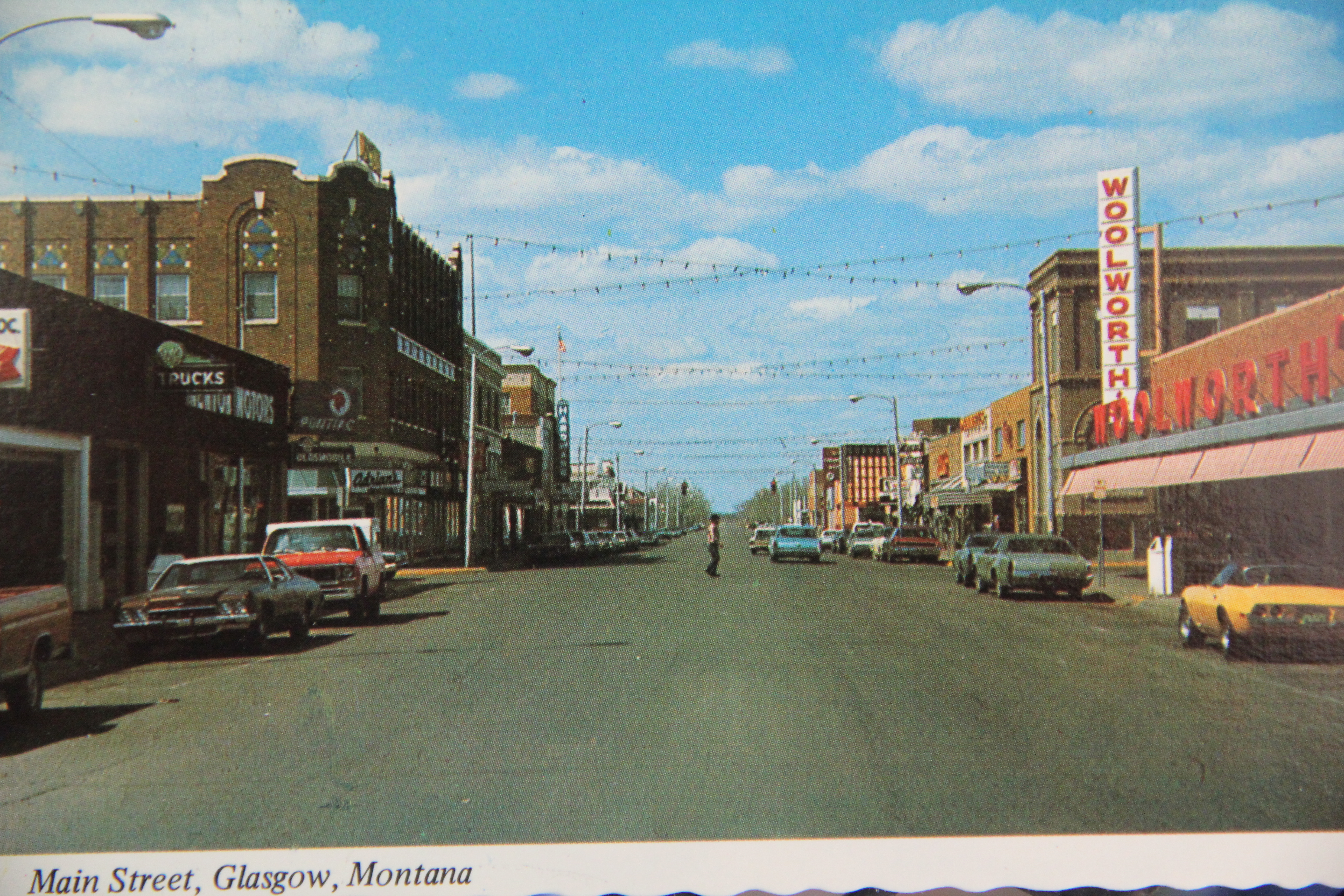
Glasgow, the seat of Valley County, has a rich small-town urban landscape, among the best along the Hi-Line of U.S. Highway 2.  Although businesses and population has struggled since I spent time there during my 1984 fieldwork (the population dropped from 4,455 in 1980 to 3,250 in 2010), the town retained an edge of vibrancy and vigor.

IMG_7984


Many of the patterns shaping life in the northern reaches in Montana are still on display within Glasgow, starting with the original impact of the Manitoba Road, then Great Northern Railway.  The combination passenger station continues to serve travelers, who if they wish to step off the train will find a classic strip of bars and cafes facing the depot.

IMG_7977


The railroad corridor has deeply imprinted the town, with giant elevators dominating the skyline while even the highway as it dips under the tracks by means of the New Deal-era underpass pays tribute to the true “right-of-way” through Glasgow.

IMG_7985  IMG_7983


So too has the federal government left a deep imprint on the town, from the irrigation projects of the U.S. Reclamation Service to the construction of Fort Peck Dam in the 1930s and then the Glasgow Air Force Base in the late 1950s and 1960s. The Glasgow Post Office and Federal Courthouse lies at the heart of downtown, reflecting in its blocky massiveness and Art Deco styling the federal presence.

IMG_7949

Just as important, the building tells the federal side of the local story through the New Deal mural, “Montana Progress,” by artist Forest Hill that adorns the lobby.  It is one of the state’s six extant New Deal post office murals. Here the coming era of progress–symbolized by railroads, irrigation (the sugar beet factory), Fort Peck Dam and electric power–supplants cowboys, Indians, and the rural landscape itself.

IMG_7945 IMG_7942


Another landmark featured in the mural is the Glasgow Civic Center, part of the larger effort to create community institutions in the face of the often overwhelming sense of change and despair during the Great Depression.  The Civic Center still serves as a town anchor, an important part of Glasgow’s public landscape.

IMG_7964

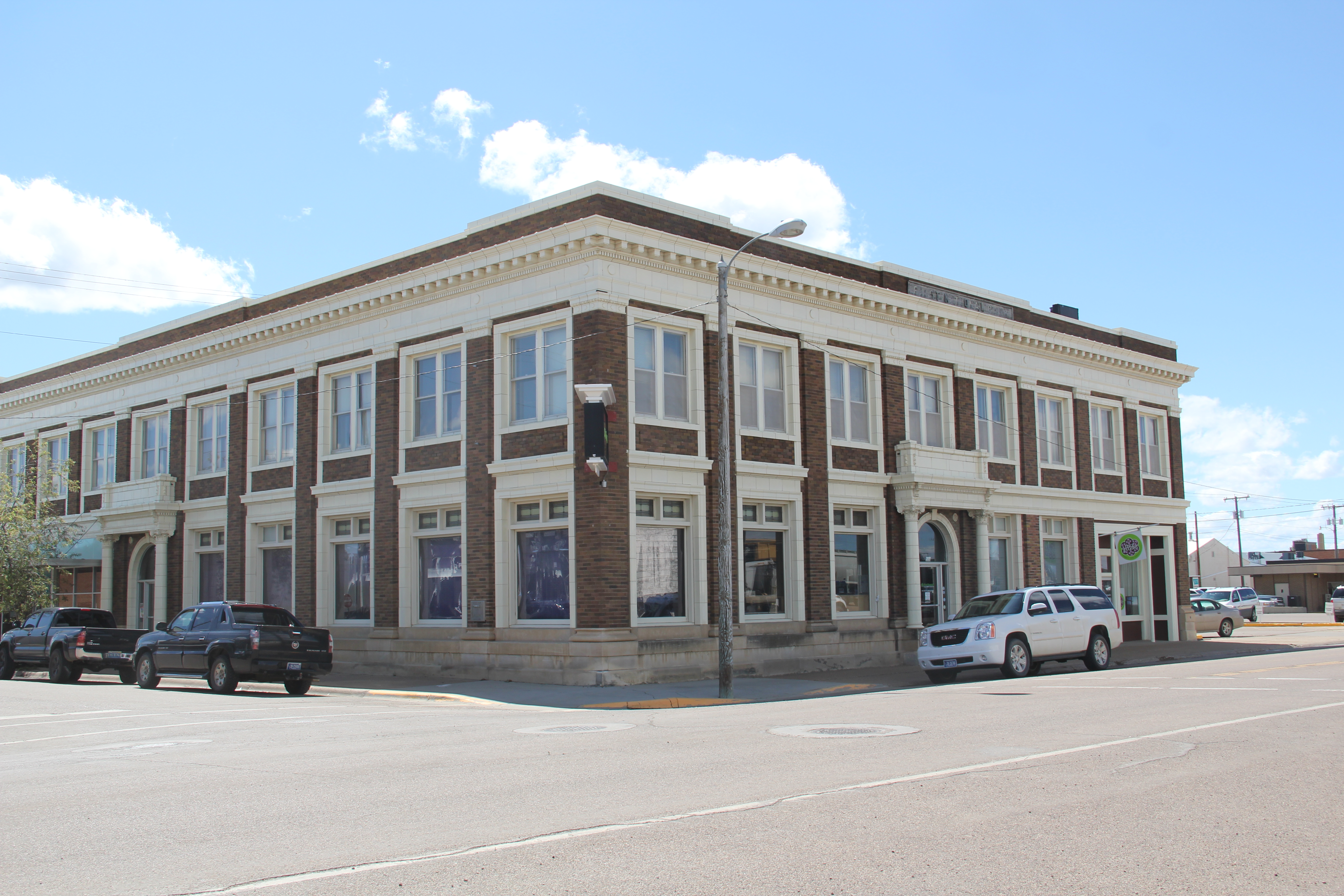
The federal imprint left a decided modernist turn to the townscape, although preservation efforts in the last generation have kept earlier classical or revival-inspired buildings part of the town, such as the Goodkind Block, the First National Bank, and especially the Rundle Building, which may be the town’s most distinctive architectural statement from its initial settlement and development era.

IMG_7982


IMG_7980

IMG_7952

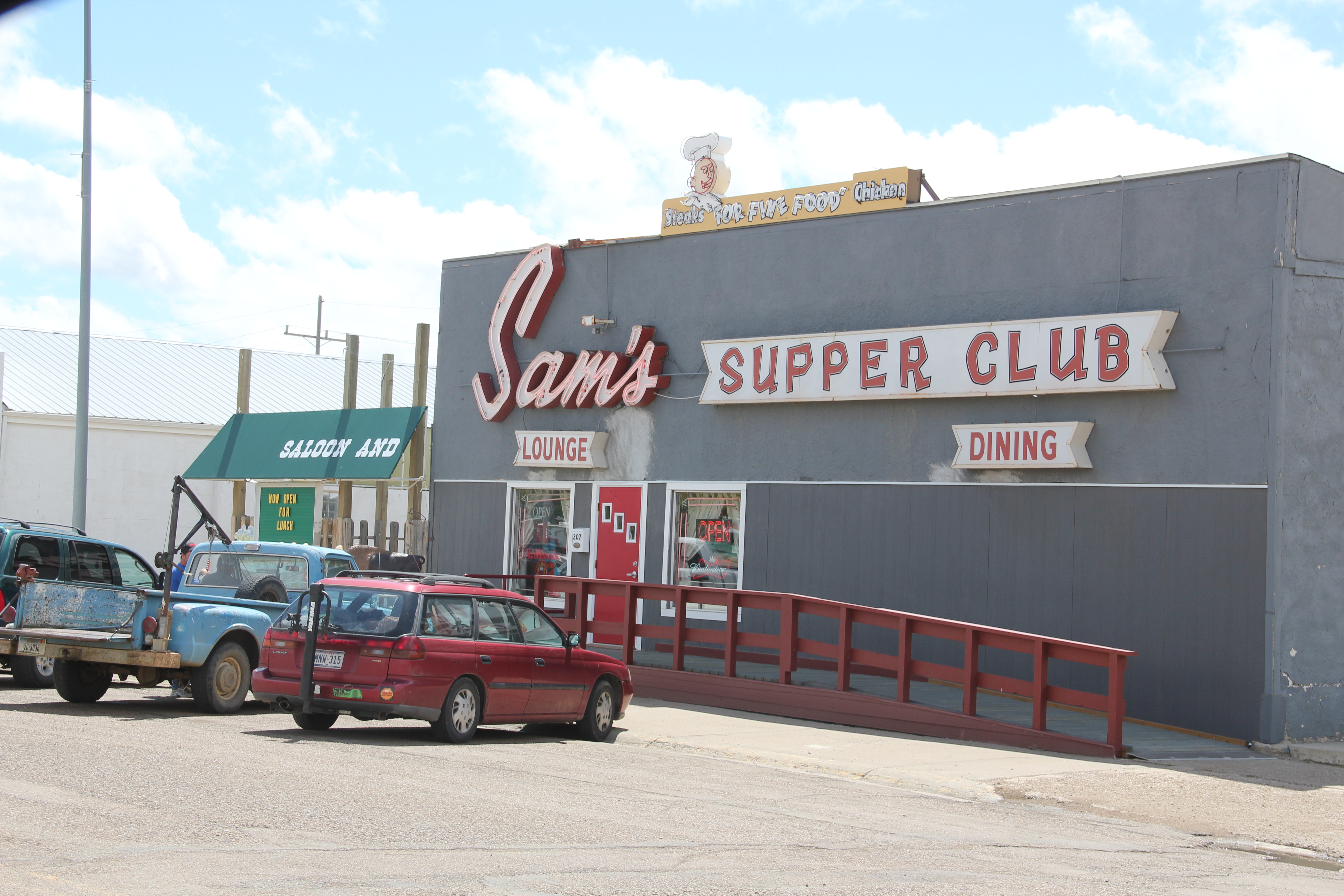
The highway corridor shows the modernism of the 1950s most graphically through restaurants, bank buildings, and signs designed to grab the attention of all those who entered.

IMG_7888 IMG_7956


IMG_7988


Glasgow’s built environment tells the story of how federal programs, from irrigation to New Deal to the Cold War, could leave marks still apparent in the 21st century.