Great Falls’ Historic Jewish Cemetery

Over the past couple of years, I have documented several historic cemeteries in Great Falls. But I had missed one, the city’s Jewish Cemetery, and it too is on Highland Road south of the city, and east of the older Highland Cemetery. It’s a bit difficult to find as there are no signs but a metal entrance “gate” shows you the way.

The Jewish community in Great Falls established the cemetery in 1916, a few years after the establishment of the much larger and nearby Highland Cemetery. The Great Falls Hebrew Association owns the property, which according to tax records has ten acres. A 2003 story in the Great Falls Tribune estimated 20 burials but no number is certain. The majority of the intact grave markers are clustered in a row in the western end of the cemetery.

But other markers are scattered across the top half of the cemetery while other family plots had been damaged before the efforts at restoration over the last ten years.

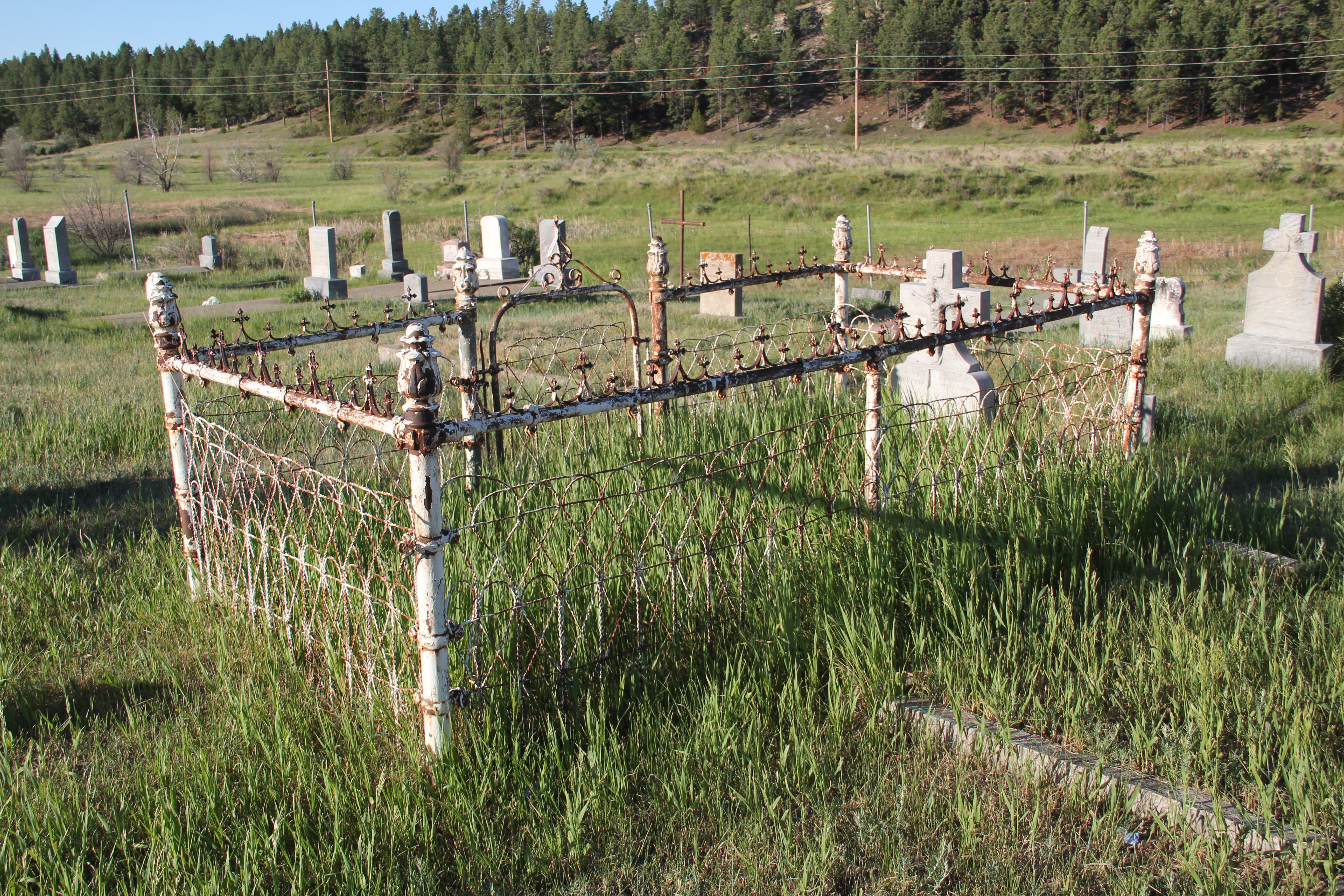
A low metal, open fence marks a family plot erected for Anna and Abraam [is it a misspelling and should be Abraham as newspaper stories suggest?] Bass, probably installed 1931-1932.

Abraam “Abe” Bass was “well known in sporting circles” and identified as a gambler, according to the Great Falls Tribune of May 10, 1931. He had earlier in 1931 been forced to end a lottery that he operated from the Star cigar store in Great Falls. He left the town looking for opportunities in Nevada but died in an automobile accident about 30 miles from Reno, Nevada. His wife Anna had died earlier.

Years of neglect mean that some markers have been damaged. Or perhaps moved, as in the case of the Baby Grossman marker of 1927.

The year 1940 appears to mark the end of the cemetery’s first generation of burials. Max Gold, a retired carpenter, was born in Russia. He lived in Cut Bank for 15 years but as his death in late 1949, the family buried him in Great Falls.
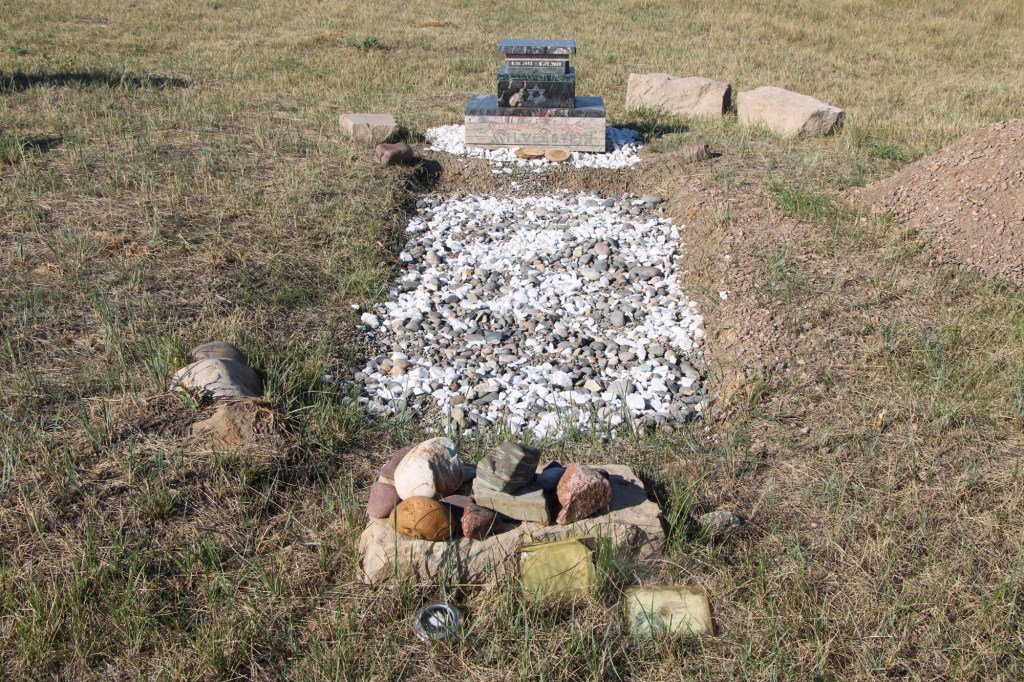
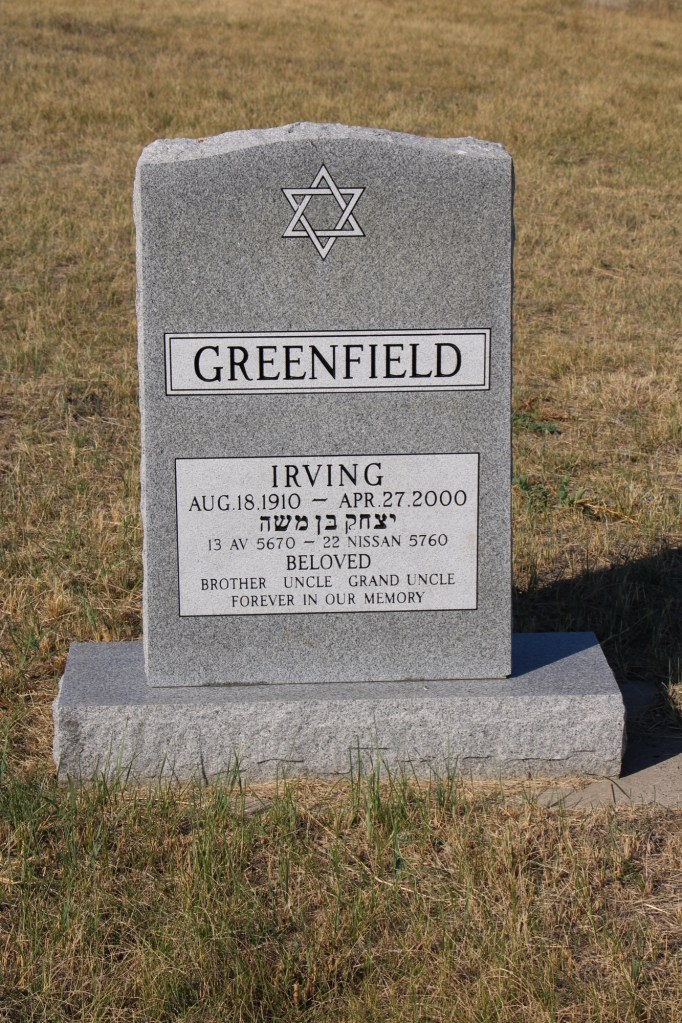
In the 21st century families again began to bury their dead here, with Irving Greenfield in 2000 and Allan Bruce Silverstein in 2012. Perhaps those burials encouraged the Association to begin regular oversight of the property, following its restoration by Max Daniel Weissman as his Eagle Scout service project in 2015.
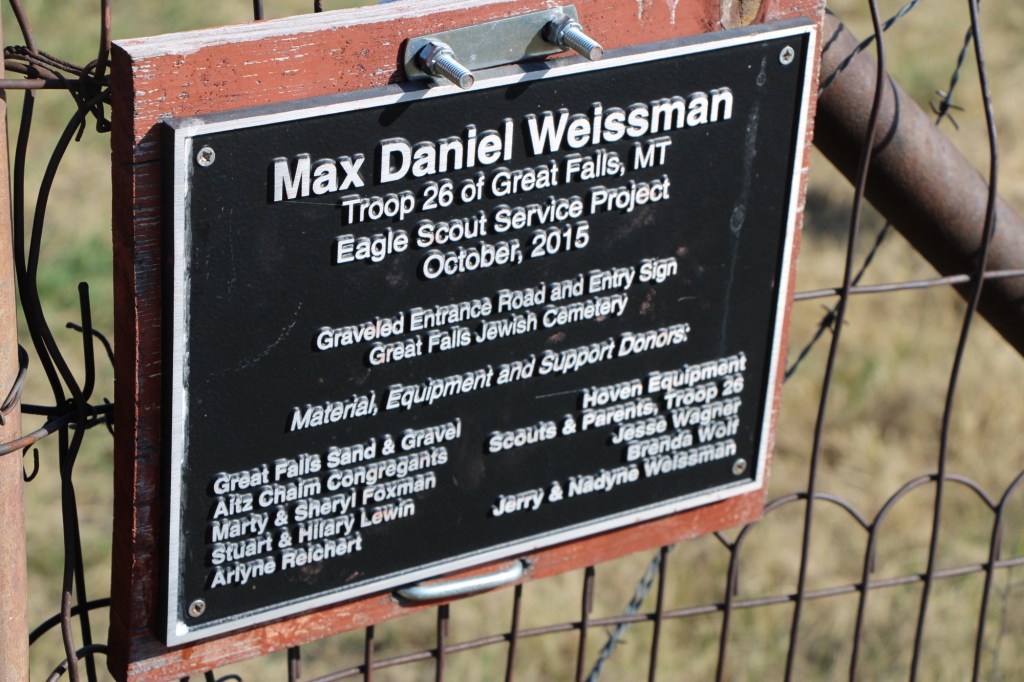
The Great Falls Jewish Cemetery is an important but once forgotten historic place in Cascade County. We can hope that the good efforts of maintenance continue and that more research is directed to the histories of those buried there.

Klein’s Cemeteries: Documenting a forgotten mining community

UMW Cemetery, U.S. Highway 87, Klein, MT

Without the striking cast-iron front gate proclaiming the U.M.W. of A. Cemetery, passengers in the cars and trucks roaring along U.S. 87 in Musselshell County would have no idea that they were passing through mining country. Outside of Red Lodge in Carbon County, Colstrip and Decker in Rosebud County, and Belt in Cascade County you don’t hear much about coal mining in Montana. The focus in the state’s history has always been squarely on the more extensive, and lucrative, mining in precious minerals, especially in western Montana. But here in the Bull Mountains north of Billings, investors were interested in the coal deposits as early as the 1880s. Significant investment didn’t come, however, until the Milwaukee Road decided to drive its transcontinental railroad line through the Musselshell Valley, just north of the coal deposits in and around the Bull Mountains.

In 1907 Republic Coal Company opened its first mine, but it was mine no. 2 that became the great producer, with miners at the peak bringing up 150 cars of coal a hour–and the production rarely slowed for the next 20 years until the Milwaukee Road lost interest in coal as it transformed its engines to diesel fuel and the depression came in 1930.

Most miners lived in Klein while others boarded at nearby Roundup, the county seat. Klein reached an estimated 1500 residents at its peak. Republic No. 2 stayed open to 1956, 25 years later the Milwaukee Road had abandoned the line and the region.

Klein is still here, greatly diminished by the closing of the mines and railroad in decades past. But the town’s cemeteries convey stories of those who lived, worked, and died there. The UMW and Miracle Lodge #84 face each other on U.S. 87 and are worth exploring in some depth.

The setting of the UAW cemetery is beautiful, nestled between the highway and the foothills to the west. The graves are facing east and most of the grave markers are small to medium in size; little ostentatious display by the families here.

Mary Bedel (d. 1919).
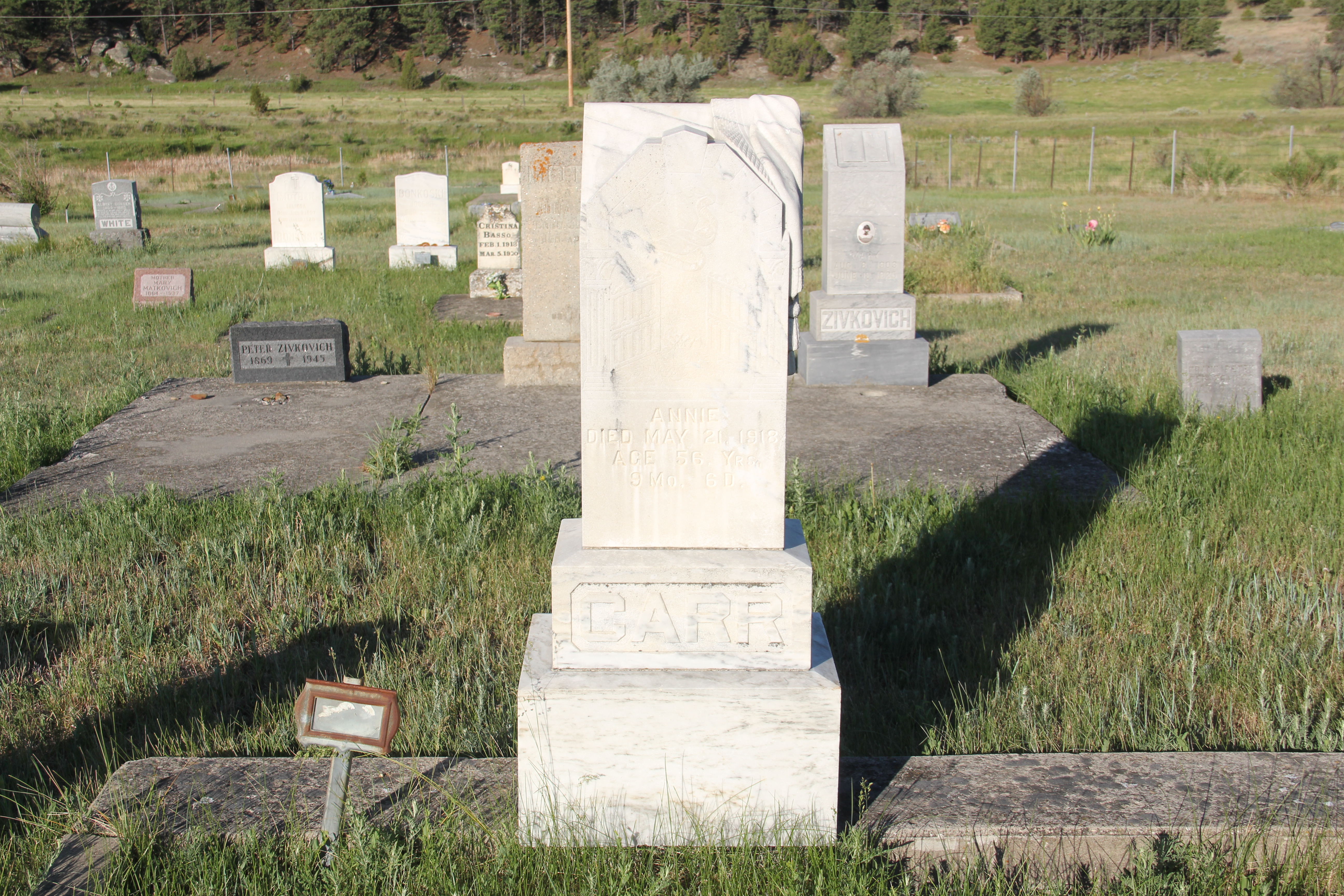
The shroud over the Carr family stone
Cristina Basso gravemarker

Although the cemetery dates to the early 20th century, it has a few examples of Victorian-styled cast-iron fences to define family plots or in the case of the second image, to highlight the death of a child.

But throughout the cemetery, you are drawn to the many ethnic names, members or at least supporters of the United Mine Workers, who came to America to find a new life, and lie buried in this rural cemetery in central Montana.