New United Mine Workers of America Cemetery at Klein

Entrance gate on US Highway 87.

The “new” UMW cemetery refers to the southern section of the cemetery, nestled in the bluffs of the Bull Mountains outside of the historic coal mining town of Klein. The UMW local 2866 operated from 1919 to 1973. The northern section contains early burials of members.

The “new cemetery” has numerous burials from the late 1920s, 1930s, and 1940s but most of the internments date to the second half of the 20th century.

The cemetery faces west (US Highway 87) and is centered on a long driveway that ends at a flagpole. Then the rows of graves on either side are roughly equal in size, giving the “new” cemetery a sense of symmetry not apparent in the earlier north section.
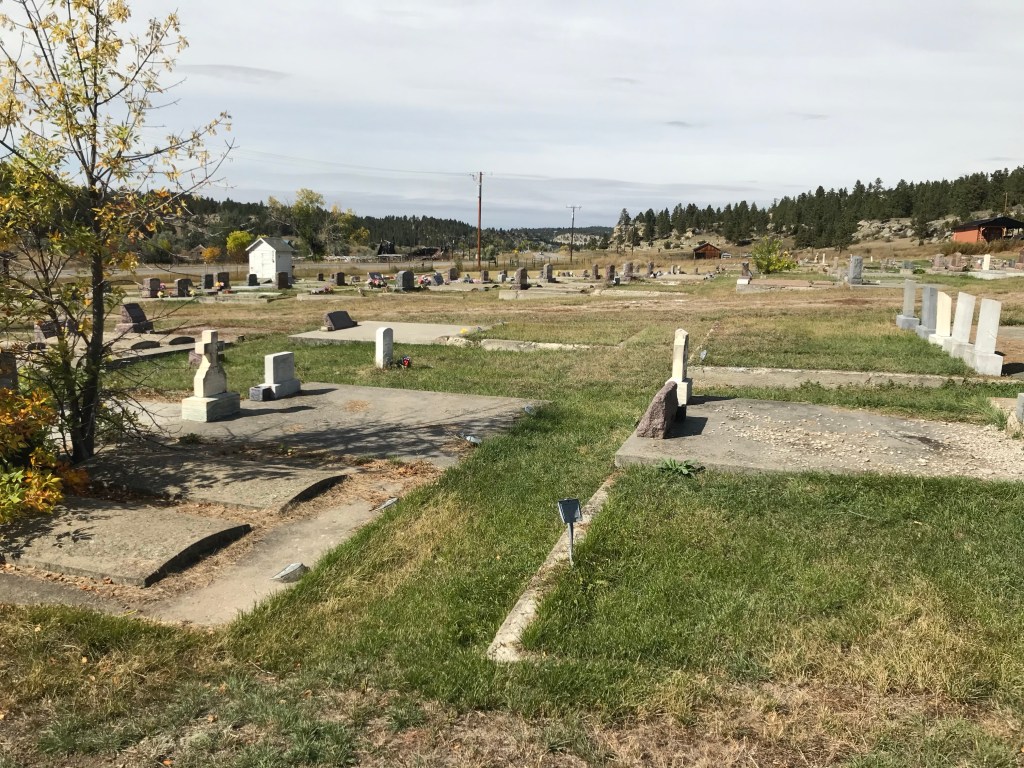
Looking northwest from the center driveway
Looking south from the center driveway
Looking southwest from the center driveway.

The cemetery’s rocky bluff setting, combined with colorful fall trees, is beautiful in September and October. It’s use of foliage and shade is another difference with the northern section of the UMW Cemetery.
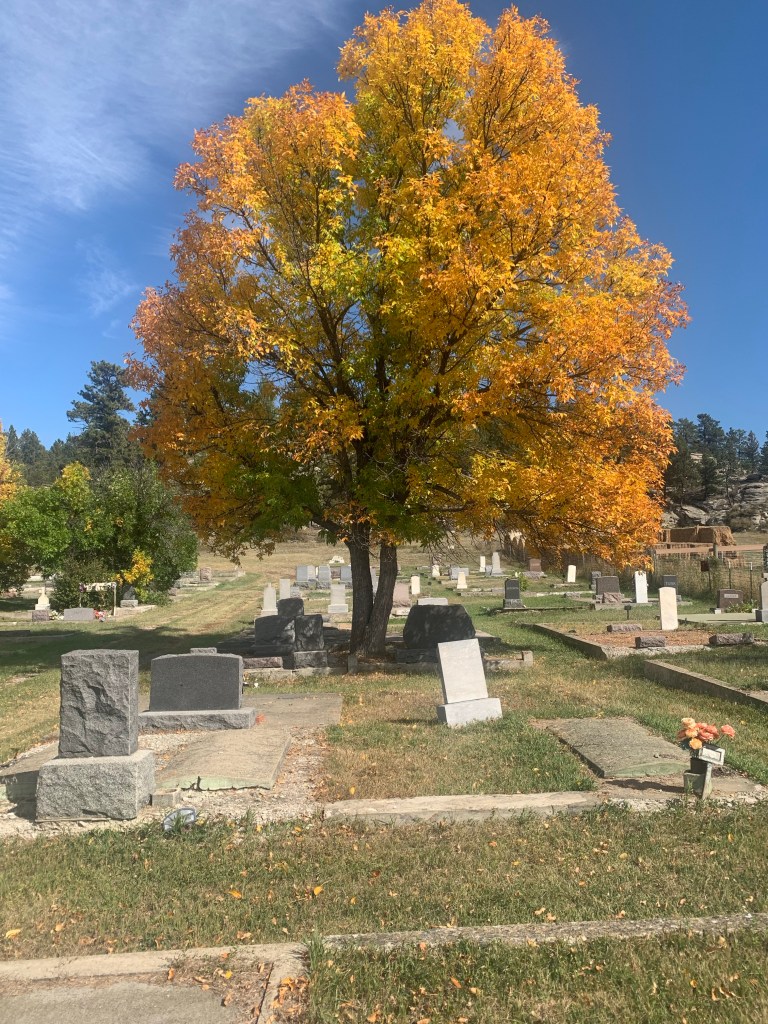
South section facing east
South section facing southeast

There are several interesting grave markers. Anna Tomko (d. 1944) was born in Croatia in 1866. She arrived in the United States in 1901 and was leaving in Roundup by 1920 where she became known as Annie Tomko.
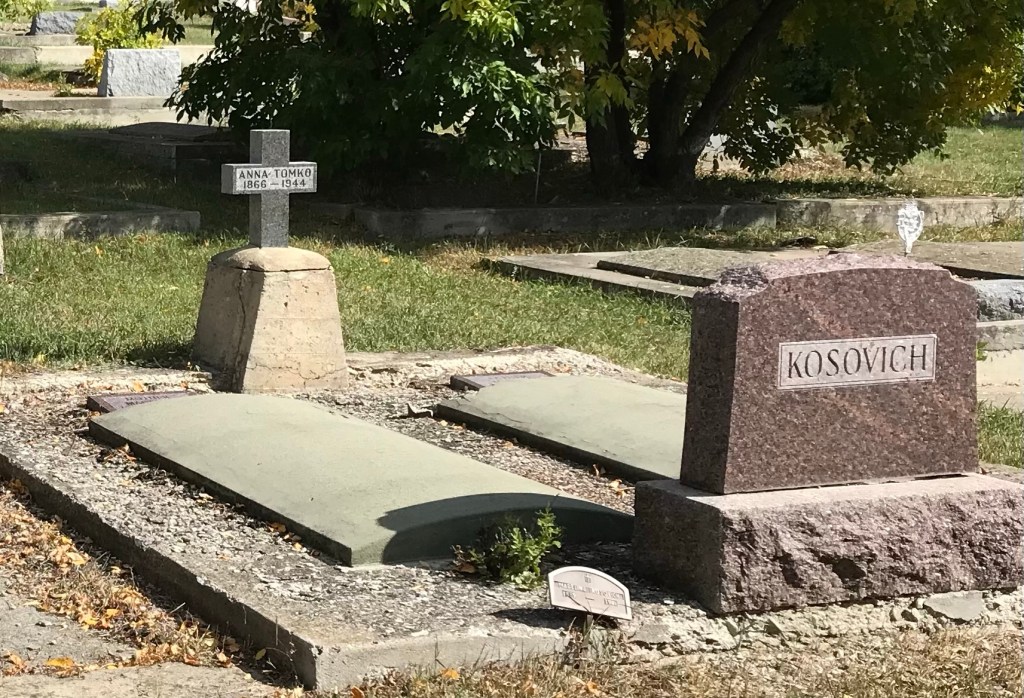
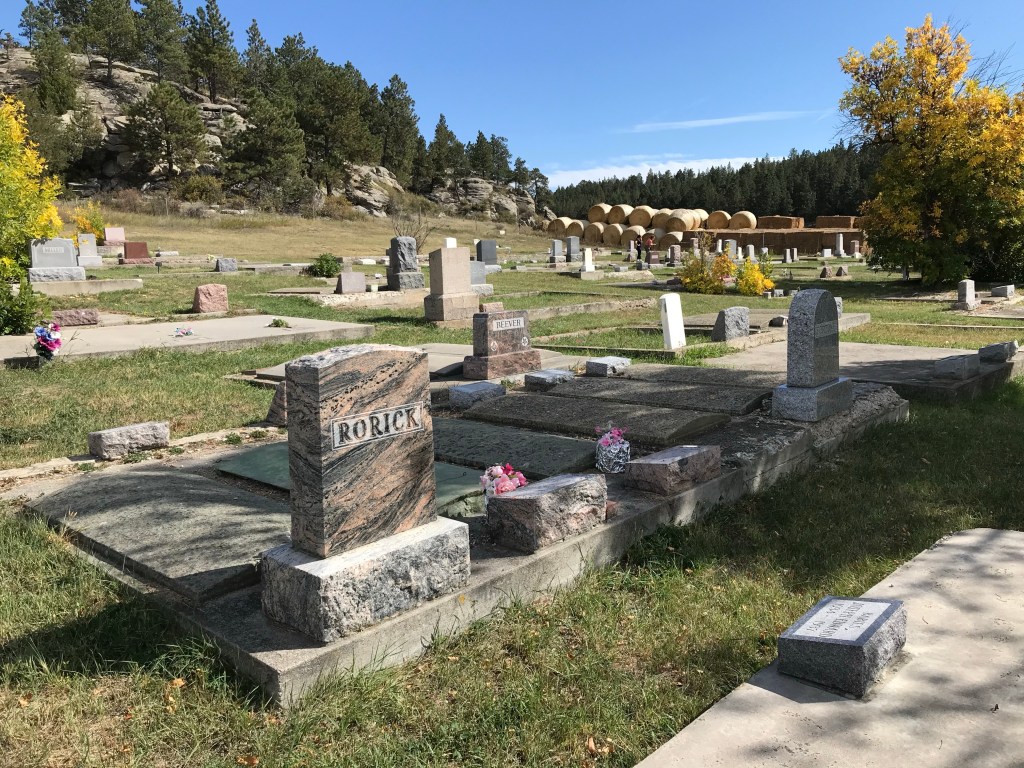
The beautiful cut and polished stone marker for Carl Eldon Rorick dates to 1941. Rorick was a native of Klein and only 17 years old at the time of his death.

The large grave marker for Mary (b. 1872) and David Murphy (b. 1870) dates to 1942; she died in January while he died in December.

David was a native of Scotland, who was working as a coal miner at Klein at least by 1920. He married his wife Maggie (Margaret) McCann Murphy in about 1892.

Klein’s Cemeteries, Part 2: Miracle Lodge #84 Cemetery

On the east side of U.S. Highway 87, directly across from the UMW Cemetery in Klein, is the Miracle Lodge #84 cemetery. Fraternal lodges meant much to the early generations of Montana settlers, and all types of organizations were active in the state in the early 20th century, when this cemetery was established.

Klein, Montana.
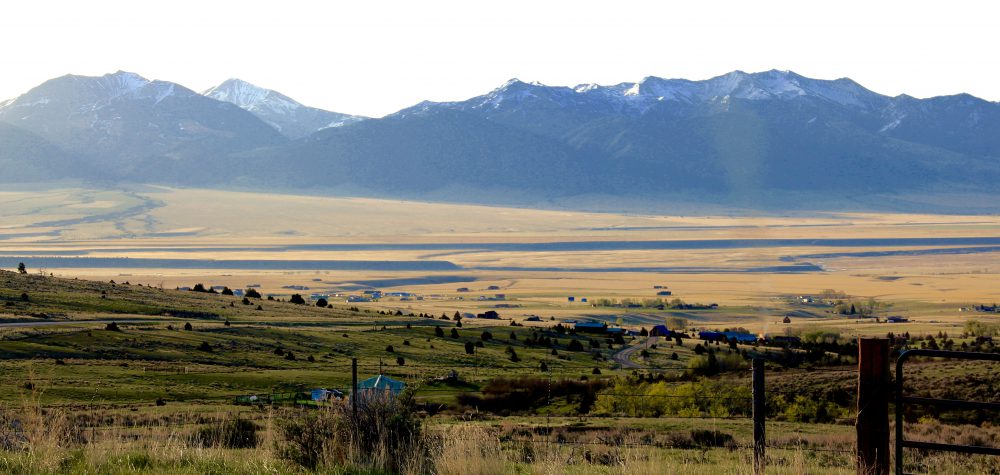
Looking southwest of the cemetery toward Klein

Miracle Lodge #84 was affiliated with the Independent Order of Odd Fellows, a fraternal organization that began in the United States in 1819 when the first lodge organized in Baltimore, Maryland. The organization was designed to take care of members in illness and in old age, and provide burial services. There are numerous I.O.O.F. grave markers in the cemetery. There also are several markers related to the Endeavor Rebekah Lodge #71, which was the women’s side of organization. The Odd Fellows allowed for women members in 1851, with most male lodges having associated Rebekah lodges.

Miracle Lodge #84 Cemetery is a large, sprawling cemetery, that is still active. Among its most distinguishing features are the numerous family plots, outlined with low, concrete walls, which sometimes have several grave markers within, or no markers at all, with probably wooden or metal markers lost over the decades.

Miracle Lodge #84 Cemetery
From Miracle Lodge Cemetery looking west to UMW Cemetery

Together these two cemeteries, nestled in the foothills of the Bull Mountains and facing each other on U.S. Highway 87, are powerful historic sites, reminding us of mining communities long forgotten as well as the stunning diversity of the settlers who made up the founding generations of so many Montana communities.

Klein’s Cemeteries: Documenting a forgotten mining community

UMW Cemetery, U.S. Highway 87, Klein, MT

Without the striking cast-iron front gate proclaiming the U.M.W. of A. Cemetery, passengers in the cars and trucks roaring along U.S. 87 in Musselshell County would have no idea that they were passing through mining country. Outside of Red Lodge in Carbon County, Colstrip and Decker in Rosebud County, and Belt in Cascade County you don’t hear much about coal mining in Montana. The focus in the state’s history has always been squarely on the more extensive, and lucrative, mining in precious minerals, especially in western Montana. But here in the Bull Mountains north of Billings, investors were interested in the coal deposits as early as the 1880s. Significant investment didn’t come, however, until the Milwaukee Road decided to drive its transcontinental railroad line through the Musselshell Valley, just north of the coal deposits in and around the Bull Mountains.

In 1907 Republic Coal Company opened its first mine, but it was mine no. 2 that became the great producer, with miners at the peak bringing up 150 cars of coal a hour–and the production rarely slowed for the next 20 years until the Milwaukee Road lost interest in coal as it transformed its engines to diesel fuel and the depression came in 1930.

Most miners lived in Klein while others boarded at nearby Roundup, the county seat. Klein reached an estimated 1500 residents at its peak. Republic No. 2 stayed open to 1956, 25 years later the Milwaukee Road had abandoned the line and the region.

Klein is still here, greatly diminished by the closing of the mines and railroad in decades past. But the town’s cemeteries convey stories of those who lived, worked, and died there. The UMW and Miracle Lodge #84 face each other on U.S. 87 and are worth exploring in some depth.

The setting of the UAW cemetery is beautiful, nestled between the highway and the foothills to the west. The graves are facing east and most of the grave markers are small to medium in size; little ostentatious display by the families here.

Mary Bedel (d. 1919).
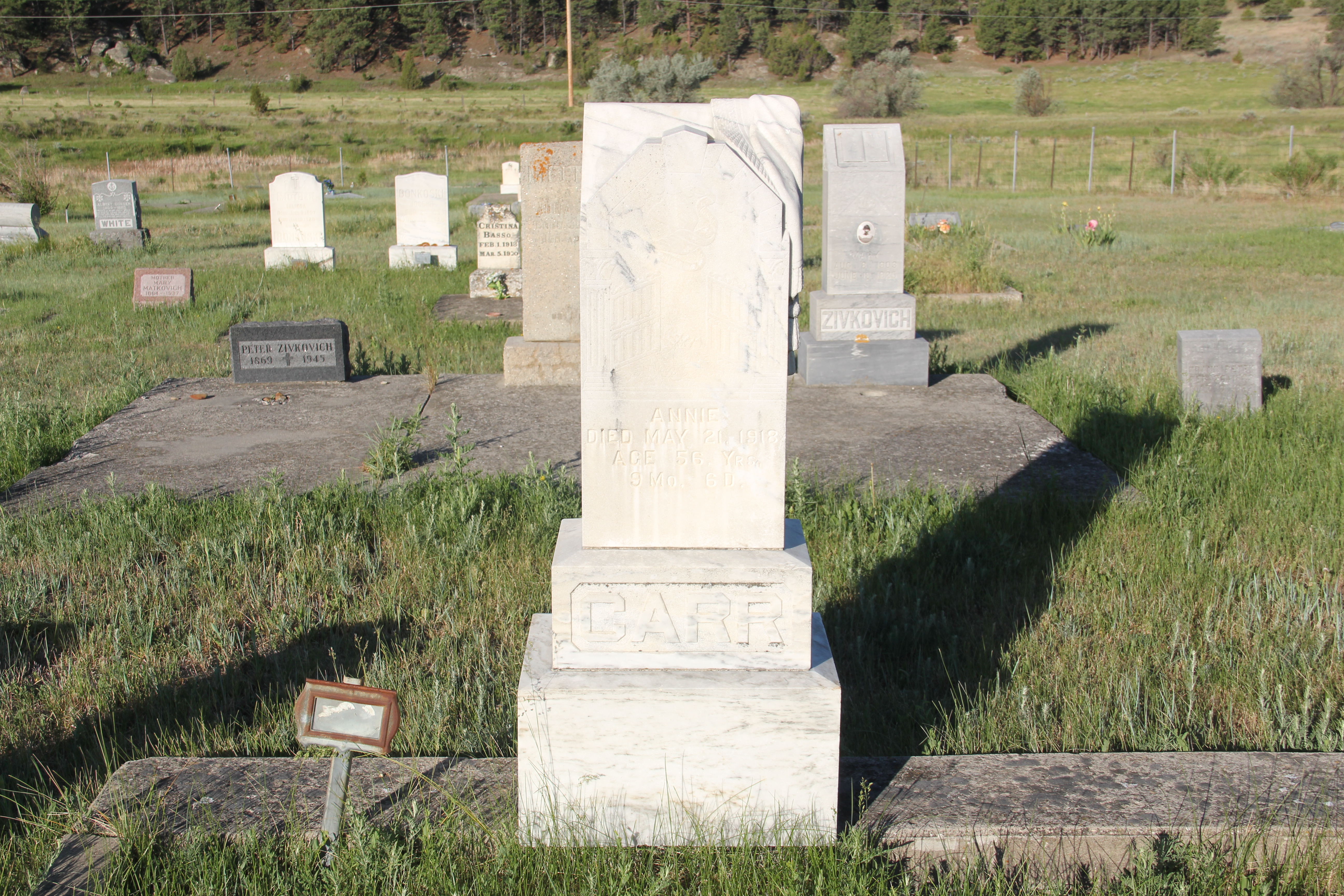
The shroud over the Carr family stone
Cristina Basso gravemarker

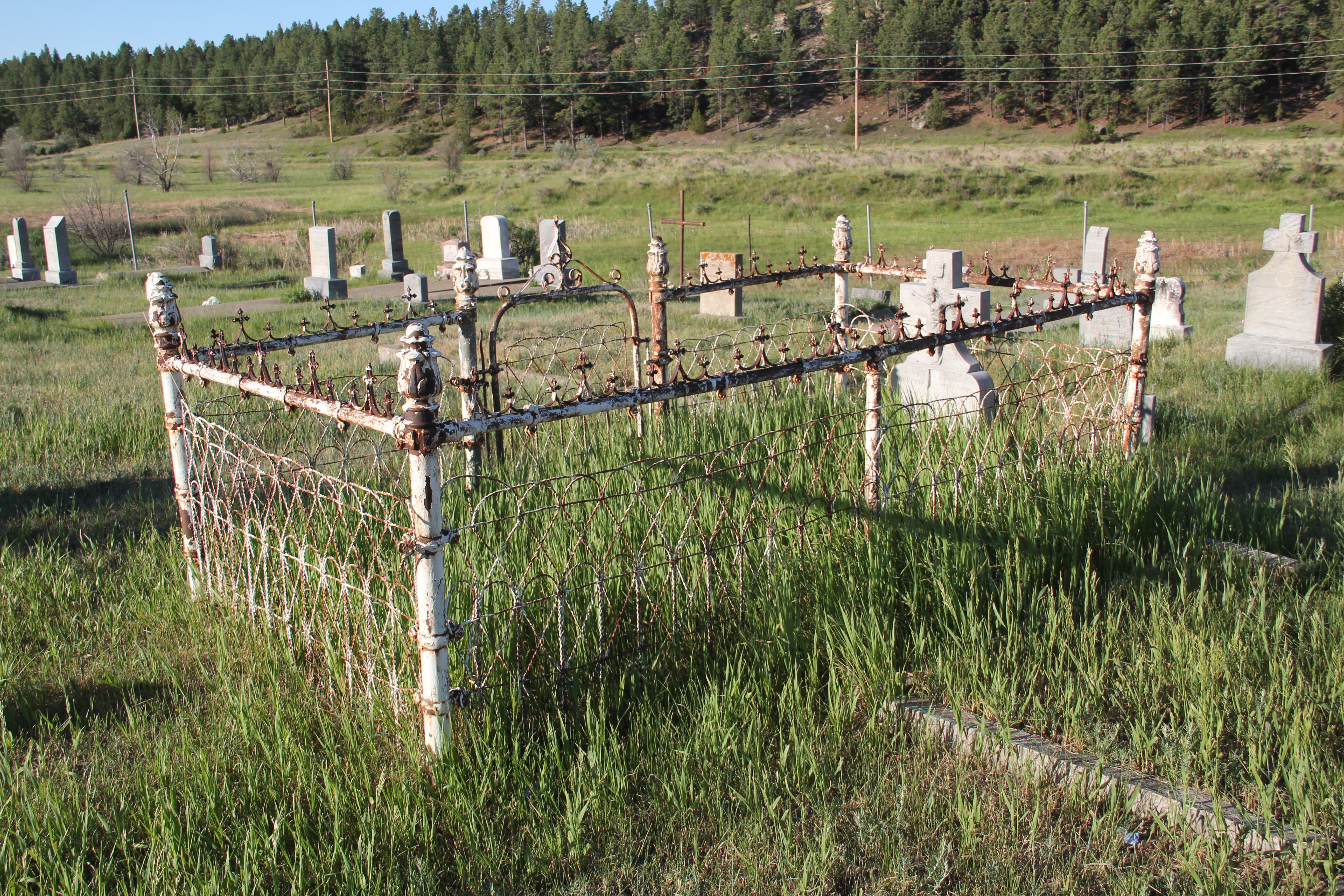
Although the cemetery dates to the early 20th century, it has a few examples of Victorian-styled cast-iron fences to define family plots or in the case of the second image, to highlight the death of a child.

But throughout the cemetery, you are drawn to the many ethnic names, members or at least supporters of the United Mine Workers, who came to America to find a new life, and lie buried in this rural cemetery in central Montana.