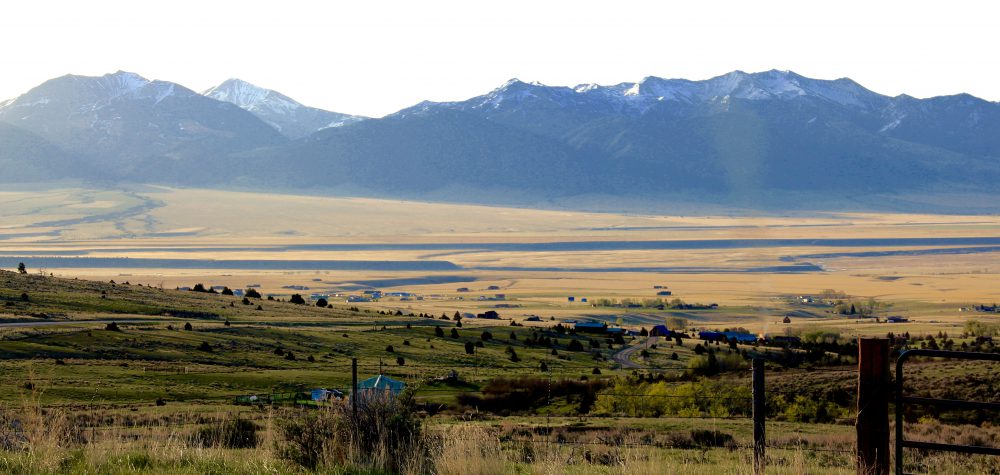
Recently there has been much needed discussion in the historic preservation field on the necessity of focusing of the many types of citizens and residents who created and sustained our historic landscape. Don’t be so building focused; think about place. Nestled behind an attractive public playground on Main Street, not far from the ultra-modern Bozeman Public Library, is such a place: Sunset Hills Cemetery. It is an absolutely compelling place to walk along its many rows and curvilinear driveways to find the stories of Bozeman, written in stone, concrete, and metal.

Within the cemetery is one of the oldest physical remnants from the city’s beginning: the marker for Lady Mary Blackmore, July 1872, when Bozeman was nothing more than a string of tents, log cabins, and false front buildings along the Bozeman Trail.


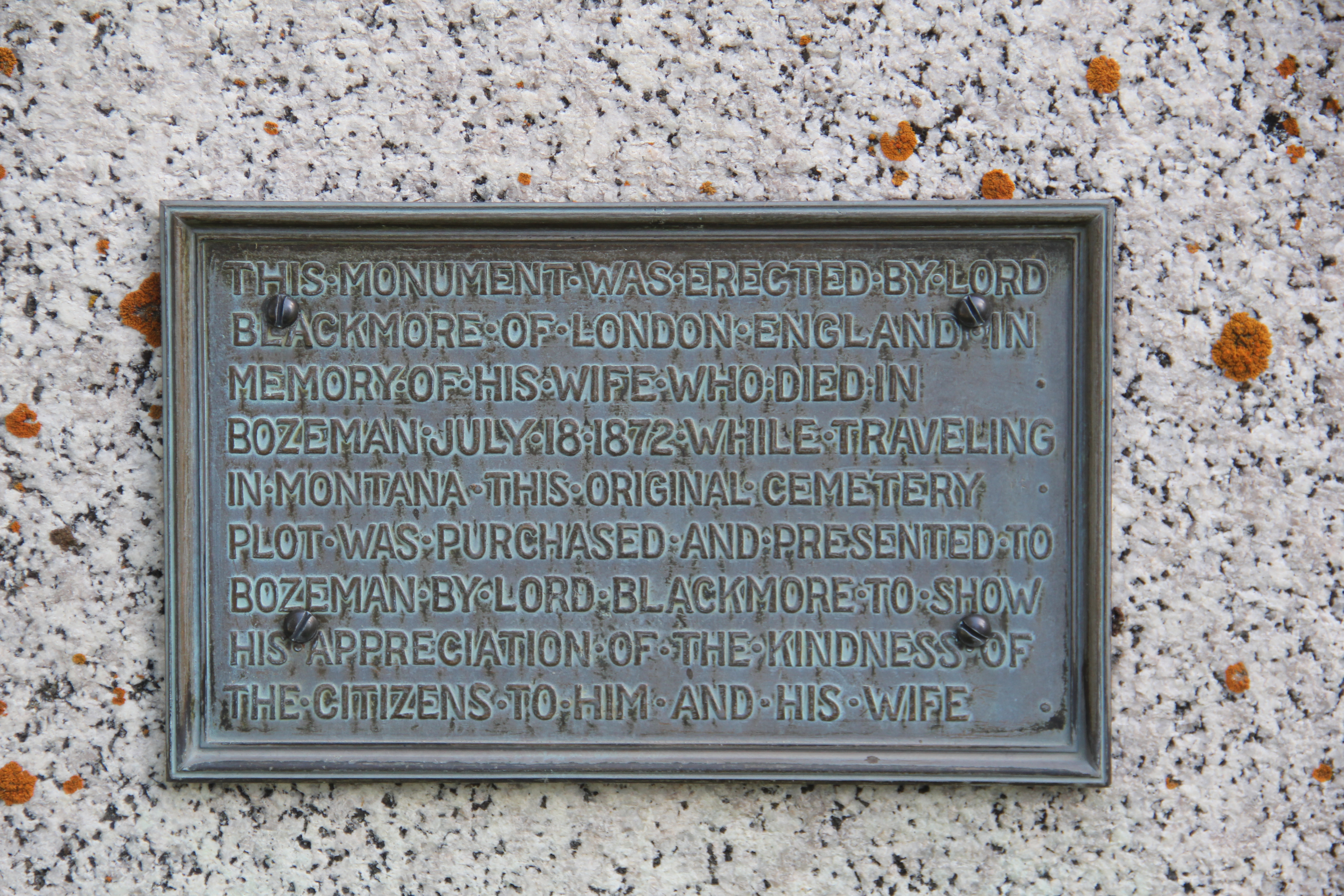
The metal plaque on the slowly decaying pyramid marker tells part of the story. Lord William Blackmore and Lady Mary Blackmore had a deep interest in the west and they came to visit newly designated Yellowstone National Park in 1872. Mary took ill and did not make the trip to the park. After her health markedly declined, citizens went to find Lord Blackmore and he returned, but Mary never recovered. Blackmore to honor his wife, and to acknowledge the support and kindness of local residents, purchased 5 acres for a public cemetery and had the pyramid marker installed. Today this oldest section of the cemetery is on the west side, The view from the Blackmore marker is impressive.

The Daughters of the American Revolution in 2020 addressed other early burials in the cemetery through this obelisk marker in memory of those without grave markers today.

Nearby is the very different grave marker for another important early settler and rancher, Nelson Story. Whereas the Blackmore marker is direct, dignified, the Story marker is designed to remind everyone that here lies an important person.


You walk through an overpowering classical-staled gateway to find the graves of Story and his family. And his employees. The marker for Tom Thompson (d. 1879), the son of Isaac and Barbara, tells the story of a young man who drowned in the Yellowstone River while “in the employ of the Honorable NELSON STORY.”

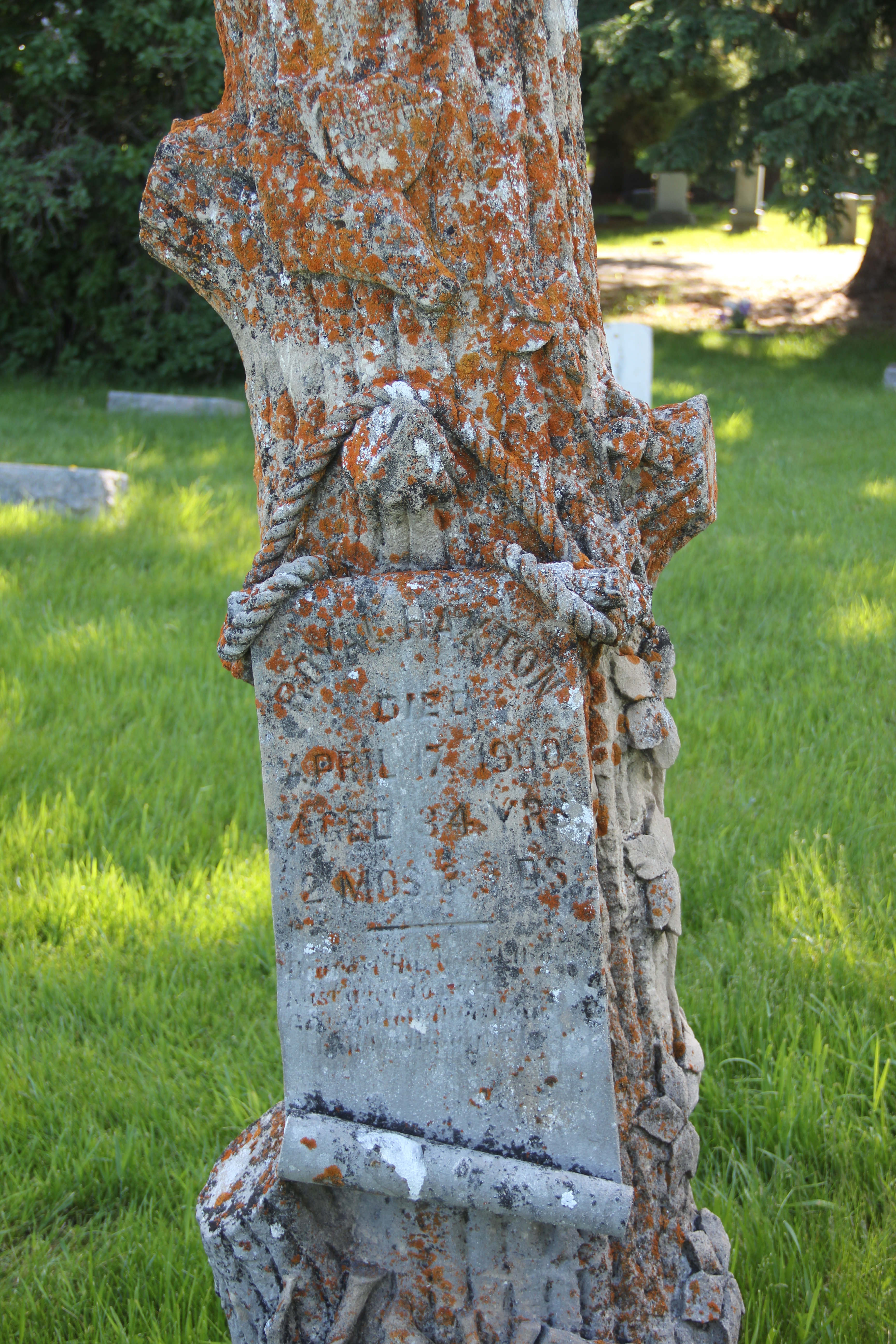
But Thompson’s story if far from the only one shared in Sunset Hills Cemetery. There are many gravestones that bear the emblems of fraternal organizations, some well known, some not so much.


Sunset Hills Cemetery has a dedicated veterans section at the rear of the property that is centered around a 1928 Grand Army of the Republic (GAR) monument to those who served in the U.S. and Union Armies during the Civil War. It is unique because typically the GAR monuments date to the decades right after the war, or perhaps up to 1915, which was the 50th anniversary of the end of the Civil War.

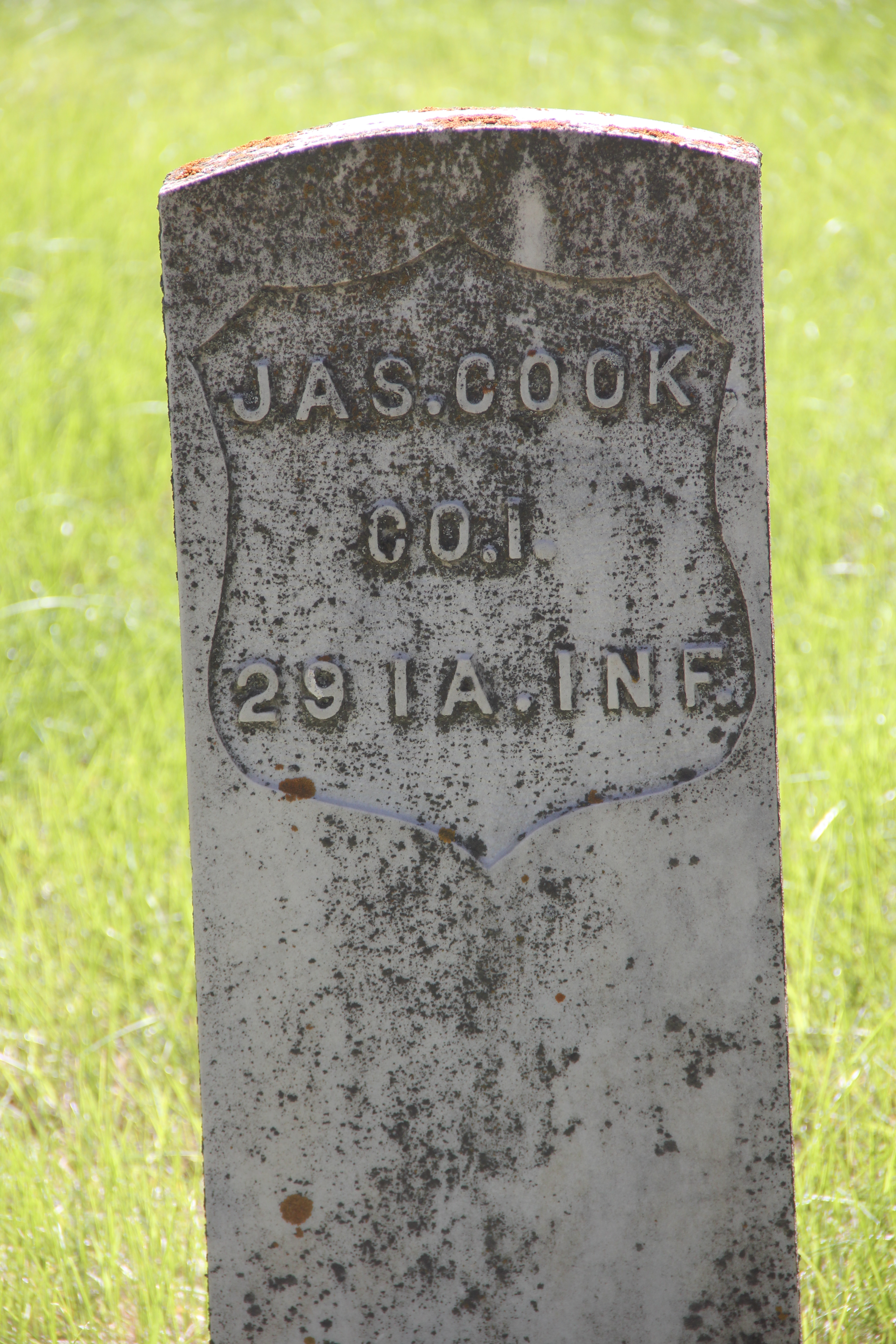
Scattered throughout the cemetery are the simple standardized gravemarkers that the federal government provided to families of U.S. veterans. This place is another reminder of the impact of the Civil War on late 19th century America.

Almost all historic cemeteries in Montana have sections for veterans and special markers designate fraternal lodge membership and prominent citizens. Sunset Hills Cemetery has all of that over its 150 years of existence–and more. Whatever row of graves you choose to explore you will find markers of beauty, of memory, and sadness.

I have explored many municipal cemeteries in Montana–but did not venture into this special place until 2021. Don’t repeat my mistake–here is a place worth exploring, just set aside plenty of time to do. It is not in the National Register of Historic Places–but it should be.
 Montana's Historic Landscapes