
July 1, 1905, the Havre Plaindealer reported that K. K. Devlin had donated three acres south of the new city reservoir for a Catholic cemetery, eventually named Calvary Cemetery. The newspaper said that engineers platted the ground on June 28, and that the first internment, the child of Joseph Gussenhoven, had been buried in the afternoon. The paper proclaimed that “The site selected is an ideal spot for a cemetery. The land slopes gently from the city reservoir to the south and east and can all be irrigated nicely from the reservoir. . . The lots will all be larger than the lots in the old cemetery [Mount Hope] thus affording ample room for trees and shrubs.”

One of the engineers had already recommended to the Mount Hope Cemetery Association to secure a “cemetery site for the city adjoining the present site selected by the Catholic people. The surroundings are naturelly [sic] most beautiful. It is close to the city and at the same time in a quiet and secluded spot and when the grounds are sown to grass, and trees and shrubs adorn the driveways and walks, it will be the most beautiful burial place in the state.” Plus the city engineer added, the grounds “can be irrigated and beautified as a nominal cost.”
The newspaper closed with what could be considered the epitaph for the old city cemetery: “The expense incurred and improving the old cemetery was necessary but to beautify the place requires water and the expense of obtaining it would be beyond the reach of the city for some years to come.”
The news upset many citizens since the city had just made the effort to upgrade Mount Hope. Two weeks after the first burial at Calvary, the Havre cemetery committee reinspected Mount Hope and “returned more fully convinced than ever that the present site could be sufficiently watered and beautified at slight expense by the driving of a new points similar to those that have been so successful in the dry well system of the waterworks and the pumping of water by use of a windmill.” The committee counted 150 graves at Mount Hope and reported that the relatives of the dead did not want the bodies moved. “Efforts to raise water will at least be made before there will be any further consideration of removal,” according to the Havre Herald of July 14, 1905.
The tone was different by the fall. The Havre Herald of November 3, 1905, recorded that “the board of trustees of Mount Hope cemetery” authorized that the cemetery be put “in good shape,” with repaired fences, walks, and drives. But the newspaper also reported that “Negotiations are under way for the purchase of land for a new cemetery adjoining the Catholic grounds.” That cemetery is the present Highland Cemetery.
From 1905-1906 numerous burials continued at Mount Hope despite the controversy over its future. The 3 year old Margie Kaepernick was buried on July 4, 1905.
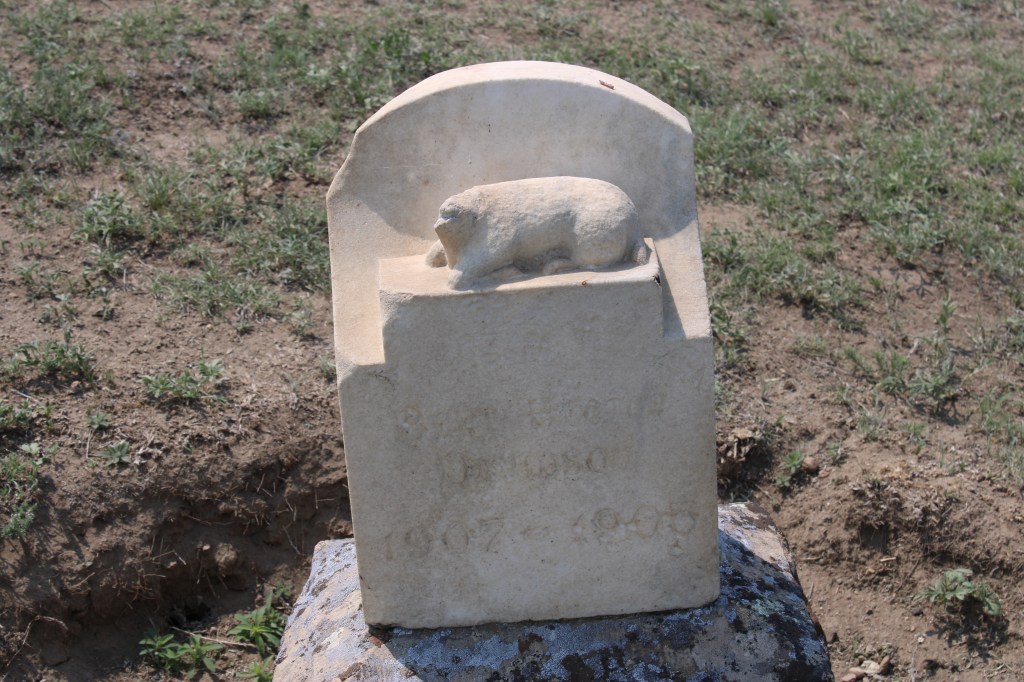
Marian Munger and Mary Lawler were interred, respectively, in September and October. Popular card dealer P. J. “Jack Flynn” was buried about a week before Christmas in 1905. His death even brought about an ode from a friend published in the Havre Herald on February 2, 1906.

The city continued to hold its Memorial Day commemoration at Mount Hope in 1906. A detail from Ft. Assinniboine led the parade, which began at the corner of Second Street and Third Avenue, winding its way through Havre before reaching the Mount Hope Cemetery. Following the U.S. Army soldiers were: the Citizens band of Havre, Civil War veterans, Spanish-American veterans, Relief corps, Clergymen, City officials, Odd Fellows, Knights of Pythias, Eagles, Great Northern band, Shop men, and Labor unions.
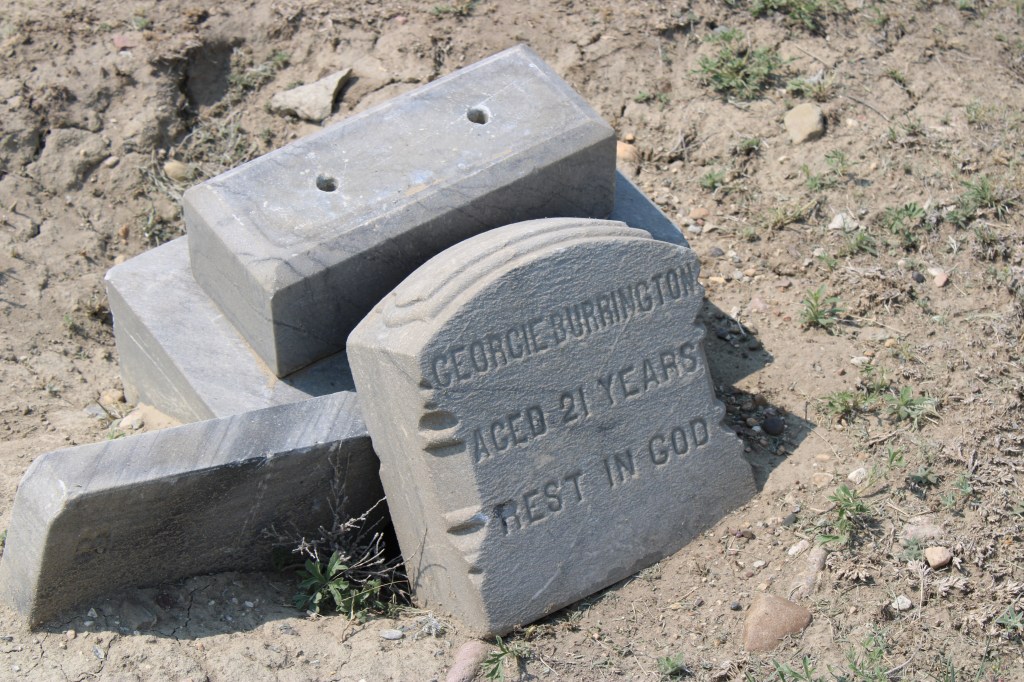
Yet as Highland Cemetery opened in 1906, joining its neighbor the Catholic Calvary Cemetery, the number of burials at Mount Hope Cemetery declined, judging from accounts published in the local newspapers. George Barrington, the son of a veteran Great Northern Railroad engineer, died in a scuffle over a pistol outside of the Gold Bug saloon. He was buried in August 1908.
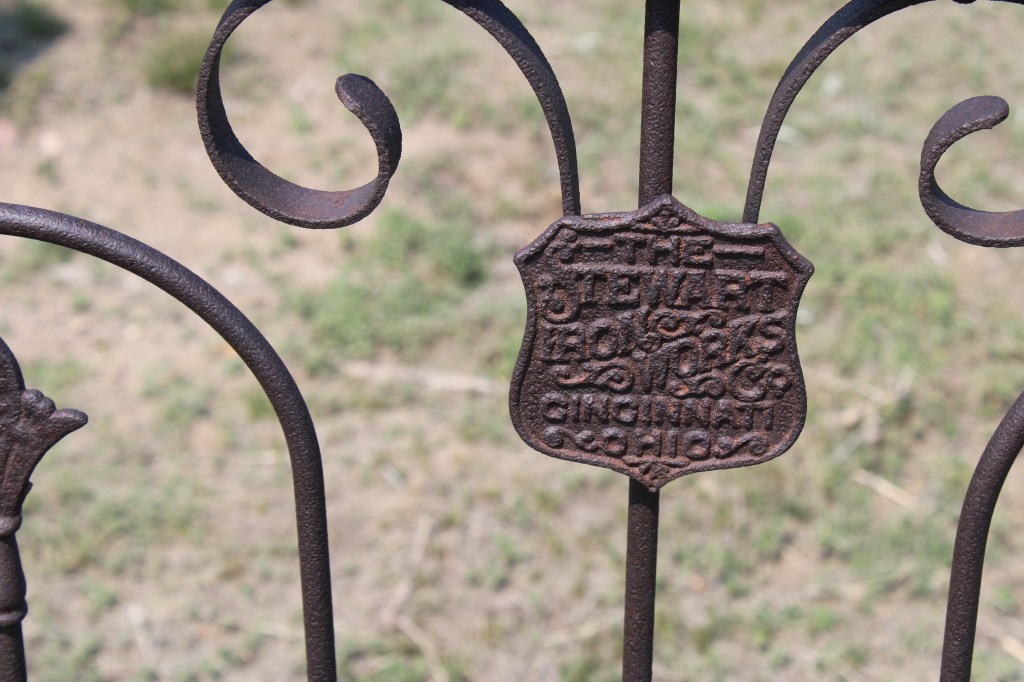
Members of the Masonic lodges in Havre and Glasgow turned out in numbers for the burial of Graham Williamson in March 1909. In May 1909, the Havre Monument Works installed a “handsome iron fence” made in Cincinnati OH, to mark the family plot of C. B. Van Alstine.

But then in May 1909 burials took place at Mount Hope Cemetery that may be considered the event that began the cemetery’s third historic period as the public burial ground for the unfortunate and marginalized in the city. Joseph Kirschweng escaped from the state asylum at Warm Springs returned to Hill Countyand killed his wife and children before committing suicide. All four were buried at Mount Hope.

In October, Rev. William Jackson, an African American minister who once served at Fort Assiniboine before becoming the pastor of the African Methodist Episcopal Church in Havre was buried at Mount Hope. Two years later, Martha Allen, a member of the AME church, was buried at Mount Hope with “one of the largest funeral corteges ever seen in the city.” (Havre Plaindealder, May 6, 1911). Two years later in August 1913 an abandoned baby found dead at city hall was buried at Mount Hope while in September William P. Farrow, “the stranger who was run over by a switch engine,” was buried at the cemetery (Havre Promoter, September 12, 1913). Victor Urkins, a Great Northern shop employee who allegedly committed suicide, was buried at Mount Hope in October 1913. Then in November came the funeral of Lucy Barnes, the wife of W. H. Barnes, a longtime resident and former domestic employee of Robert L. McCulloch at Fort Assiniboine, who also was African American and member of the AME Church. Most of the Japanese burials here took place from 1909 to 1920.


Burial accounts in the local newspapers about Mount Hope Cemetery become few and far between by the time of World War I. Three of the last stories were about Chinese residents: Wong Hoy Lang in 1921; N. Len, who was a gardener in 1922; and Lo Bow in 1924. Lo Bow “had lived in Havre for the past 30 years and was interested in the restaurant business at the time of his death.” (Havre Promoter, September 23, 1924). 1924 was the last year Mount Hope Cemetery would be mentioned in local newspapers for decades to come.
 Montana's Historic Landscapes