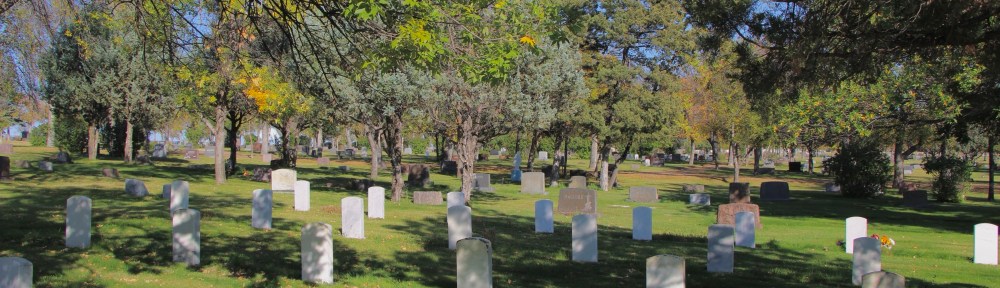
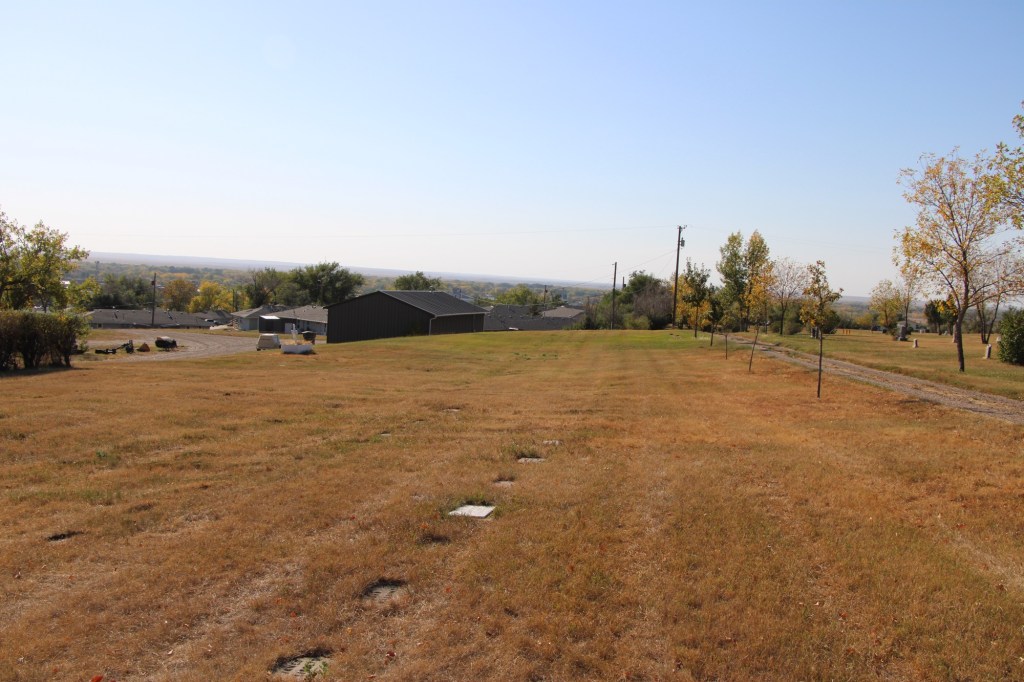
Glasgow, the seat of Valley County, dates to the late 1880s when the Manitoba Railroad (later named the Great Northern Railroad) entered the northeast corner of Montana Territory on its way west to its initial terminus in Great Falls. The first burials at what later became Highland Cemetery on a bluff northeast of the town center date to those years. The images above and below are of that first burial ground, known as Potter’s field, and part of what is designated at the first addition.
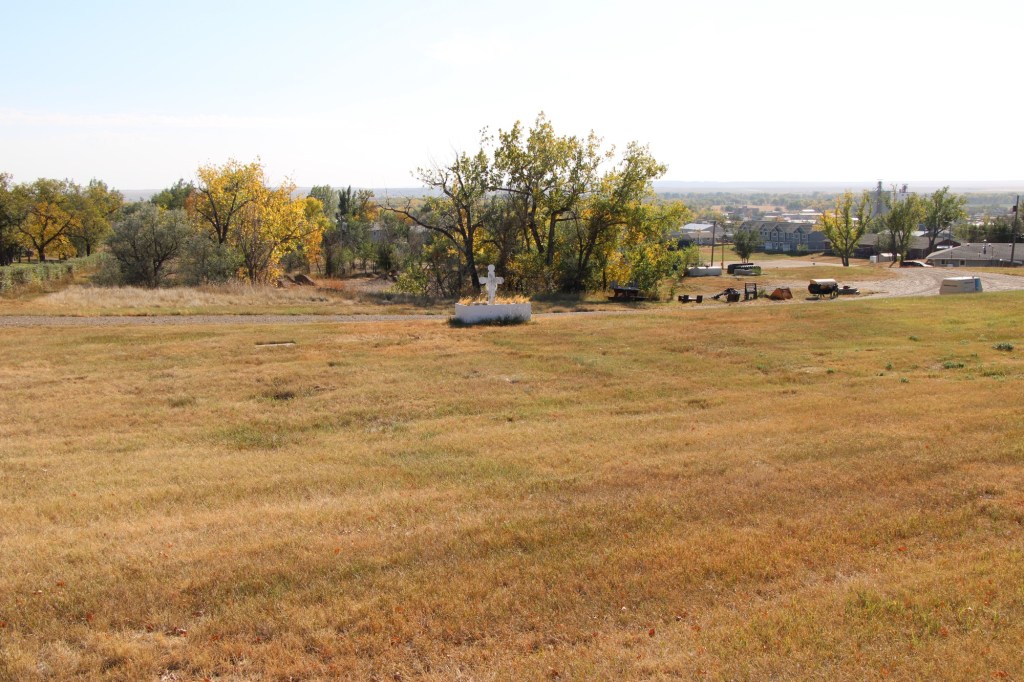
The next two images are of the cemetery’s second addition .
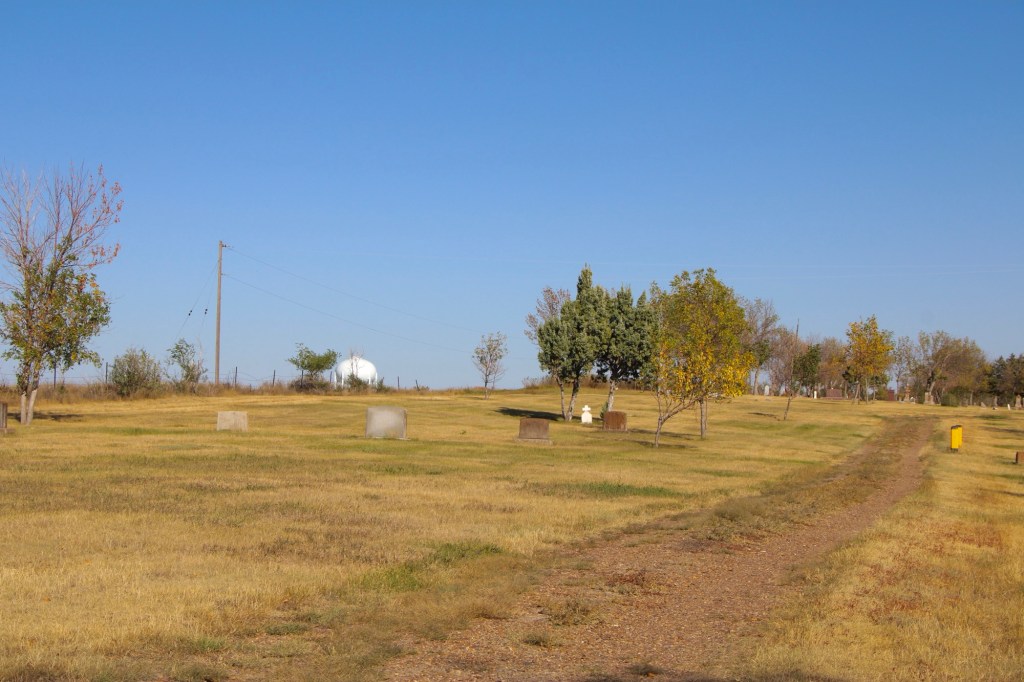
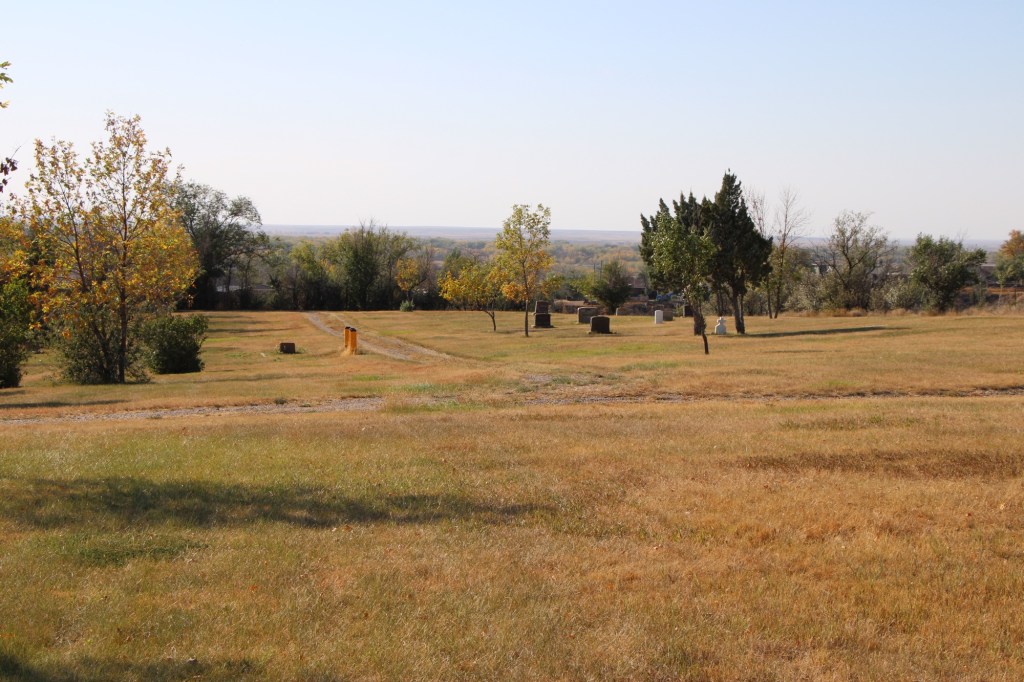
The section designated as Glasgow original cemetery also marks the beginning of the Highland Cemetery period. The Glasgow Montana Citizen reported on November 13, 1897: “Owing to the utter lack of system in locating the graves on the hill it was impossible to lay it [a city cemetery] out in lots so the county fathers located a strip of five acres of land adjoining the old burrying [sic] ground and laid it out into lots for future use. The cemetery is named Highland.” A couple of weeks later, the Glasgow Montana Citizen clarified the situation on December 11, 1897: The opinion prevails that the old cemetery is not a portion of the new one. This is wrong. The plat of Highland Cemetery includes a strip sixty feet wide of the old graveyard which takes in all the graves.”
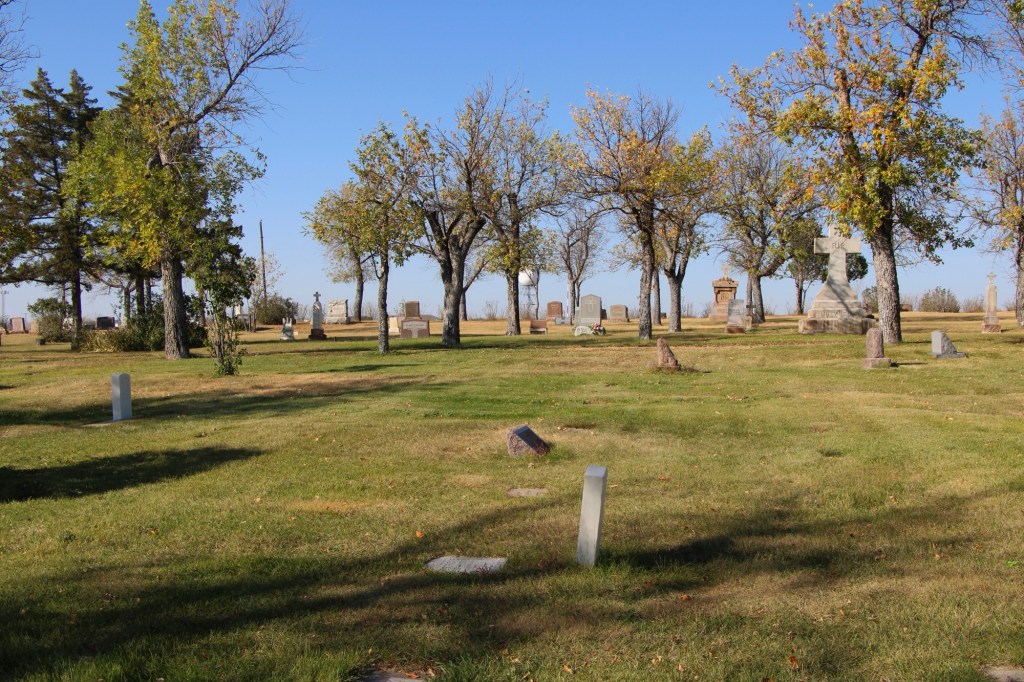
Within the boundaries of the original Highland are several remarkable gravestones, many of which have fascinating stories.
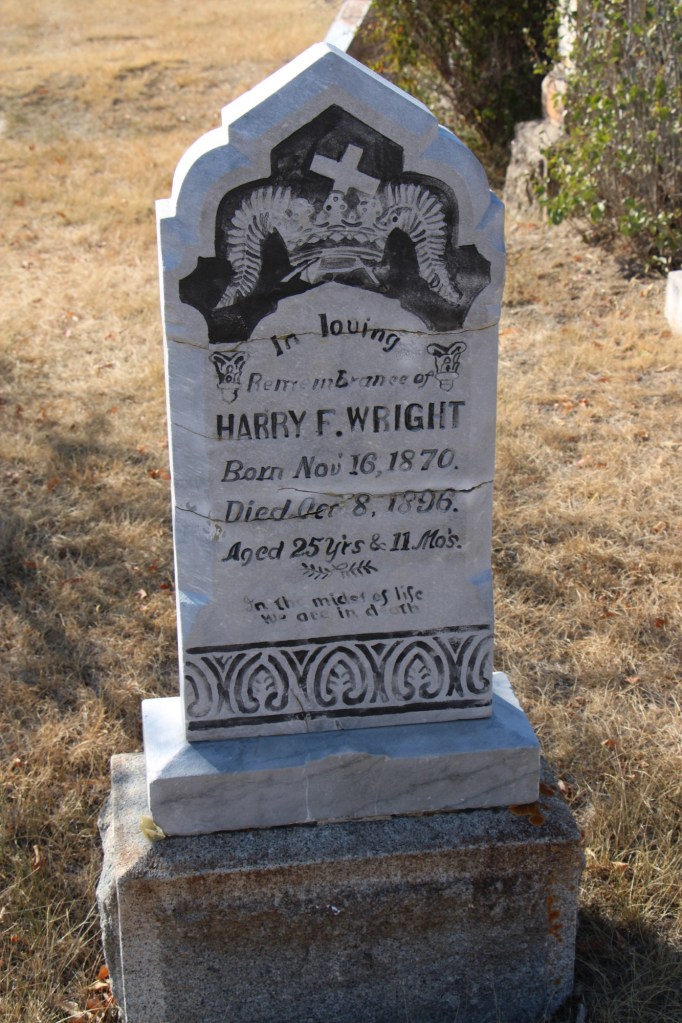
For instance, Harry Wright, according to the Glasgow Record of October 15, 1896, “was one of the best known ranchers around Saco and was a prosperous young man. He had quite a nice little bunch of cattle, a comfortable ranch and was always considered one of the most promising young men of Saco.” He was returning to England for a visit when he took ill in Buffalo, New York. He had kidney surgery which “proved most successful” but before resuming his travel Wright took a “Turkish bath” [a type of steam bath] and “death came a short while afterwards.” His sister lived in Hinsdale and had the body shipped to Glasgow to be buried in the cemetery in 1897.
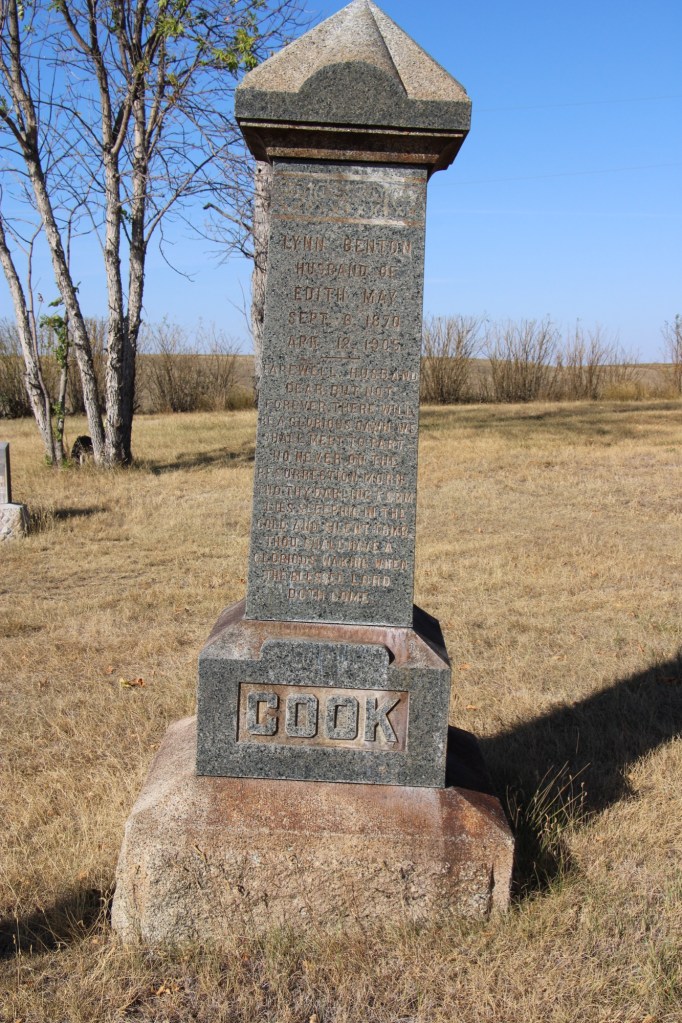
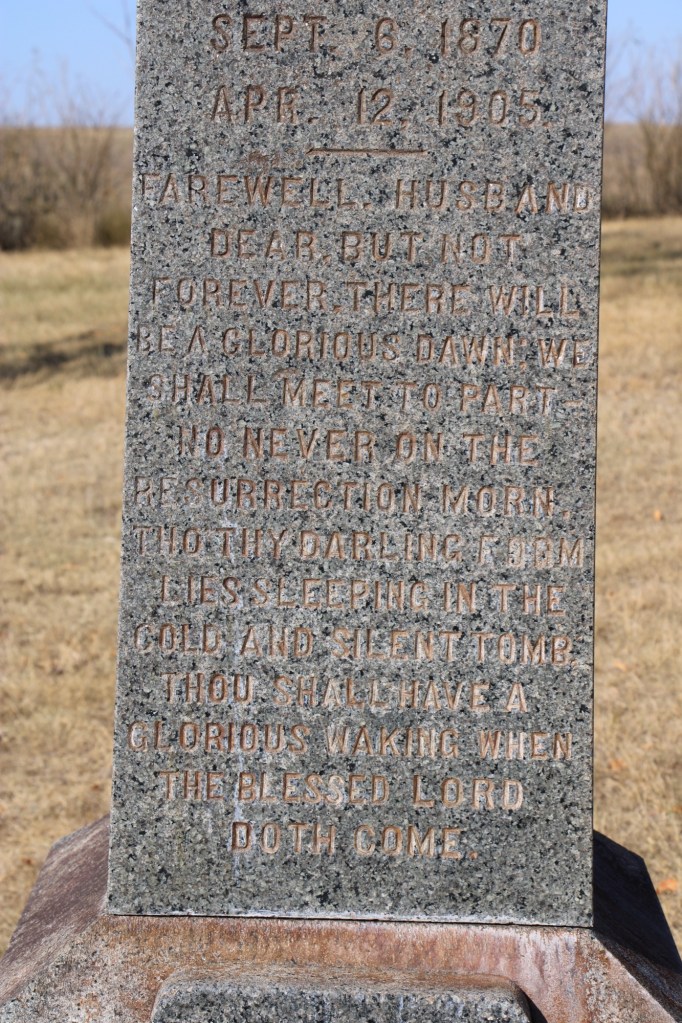
The tall obelisk marker for Lynn Benton Cook, who died at the age of 34 in 1905, has an unusually long dedication, beginning “Farewell Husband” composed by his wife Edith May.
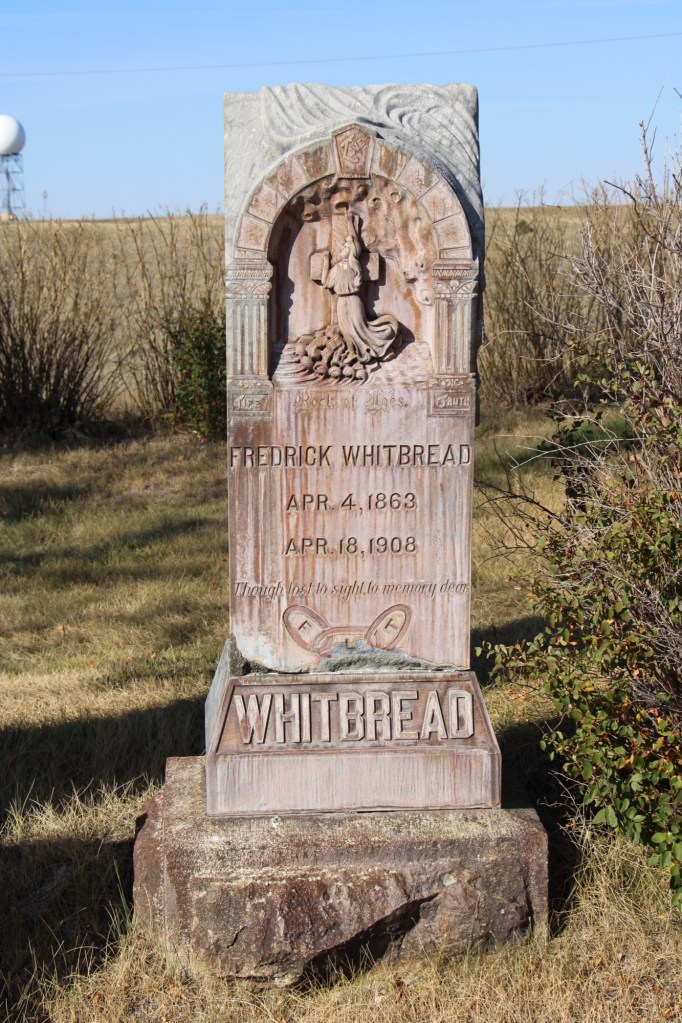
Fredrick Whitbread has a beautiful carved marker with a Richardsonian Romanesque arch framing a depiction of salvation. He was an Englishman who came to the USA in 1881. He worked as a locomotive fireman before becoming a Great Northern engineer. He left the railroad in 1897 and established a cattle ranch near Hinsdale. However in 1907 he reversed course to become the night foreman at the Great Northern’s roundhouse in Glasgow. He was a loyal member of the Odd Fellow lodge and his funeral “was the largest in the history of this city,” according to the Glasgow Montana Citizen of April 25, 1908.
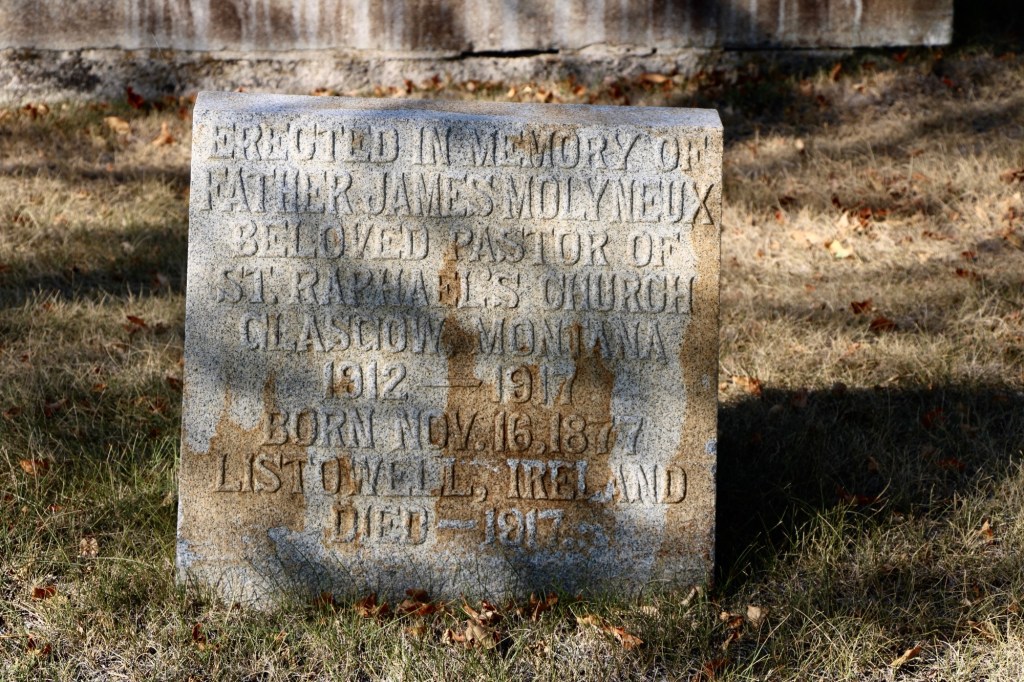
Another prominent citizen was Father James Molyneux, an Irish Catholic priest who pastored St RaphaelCatholic Church in Glasgow from 1912-1917 during the height of the county’s homesteading boom.

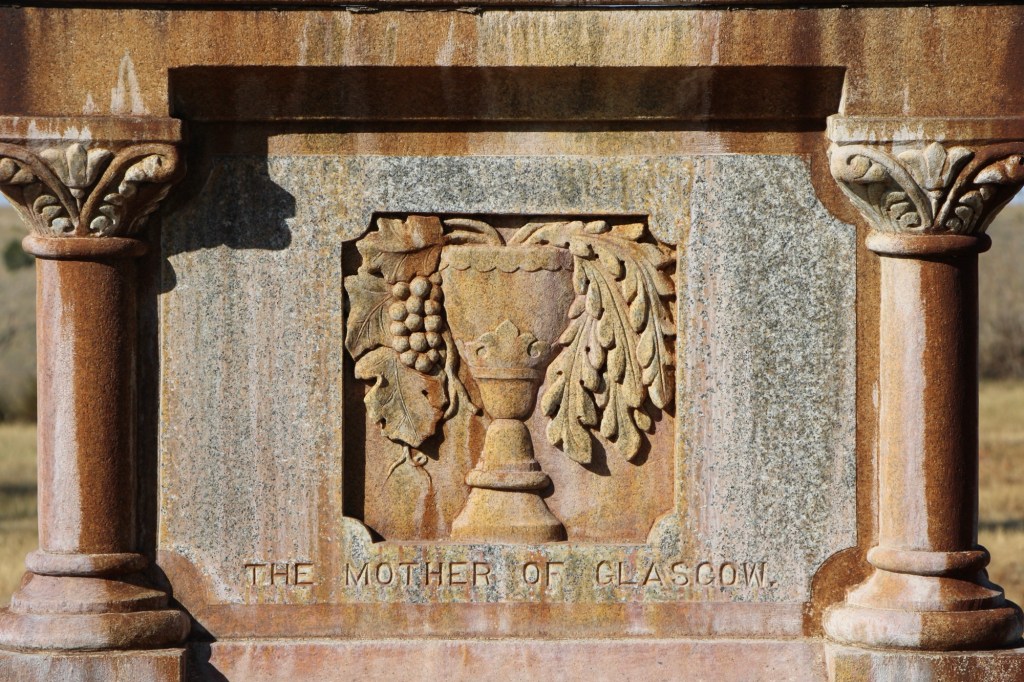
Perhaps the most compelling marker in the early history of Highland Cemetery is that of Mary Fitzpatrick Roach. She first came to Glasgow by 1890 when she worked as a cook at a local hotel before opening her own restaurant. During the railroad strike of 1895, she “became famous all along the Hi Line, by carrying her customers along whether they could pay or not.” (Glasgow Courier, June 5, 1931)
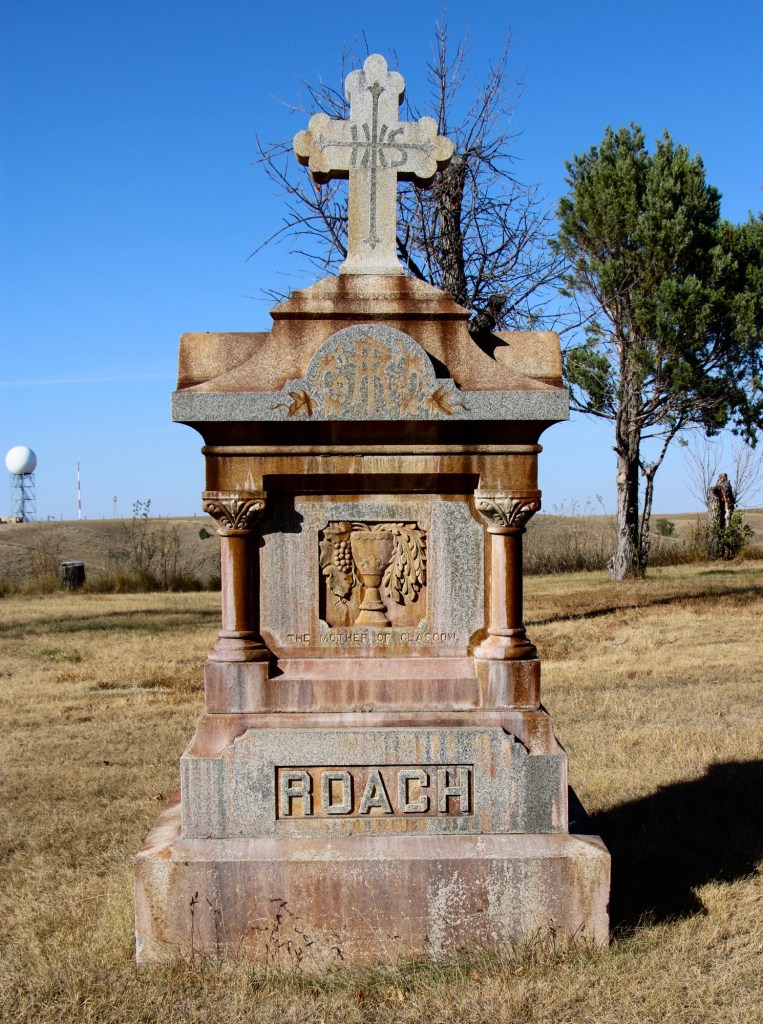
Her empathy and charity earned her the nickname “Mother of Glasgow,” which is carved in her gravestone. After the strike, her business grew and she owned a boarding house, a meat market, a large herd of cattle, and a lodging house. She married Porter Roach in 1907 and died two years later.
Highland Cemetery, like several other municipal cemeteries along the Hi Line, maintains an impressive Veterans section, with the four section arranged around a central flagpole.
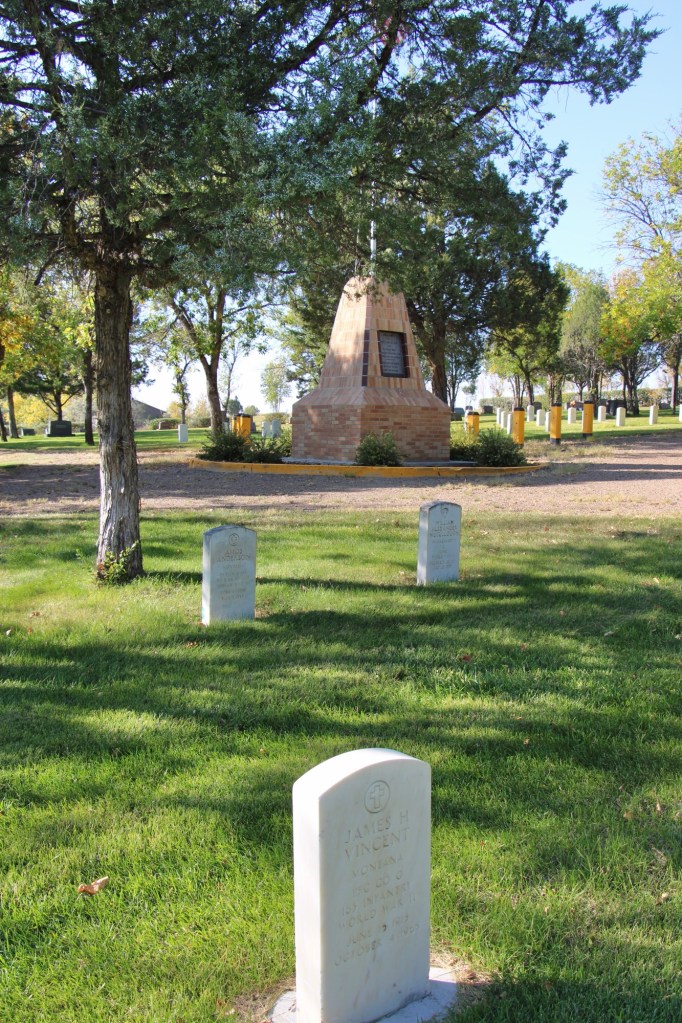
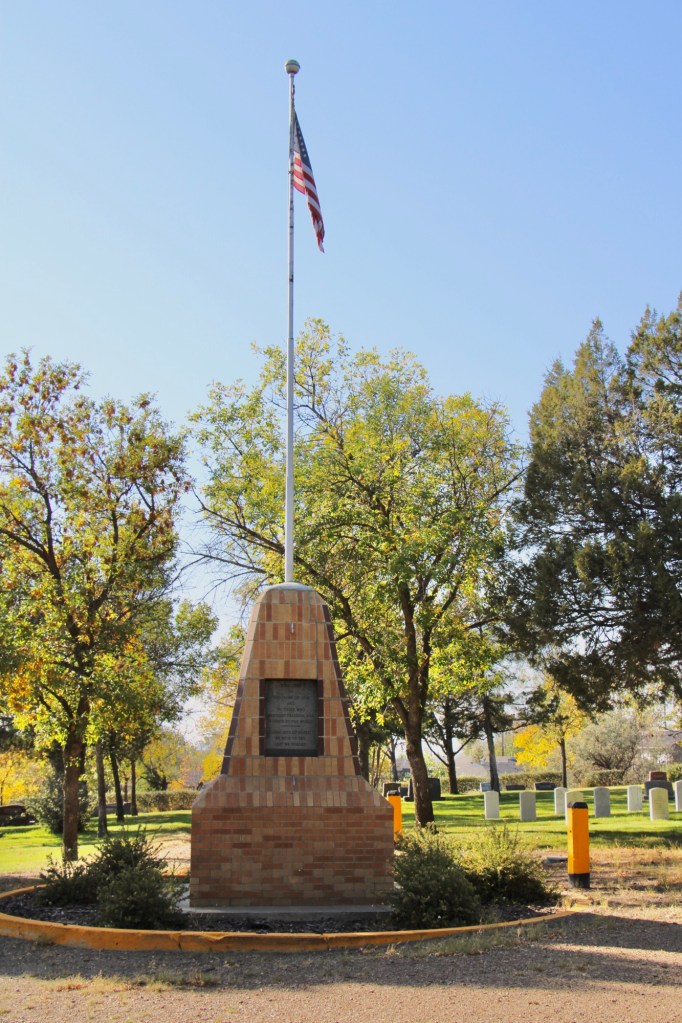
Residents of Valley County are no doubt proud of what Highland Cemetery says about their respect for the past and those who came before. This post only begins to share the impressive grave markers and stories of this public space.
 Montana's Historic Landscapes
Such rich and beautiful history! Thank you for sharing.
Mary Roach came to Glasgow by 1780 and lived until 1909? Wow, that’s really old.
Obviously a typing error and will correct