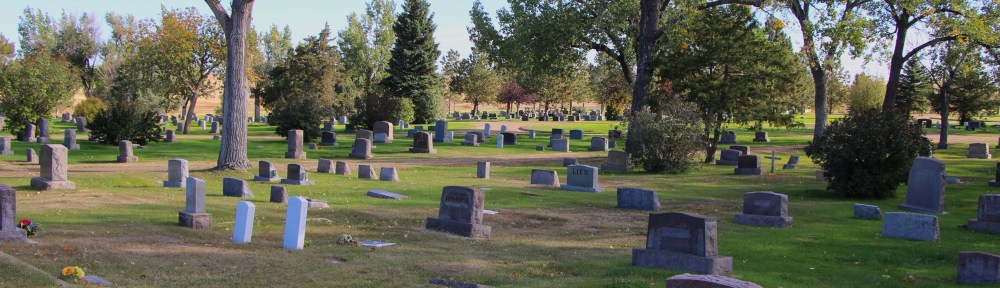
Municipal cemeteries are key public spaces in the Hi-Line towns of Montana. As they mostly date from the 1890s to 1910s, the cemeteries are part of the region’s progressive-era history. New settlers sought to replicate their prior homes—building permanent schools, new churches, town blocks, and homes while also establishing cemeteries.
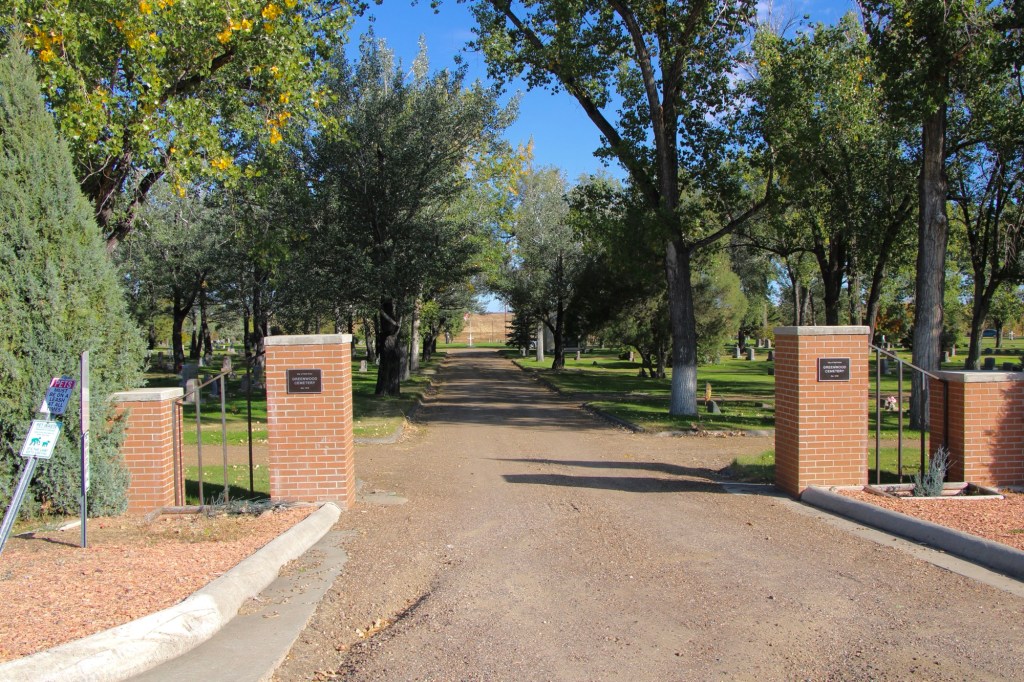
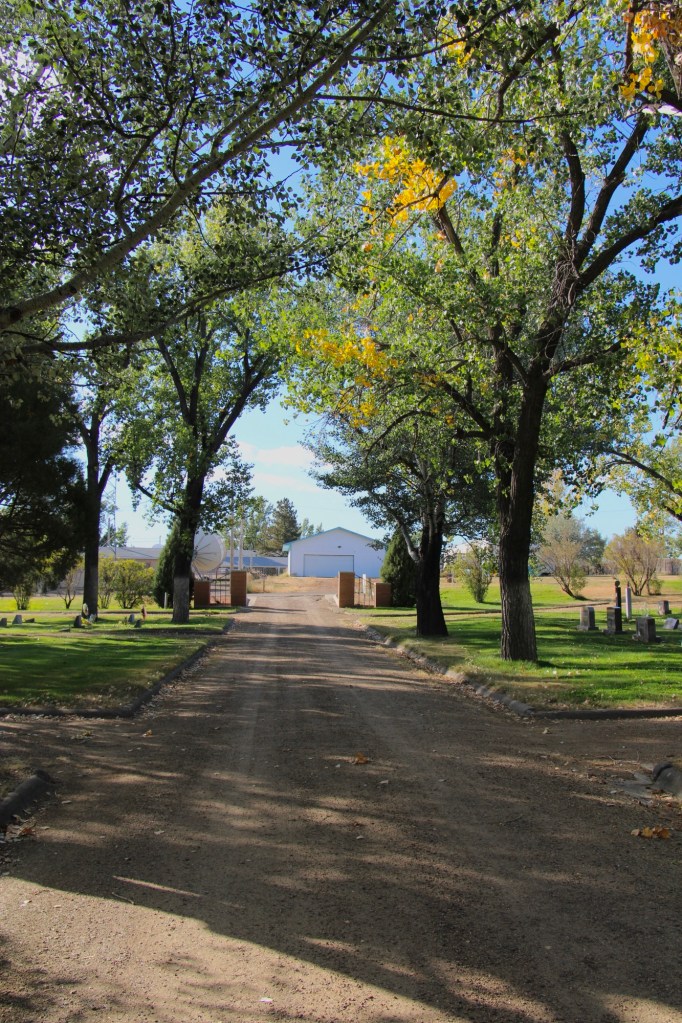
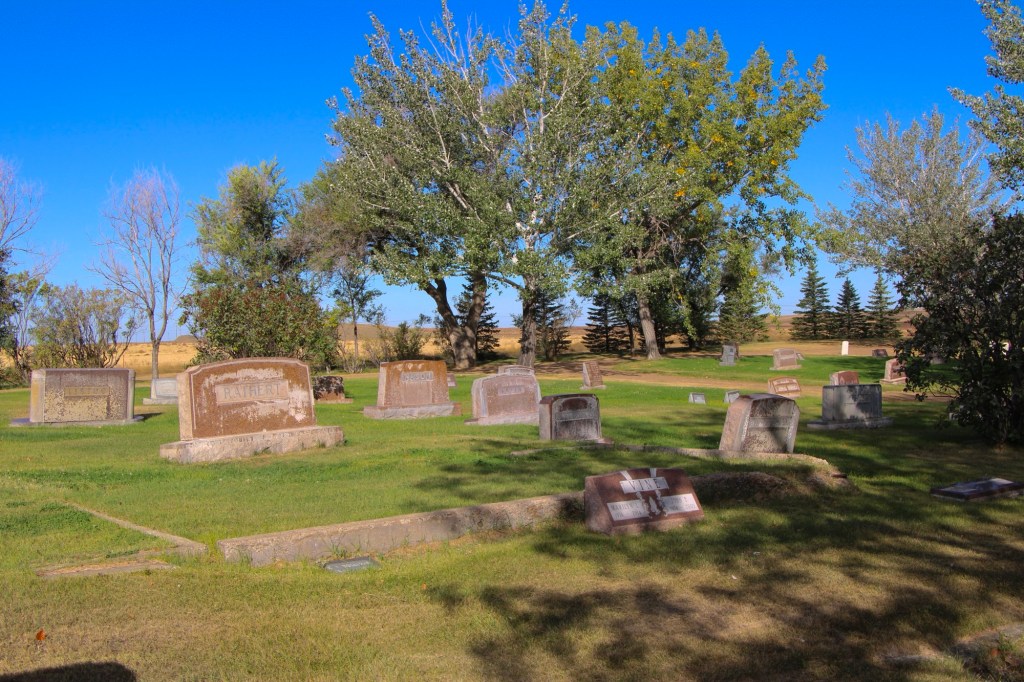
In 1915 settlers formally incorporated Wolf Point as a municipality. A year later, mortician L.M. Clayton opened a funeral business, which would operate until 2005. On a hill several blocks north of the town’s railroad tracks, Clayton established Greenwood Cemetery by 1917. The name came from his wife, Nora May Greenwood. The Greenwood Cemetery Association was organized to administer the property, and its beautification was ensured by the town’s Woman’s Club when it worked with Wolf Point leaders and the cemetery association to extend water to the place. It became a green oasis of rest and tranquility within the often brown, water starved landscape. It remains an impressive landmark of civic pride today.
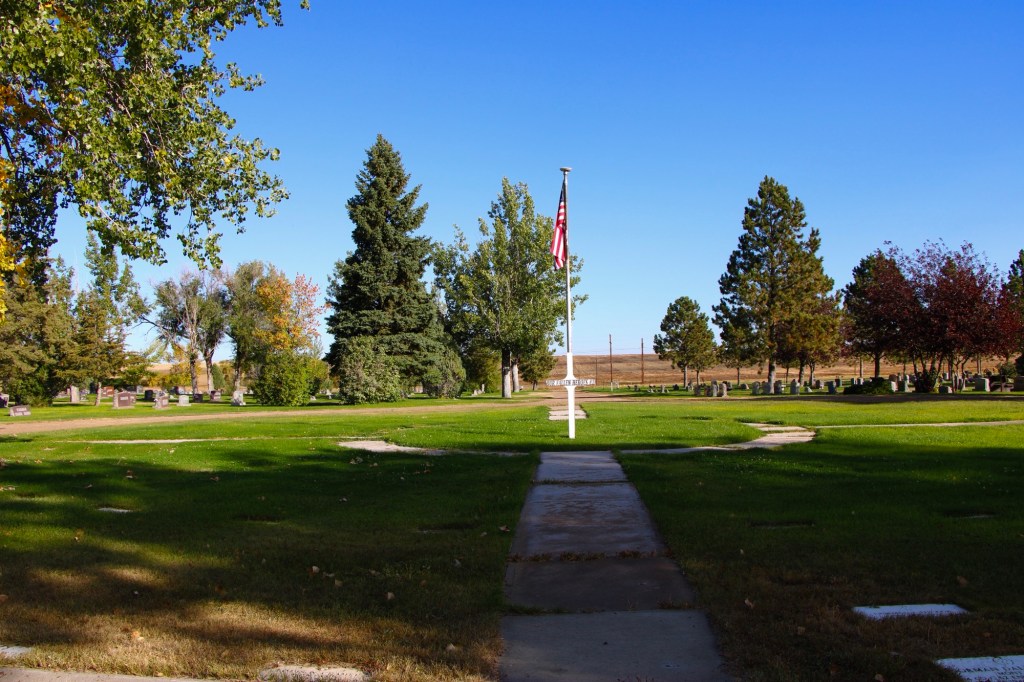
There are two ceremonial areas that immediately capture your attention. Two veterans circles have been installed to honor the many from Roosevelt County who have served the nation from World War I forward.
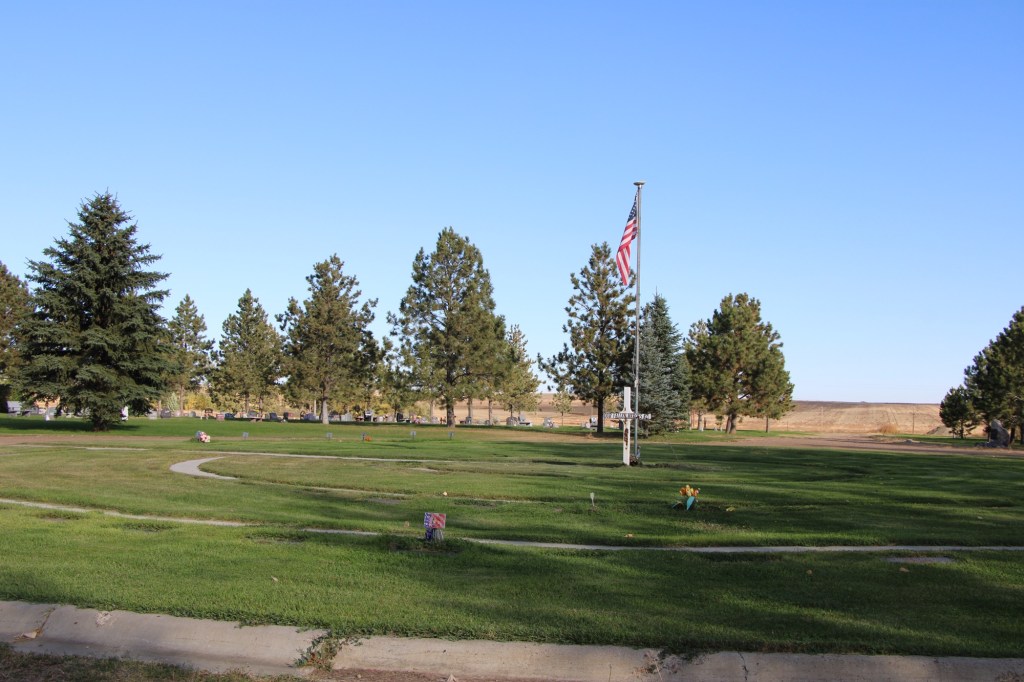
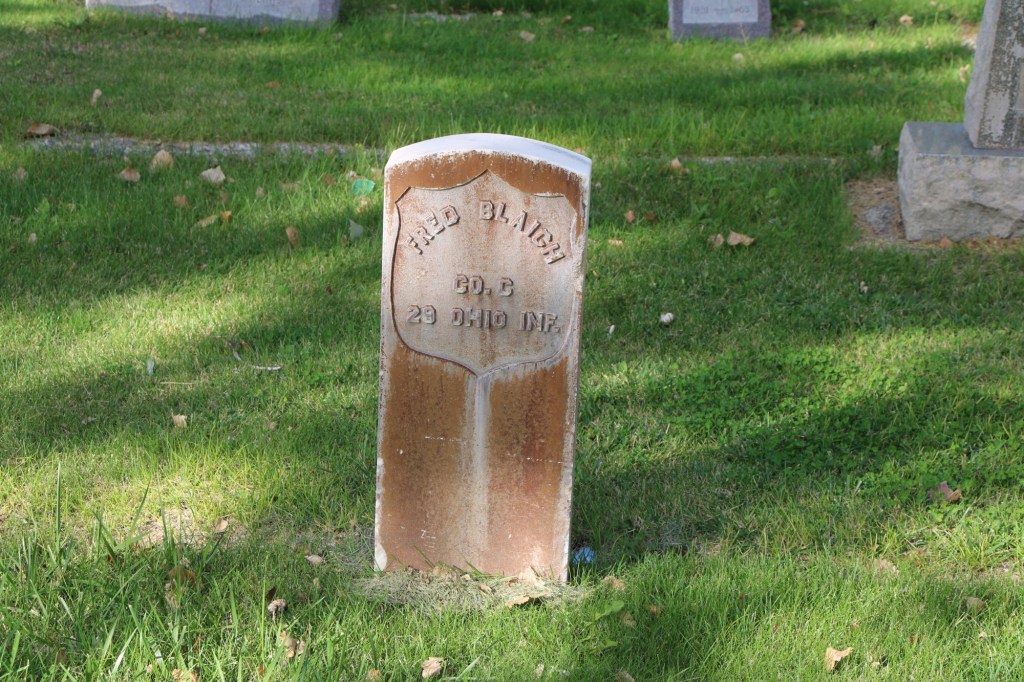
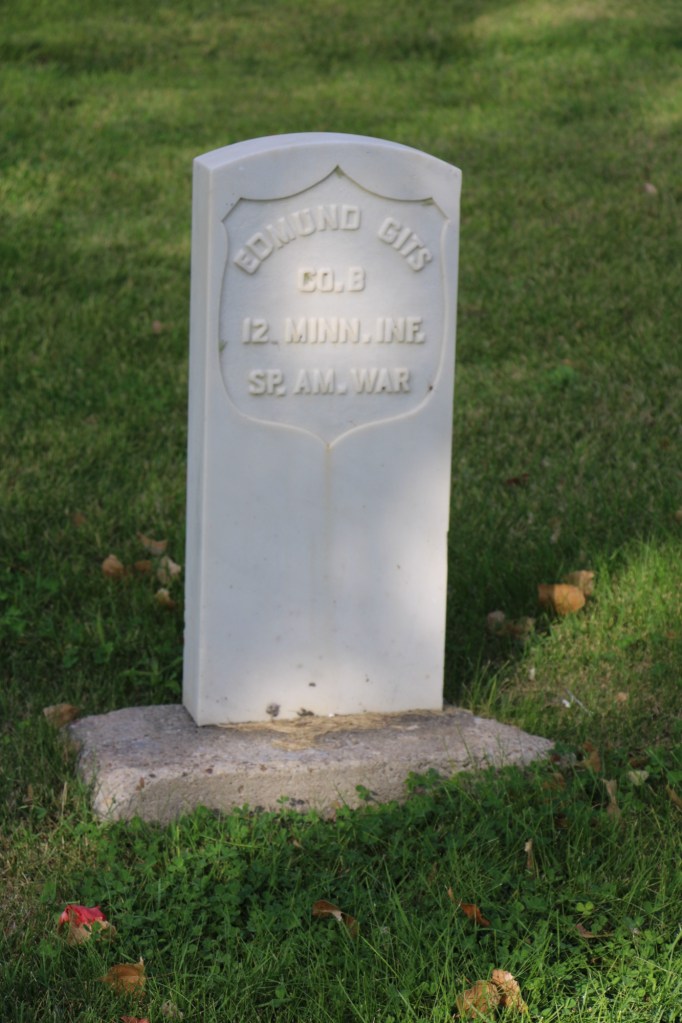
Scattered through the cemetery are other veteran burials, including ones from the Civil War and the Spanish-American War.
The second ceremonial area is more subtle in appearance but unique in its own way.
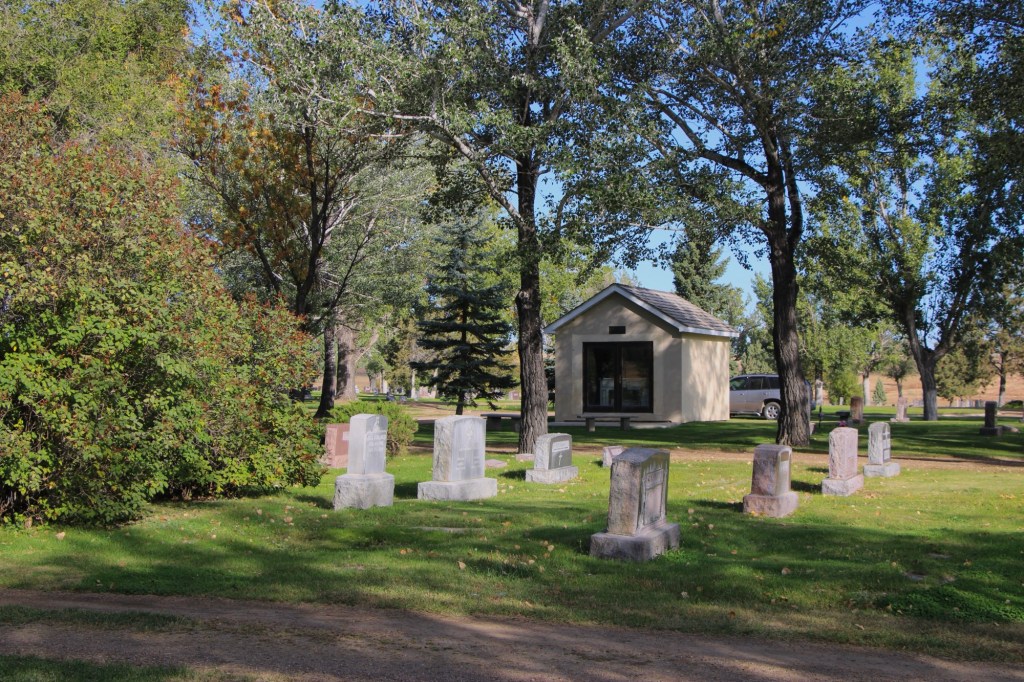
Father Benedict Seehaler established and led Wolf Point’s Immaculate Conception Catholic Church from 1917 to 1931. After his death, parishioners built a tiny memorial chapel in his memory. It was built over his grave.
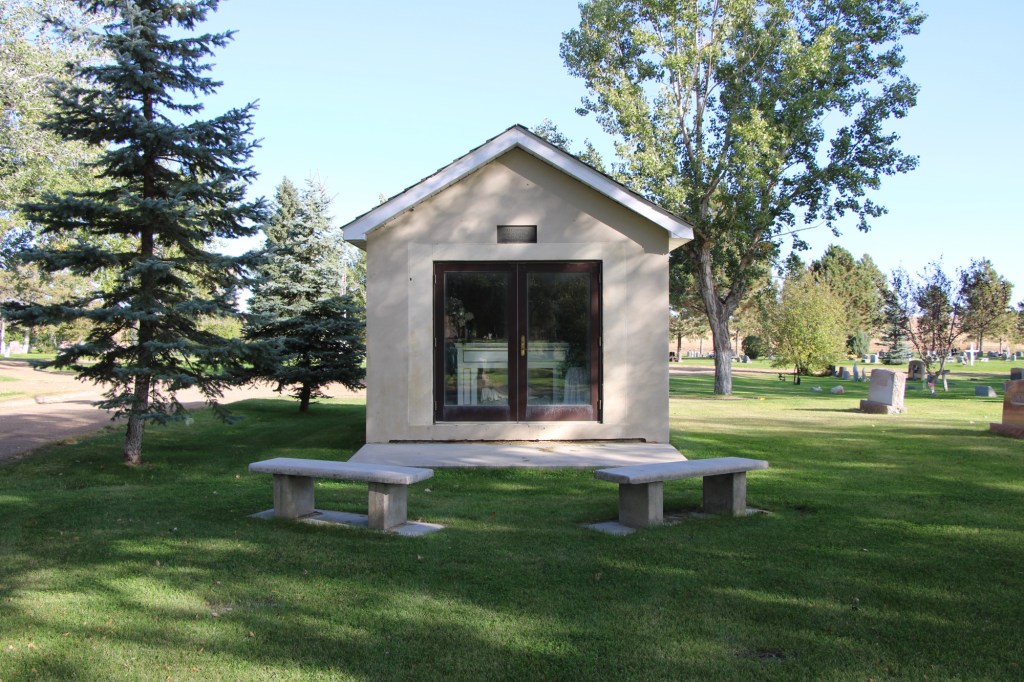
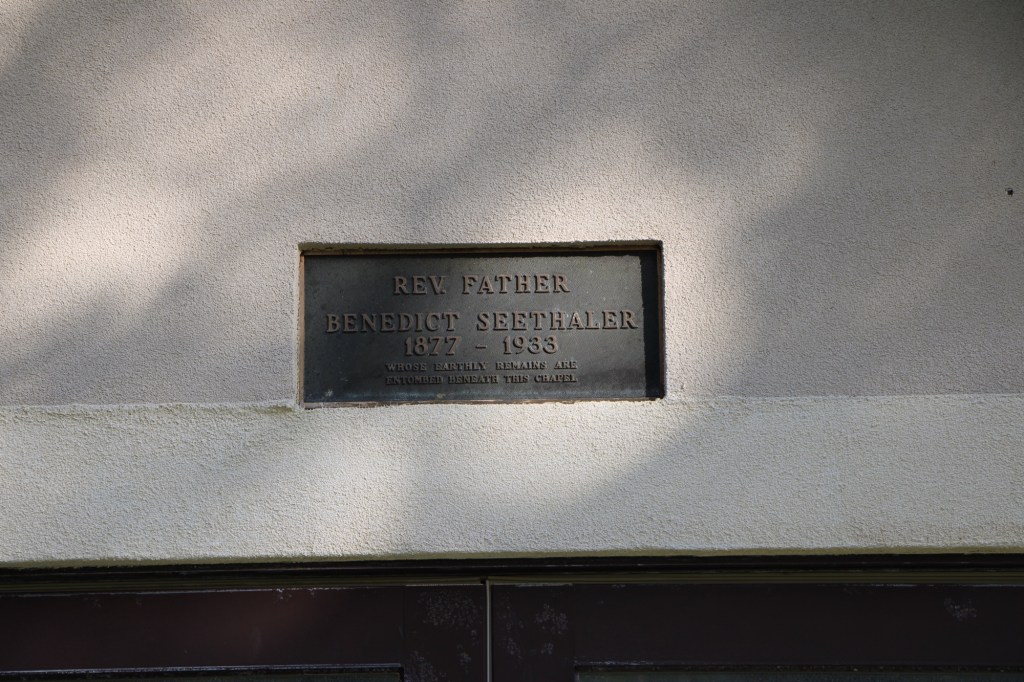
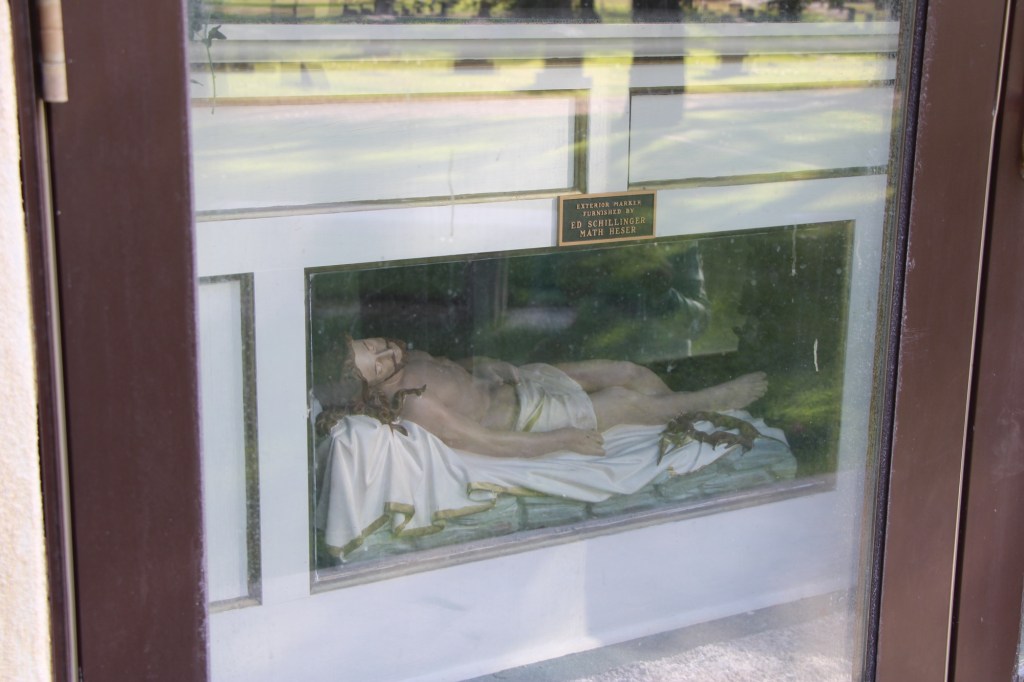
The chapel has an altar and a carved depiction of Christ. The church on Memorial Day holds a memorial mass is held (weather permitting) at the Father Benedict Seehaler Memorial Chapel in Greenwood Cemetery.
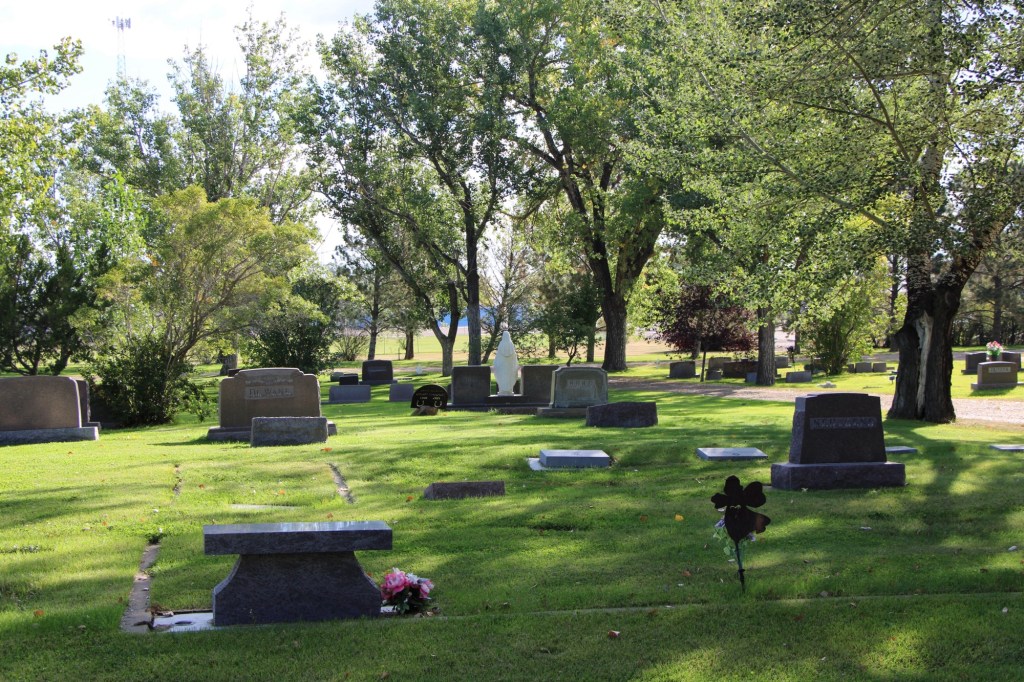
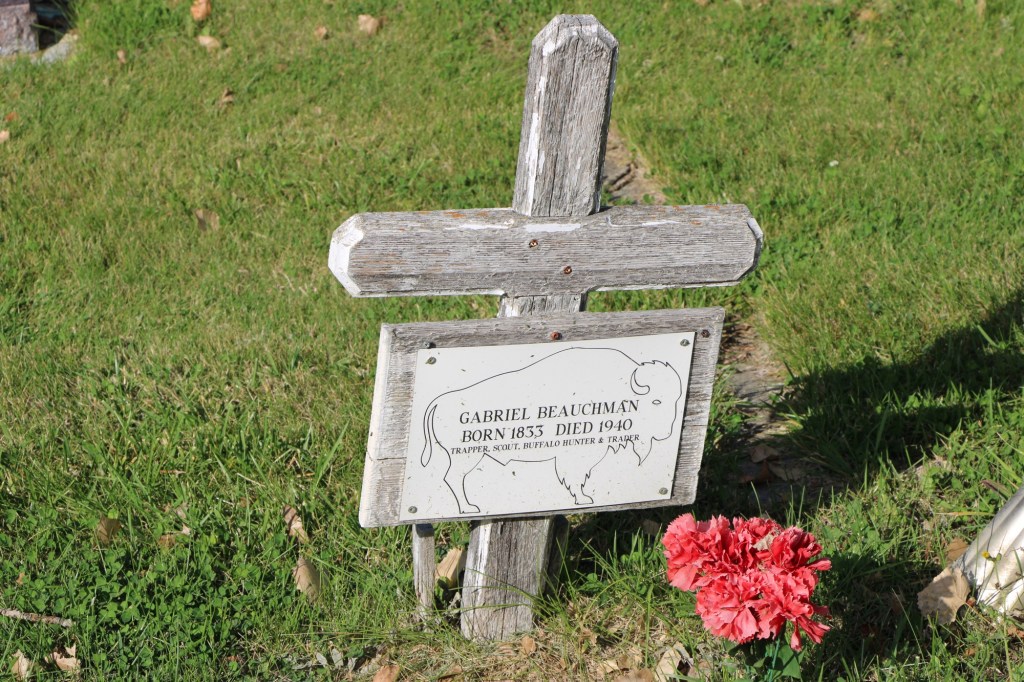
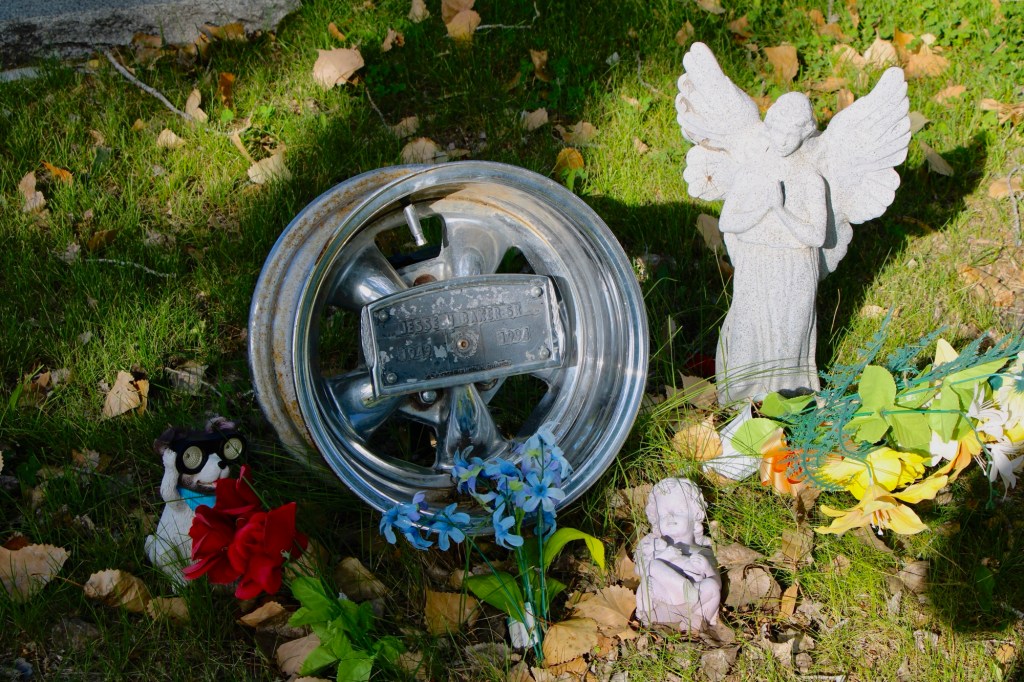
There are many impressive grave markers at the cemetery, whether they are unadorned crosses of early settlers to ones that through the materials used help to tell a story.
Two of the most unique, however, are pedestal sculptures in memory of a husband and wife, Floyd and Bea Dewitt. Floyd passed away in 1980, Bea followed three years later. Floyd’s sculpture is a likeness while Bea’s pedestal sculpture is more symbolic, with the interpretation left to the visitor, until you learn she was a beloved nurse.
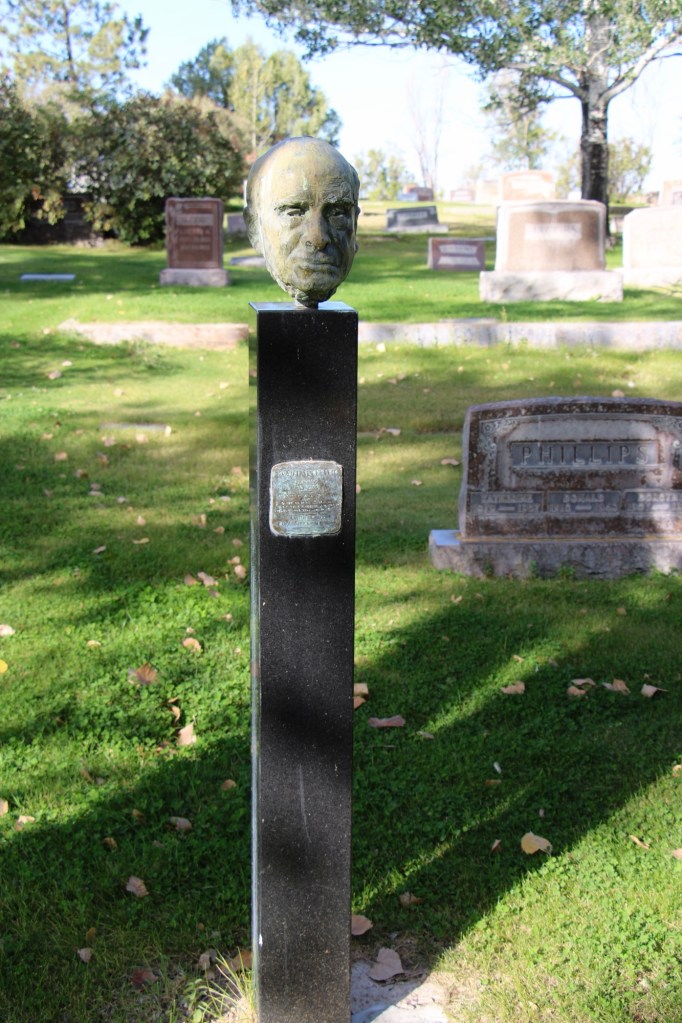
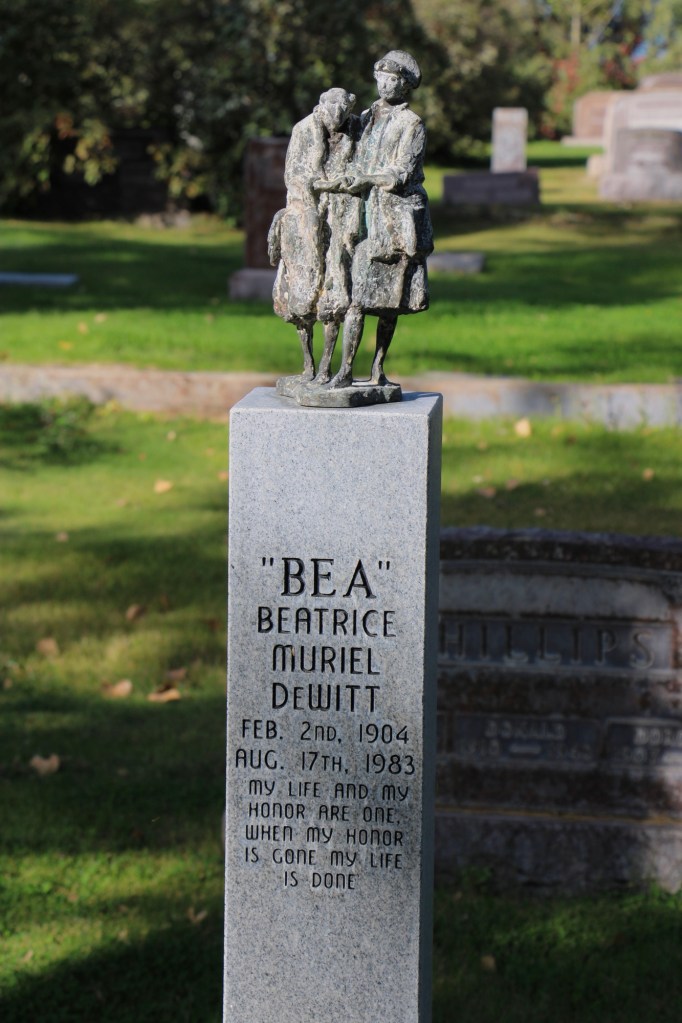
Historian Patty Dean found the DeWitt’s obituaries published in the Billings Gazette, see below, and graciously shared them:


There are many more observations you can make about Greenwood Cemetery but this is enough for the posting (I reserve the right to revisit this place in the future. It is simply one of the most significant municipal cemeteries of northern Montana.
 Montana's Historic Landscapes
Interesting to see the name Floyd and Bea Dewitt in the Greenwood Cemetery at Wolf Point. My dad an orphan sent to Poplar, Montana in 1915 at the age of eleven. He worked for Walter Dewitt at age 12 or 13. Excerpt from dad’s story Orphan Boy by R. J. Milne, Jr.
“I went to work for Walter Dewitt, a bachelor who lived near the badlands. He didn’t have his own farm; he always rented from homesteaders and cultivated their fields. While Dewitt harvested wheat for other farmers, I lived alone in his shack, herding ranch stock off the property and away from his crops. I used Dretta’s little mare, Posey. I earned five dollars a week, and thought I was rich. He furnished me with Van Camp’s pork and beans (five cents a can), Pet milk, and a few eggs that the chickens laid. I saw Dewitt about once a week. One time, he told me my eating habits were too expensive, and said to cut down on beans and eat more eggs. Dewitt’s brother, Howard, bought a long-legged black horse–named Spud–for me to use after losing Posey”.
Russ Milne
Wonderful information, thanks
Thank you for your compassionate coverage of Montana’s cemeteries. Each one has its own unique story, and your telling of those stories, in a way, pays homage to those interred within. Your work, indeed, gives credence to the oft-heard condolence: “May their soul live in Memory Eternal.”
Regards,
Sheo
Thanks very much