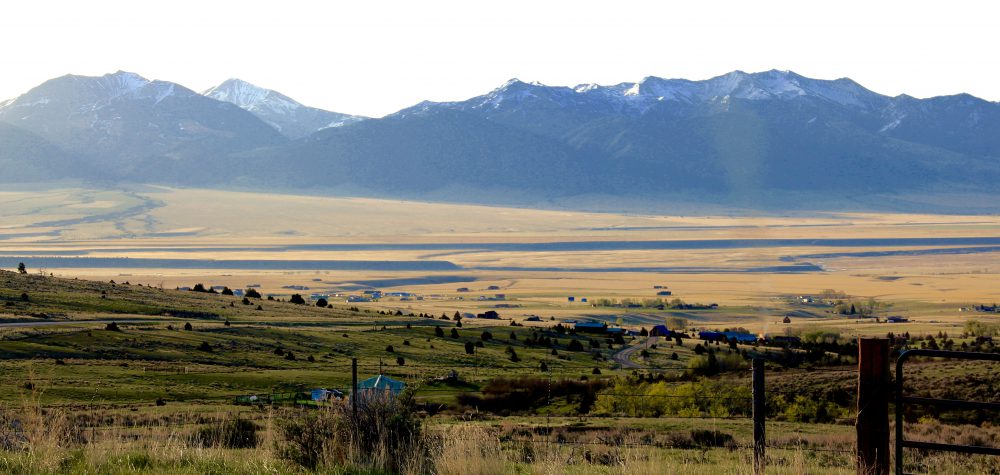
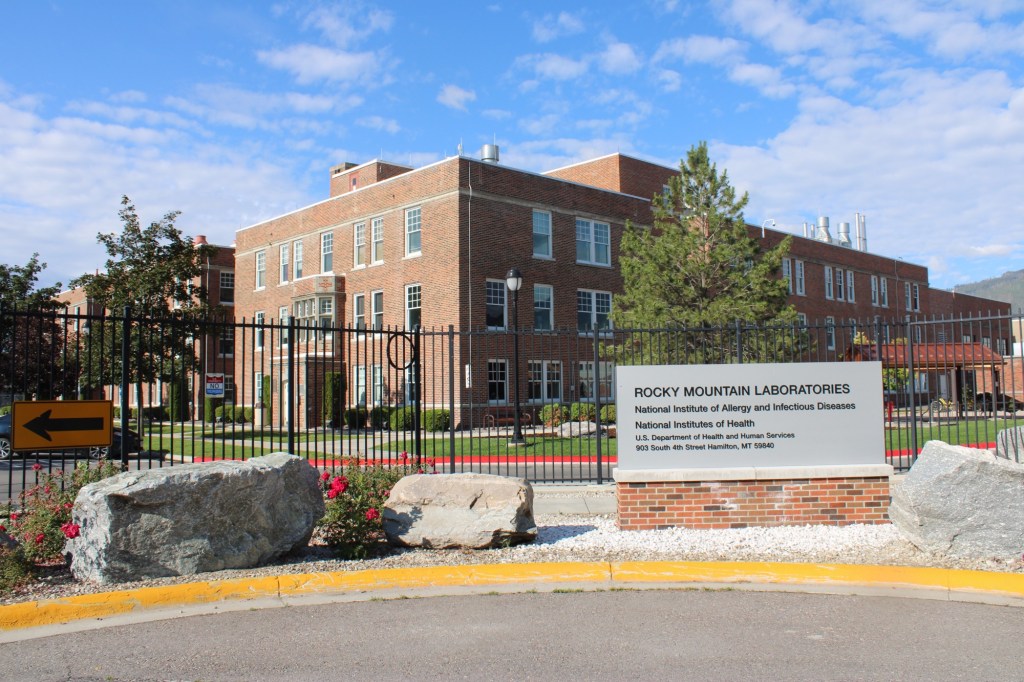
Nestled in the south end of Hamilton’s historic residential neighborhood is the Rocky Mountain National Laboratories. It began as a state initiative, as a way to combat Rocky Mountain spotted fever, a disease carried by the wood tick. For 20 years scientists searched for solutions and at one time worked out of an old abandoned log school. By 1924 an effective vaccine against Rocky Mountain spotted fever had been developed. The state of Montana built the first permanent brick laboratory at Hamilton in 1928.
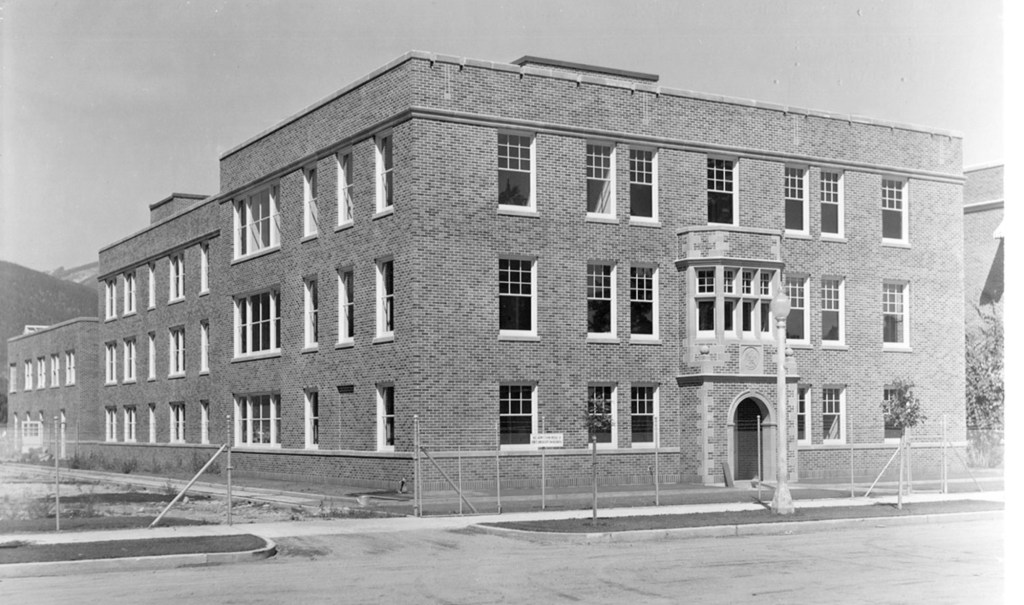
During the New Deal, the federal government took over the state program and with Public Works Administration funding, it built a new modern campus, allowing the scientists to expand their research.
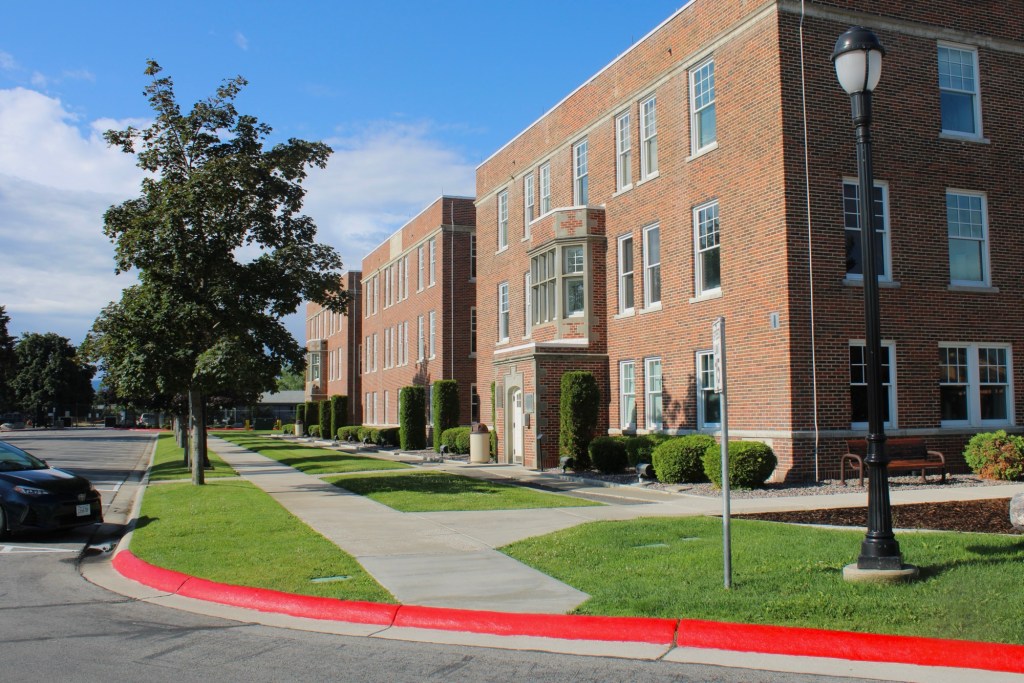
The new campus, completed c. 1940, created a quad of three-story brick buildings for the laboratory, with the new buildings having a slight Collegiate Gothic style.

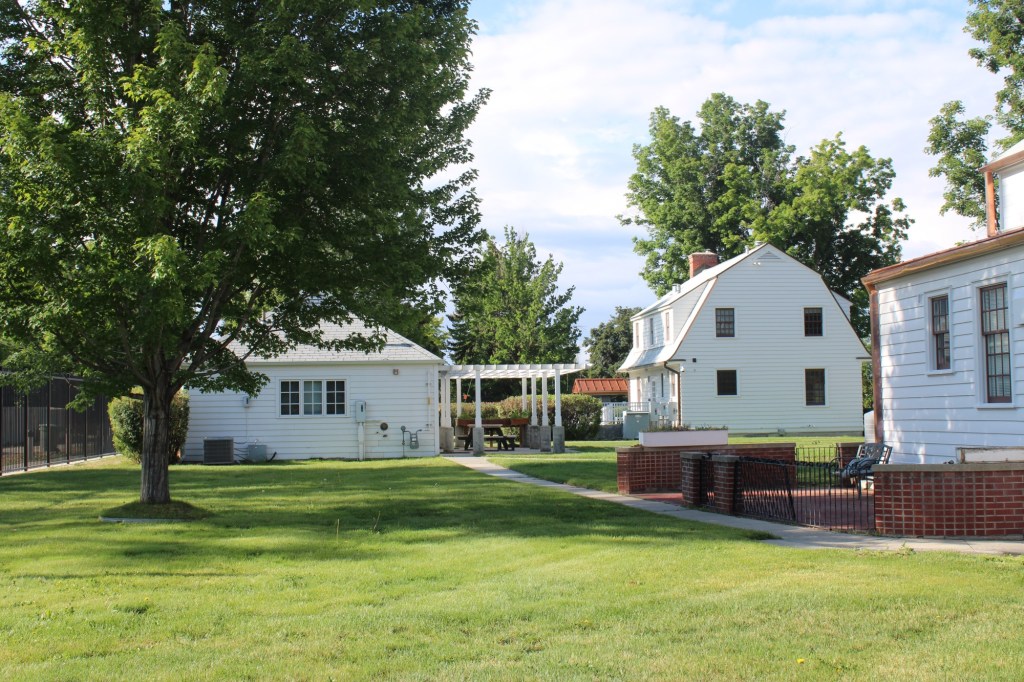
Across from the labs was housing for scientists, with the north house reflecting a modest Colonial Revival style while the south house was a classic Dutch Colonial styled house. There was a shared garage in back of the homes.
Good thing the lab was expanded. Officials looked to it to find solutions for yellow fever and vaccines against diseases common in the Pacific theater of Wirld War II. It developed the standard Army vaccine to fight yellow fever in 1942.
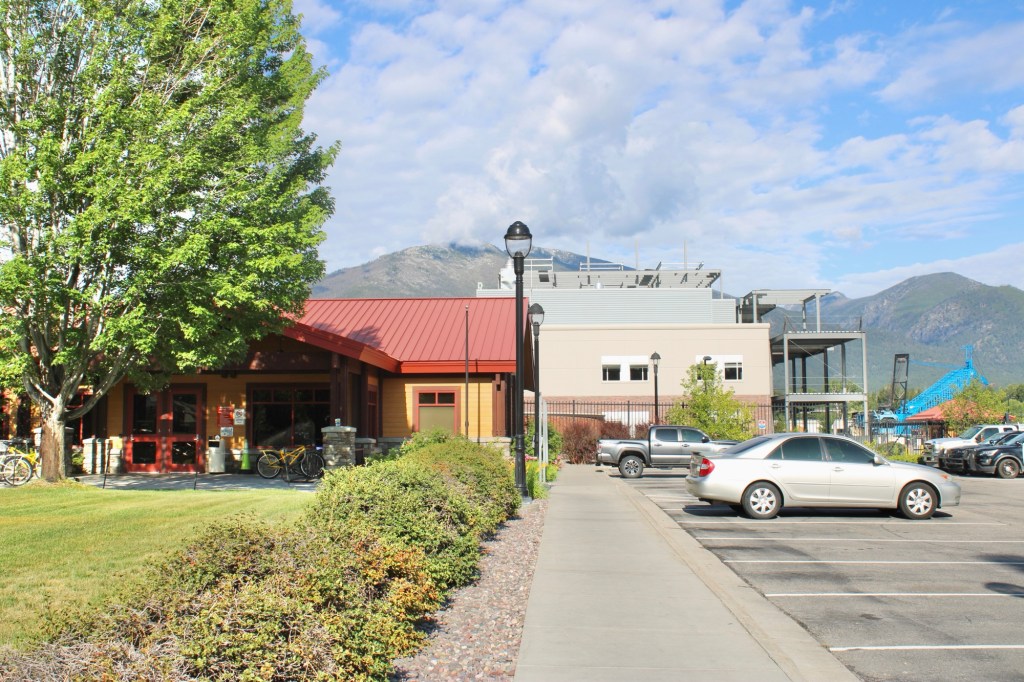
You can discover more about the laboratories and its 21st century at the visitor center, which opened in 2006.
The older section of the laboratories from the New Deal era was listed in the National Register of Historic Places in 1988.
 Montana's Historic Landscapes
Another great post. As the former NASA State Education rep for Montana, I sure wish I’d known this in those days. Wonderful information to share with students and teachers.
Many thanks,
Don Scott, NASA-AESP ret